

Cellular Peptides
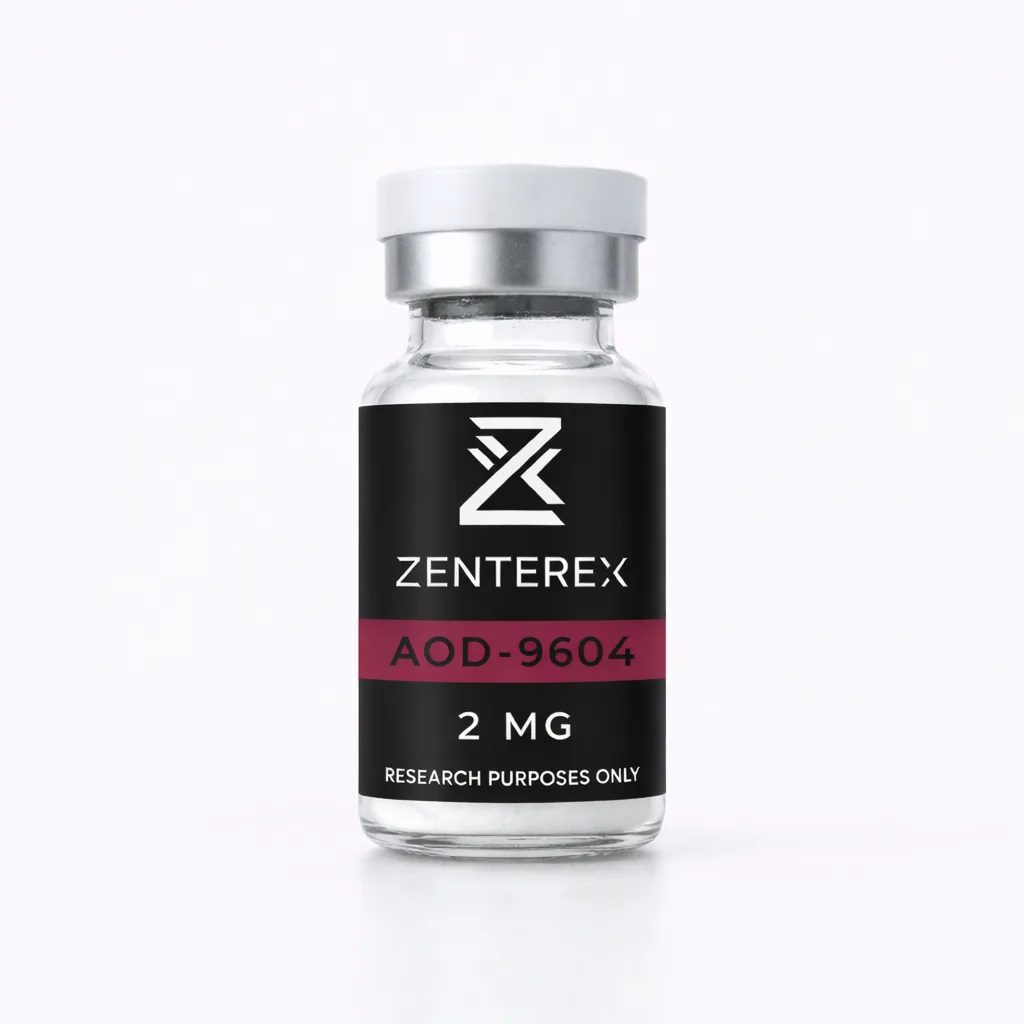
AOD-9604
2mgC₇₈H₁₂₃N₂₃O₂₃S₂
Key Research Findings
- Characterisation of the modified hGH 176–191 fragment.
- Published in-vitro adipocyte lipolysis assay data.
- IGF-1-receptor non-binding profile reported in receptor-affinity studies.
Overview
AOD-9604 is a synthetic modified fragment of the C-terminal sequence of human growth hormone (hGH 176–191). Supplied as a lyophilised powder for in-vitro research use only.
Mechanism of Action
Reported in published in-vitro adipocyte assays as a fragment active on lipolysis-related enzyme pathways without IGF-1-receptor binding. Not intended for human or veterinary use.
Research Effects
Adipocyte Lipolysis Assays
Extensive ResearchReported in in-vitro adipocyte cell-line assays as active on lipolysis-related enzyme pathways.
IGF-1 Receptor Profile
Moderate ResearchReceptor-affinity studies report no binding of IGF-1 receptor under assay conditions tested.
Chondrogenic Cell Studies
Preliminary ResearchEarly-stage in-vitro studies on chondrocyte cell models.
Laboratory Research Only — All information on this page is provided for scientific research purposes only. This is a certified reference material sample sold and distributed for laboratory research only.
Quick Facts
Research Status Key
Related Peptides
Cellular Peptides
MOTS-C
MOTS-C is a synthetic 16-residue mitochondria-derived peptide encoded within the mitochondrial 12S rRNA gene. Supplied as a lyophilised powder for in-vitro research use only.
Learn More →
GH Secretagogue Peptides
HGH-Frag 176-191
HGH-Fragment 176–191 is a synthetic stabilised analogue of the C-terminal 176–191 sequence of human growth hormone. Supplied as a lyophilised powder for in-vitro research use only.
Learn More →