

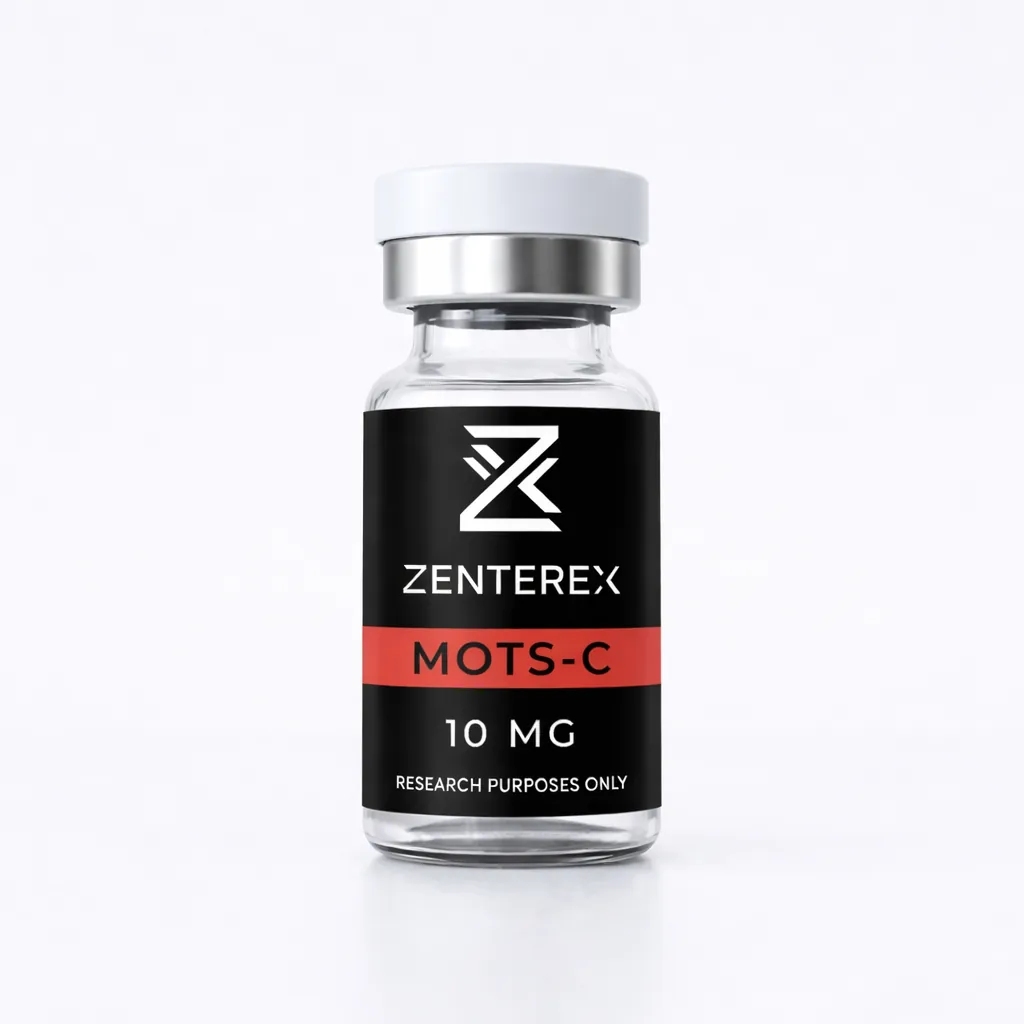
Cellular & Metabolic Compounds
MOTS-C
10mgC₁₀₀H₁₆₈N₃₀O₃₆
Key Research Findings
- Lee et al. — original characterisation of the mitochondria-encoded peptide and its nuclear translocation.
- Published cell-culture studies on AMPK activation under metabolic-stress conditions.
- Serum-analysis studies on age-related concentration decline.
Overview
MOTS-c is a 16 amino acid peptide encoded not in nuclear DNA but within the mitochondrial 12S ribosomal RNA gene, making it one of a small group of mitochondrial-derived peptides identified since 2015. Its discovery is relatively recent, so the literature is smaller than for the older research peptides in this catalogue, but it is growing quickly and comes from mainstream metabolic research groups rather than from a single laboratory. We supply it as a lyophilised powder at 10mg per vial with an independent batch certificate of analysis reporting HPLC purity and mass spectrometry identity.
Mechanism of Action
Lee and colleagues characterised the peptide in Cell Metabolism in 2015 and reported that it acts on the folate-methionine cycle, with downstream accumulation of AICAR and activation of AMP-activated protein kinase [1]. That places it upstream of a well-mapped energy-sensing pathway rather than acting as a receptor ligand, which distinguishes it from most of the other peptides on this site. Subsequent work has examined its translocation to the nucleus under metabolic stress, where it has been reported to influence expression of antioxidant response genes. A 2023 review by Zheng and colleagues collects the mechanistic findings to date [2]. Because it originates in the mitochondrial genome, it is also studied as a signal from mitochondria to the nucleus rather than as a conventional hormone. Not intended for human or veterinary use.
Research Effects
AMPK Activation Assays
Moderate ResearchReported in cell-culture assays as an activator of AMP-activated protein kinase.
Nuclear-Translocation Studies
Moderate ResearchPublished in-vitro studies report nuclear translocation under metabolic-stress assay conditions.
Folate-Cycle Enzyme Studies
Preliminary ResearchEarly-stage cell-culture data on folate-cycle and one-carbon metabolism enzymes.
References
- [1]Lee C, Zeng J, Drew BG, et al.. The mitochondrial-derived peptide MOTS-c promotes metabolic homeostasis and reduces obesity and insulin resistance. Cell Metab. 2015. PMID 25738459 · doi:10.1016/j.cmet.2015.02.009
- [2]Zheng Y, Wei Z, Wang T. MOTS-c: A promising mitochondrial-derived peptide for therapeutic exploitation. Front Endocrinol (Lausanne). 2023. PMID 36761202 · doi:10.3389/fendo.2023.1120533
Cited for the molecular pathways described above. Listing a study is not a claim about any outcome in humans.
Laboratory Research Only — All information on this page is provided for scientific research purposes only. This is a certified reference material sample sold and distributed for laboratory research only.
Quick Facts
Research Status Key