

Cellular & Metabolic Compounds
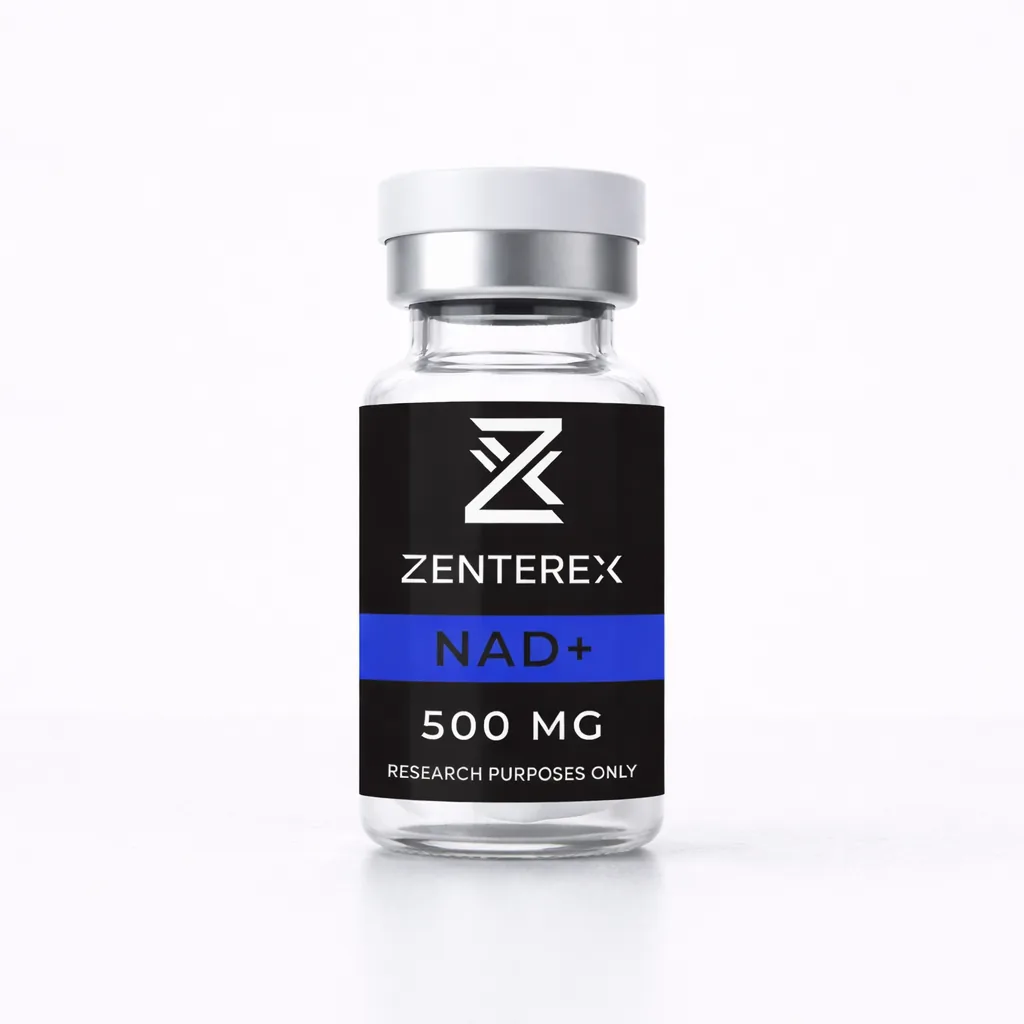
NAD+
500mgC₂₁H₂₇N₇O₁₄P₂
Key Research Findings
- Established role as an electron-carrier coenzyme in mitochondrial oxidative phosphorylation.
- Published sirtuin-enzyme assay data on SIRT1–SIRT7 cofactor activity.
- PARP-enzyme studies — characterisation as a required substrate in DNA-strand-break assays.
Overview
NAD+ is nicotinamide adenine dinucleotide, a redox coenzyme present in every living cell and one of the most studied molecules in biochemistry. It is not a peptide, and we group it under cellular and metabolic compounds for that reason. It cycles between an oxidised form, NAD+, and a reduced form, NADH, carrying electrons between the reactions of glycolysis, the citric acid cycle and oxidative phosphorylation. Beyond that classical role it is consumed as a substrate by three families of enzymes, which is what has driven the recent research interest. We supply it as a powder at 500mg per vial with an independent certificate of analysis.
Mechanism of Action
The distinction that matters for assay design is between NAD+ as a cofactor and NAD+ as a substrate. In redox reactions it is recycled and its total pool is unchanged. In contrast the sirtuins, the poly-ADP-ribose polymerases and CD38 cleave NAD+ and consume it, releasing nicotinamide, so their activity is directly limited by how much NAD+ is available. Imai and Guarente set out the sirtuin dependence [3], Canto and colleagues review the balance between the mitochondrial and nuclear pools [2], and Verdin covers the wider picture in ageing and metabolism [1]. NAD+ is hygroscopic and degrades in solution faster than most peptides, so it should be reconstituted immediately before use rather than stored dissolved. Not for human or veterinary use.
Research Effects
Electron-Transport Chemistry
Extensive ResearchCharacterised in classical biochemistry as an electron-carrier coenzyme in NADH-dependent reactions.
Sirtuin Enzyme Assays
Extensive ResearchReported in published enzyme assays as a co-substrate for the SIRT1–SIRT7 deacetylase family.
PARP Enzyme Assays
Extensive ResearchRequired substrate for poly(ADP-ribose) polymerase activity in DNA-strand-break repair assays.
References
- [1]Verdin E. NAD+ in aging, metabolism, and neurodegeneration. Science. 2015. PMID 26785480 · doi:10.1126/science.aac4854
- [2]Canto C, Menzies KJ, Auwerx J. NAD+ Metabolism and the Control of Energy Homeostasis: A Balancing Act between Mitochondria and the Nucleus. Cell Metab. 2015. PMID 26118927 · doi:10.1016/j.cmet.2015.05.023
- [3]Imai S, Guarente L. NAD+ and sirtuins in aging and disease. Trends Cell Biol. 2014. PMID 24786309 · doi:10.1016/j.tcb.2014.04.002
Cited for the molecular pathways described above. Listing a study is not a claim about any outcome in humans.
Laboratory Research Only — All information on this page is provided for scientific research purposes only. This is a certified reference material sample sold and distributed for laboratory research only.
Quick Facts
Research Status Key
Featured in Bundles
NAD+ is included in the following Zenterex research peptide bundles.
Related Peptides
Cellular & Metabolic Compounds
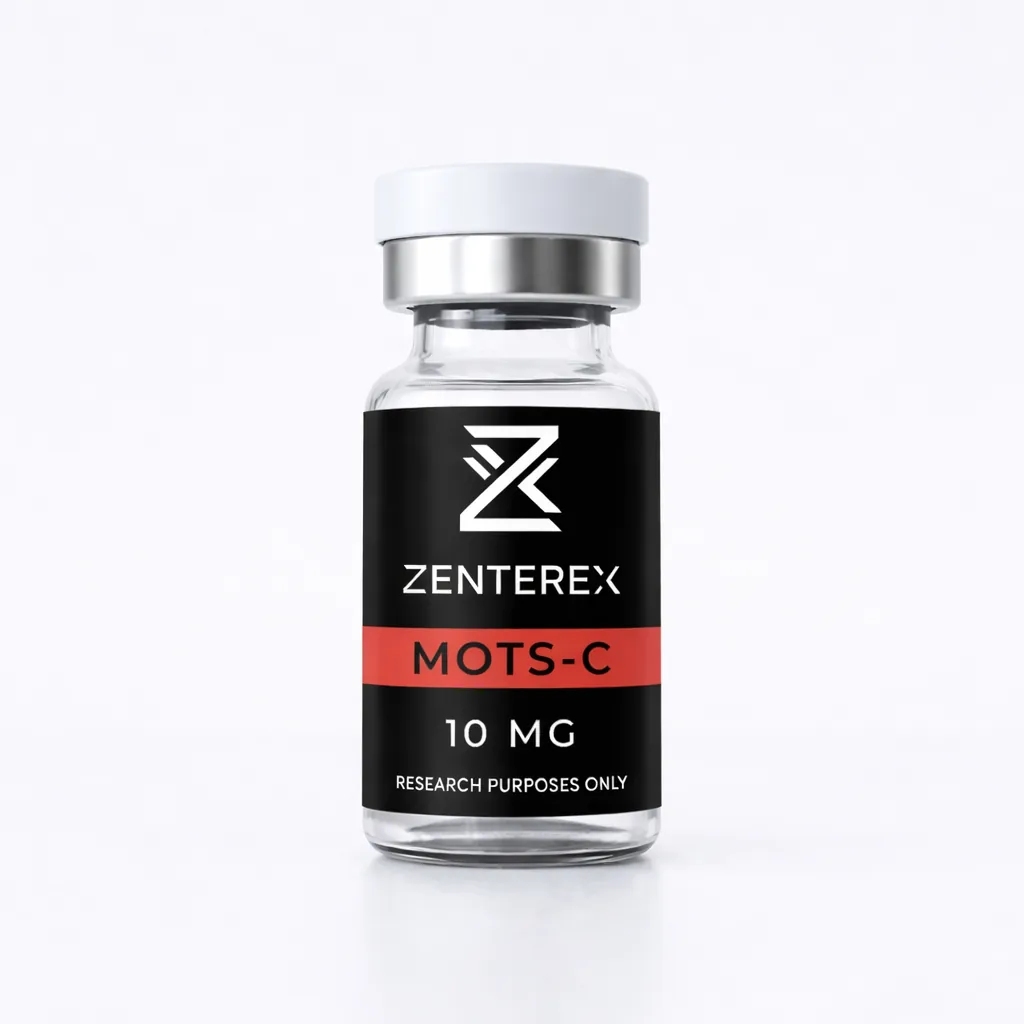
MOTS-C
MOTS-c is a 16 amino acid peptide encoded not in nuclear DNA but within the mitochondrial 12S ribosomal RNA gene, making it one of a small group of mitochondrial-derived peptides identified since 2015. Its discovery is relatively recent, so the literature is smaller than for the older research peptides in this catalogue, but it is growing quickly and comes from mainstream metabolic research groups rather than from a single laboratory. We supply it as a lyophilised powder at 10mg per vial with an independent batch certificate of analysis reporting HPLC purity and mass spectrometry identity.
Learn More →
Synthetic Peptide Analogues
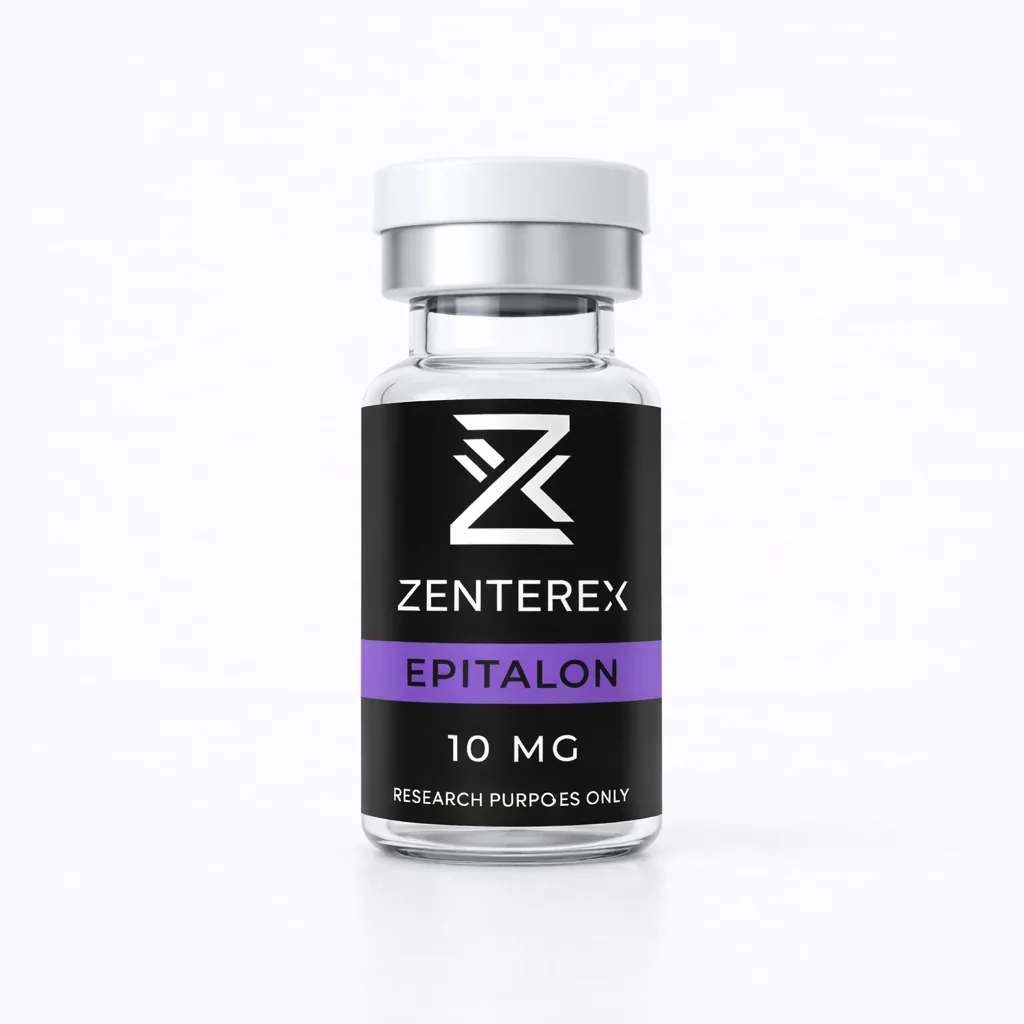
Epitalon
Epitalon (Epithalon) is a synthetic tetrapeptide derived from a sequence identified in pineal-gland extracts. Supplied as a lyophilised powder for in-vitro research use only.
Learn More →