

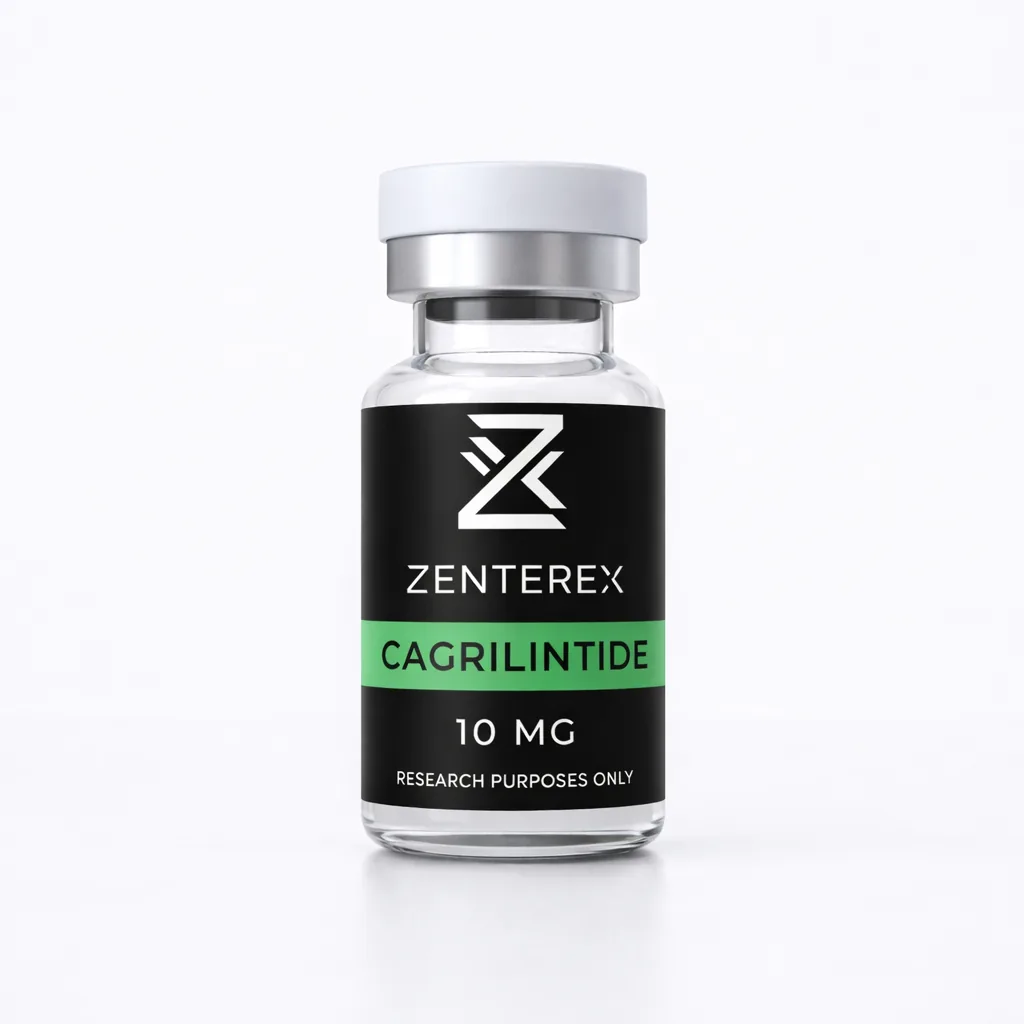
Cellular Peptides
Cagrilintide
10mgC₁₆₂H₂₆₂N₄₆O₅₂
Key Research Findings
- Characterisation of the amylin-analogue sequence and fatty-acid conjugation.
- Published receptor-binding assay data at amylin receptors.
- In-vitro glucagon-secretion cell-model studies.
Overview
Cagrilintide is a long-acting synthetic amylin analogue. Supplied as a lyophilised powder for in-vitro research use only.
Mechanism of Action
Reported in published in-vitro studies as a ligand of amylin receptors in hypothalamic and brainstem cell-line assays. Not intended for human or veterinary use.
Research Effects
Amylin Receptor Binding
Extensive ResearchReported in receptor-binding assays as a high-affinity ligand of amylin receptor subtypes.
Extended Pharmacokinetic Profile
Extensive ResearchCharacterised in animal-model studies with an extended plasma half-life due to fatty-acid conjugation.
Glucagon Cell-Model Studies
Moderate ResearchPublished in-vitro cell models report effects on glucagon-secretion pathway activity.
Laboratory Research Only — All information on this page is provided for scientific research purposes only. This is a certified reference material sample sold and distributed for laboratory research only.
Quick Facts
Research Status Key
Related Peptides
Cellular Peptides
MOTS-C
MOTS-C is a synthetic 16-residue mitochondria-derived peptide encoded within the mitochondrial 12S rRNA gene. Supplied as a lyophilised powder for in-vitro research use only.
Learn More →
Cellular Peptides
NAD+
Nicotinamide Adenine Dinucleotide (NAD+) is a coenzyme central to cellular electron-transfer chemistry. Supplied as a lyophilised powder for in-vitro research use only.
Learn More →