
What Is BPC-157? A Plain-English Guide
BPC-157 explained simply: where it came from, what the letters mean, what scientists have studied it for, and what you get when you order a vial.
BPC-157 is one of the most talked-about research peptides, and one of the least clearly explained. Most write-ups jump straight into receptor pathways. This one starts from scratch.
First: what is a peptide?
A peptide is a short chain of amino acids.
Amino acids are the building blocks your body uses to make proteins. Think of them as beads on a string. String a few together and you have a peptide. String hundreds together and you have a protein.
That is the only real difference. Peptides are short. Proteins are long.
BPC-157 is a chain of 15 beads. That makes it a fairly short one.
Where BPC-157 came from
This is the part most people find interesting.
In the 1990s a research group in Croatia was studying gastric juice. That is the fluid your stomach uses to break down food. Your stomach is a harsh place, and researchers were curious about why the stomach lining does not simply digest itself.
They identified a protein in that fluid and took a small section out of it: 15 amino acids long. That fragment is BPC-157.
So it is not a compound someone invented from nothing. It is a copy of a small piece of something already in the human body. It is made in a lab rather than extracted.
What the letters and numbers mean
BPC stands for Body Protection Compound. That was the name the original research group gave it, based on the tissue they found it in.
157 is just a sequence number from their lab. It does not mean anything on its own.
Names like this are common in this field, and they are labels rather than descriptions. They tell you who found it and when, not what it does. Our glossary covers the other odd names you will run into.
What scientists have actually studied
Here is where we have to be careful and clear.
BPC-157 has been studied in lab dishes and in rats. It has not been through the large-scale human trials that a licensed medicine goes through. So what exists is early-stage research, not settled conclusions.
What that research looked at, in plain terms:
- Blood vessel signalling. Cells send each other chemical messages to trigger the growth of new blood vessels. Researchers measured whether BPC-157 changed those messages in cell cultures.
- Nitric oxide. A gas the body makes that helps control blood flow. Studies in rats looked at whether it affected how much was produced.
- A cell communication pathway called ERK1/2. A relay system cells use to pass instructions to their control centre. Lab studies measured whether it altered that relay.
Notice what these have in common. They are all measurements of signals inside cells, taken in dishes and in animals.
Two things worth knowing about the research
Most of it comes from one group. A large share of the published work traces back to a small number of researchers. That is not an accusation. It does mean the findings have been repeated by other groups less often than a long citation list suggests.
Rats are not people. Almost all of the animal work is in rodents. Results in rats describe rats. Anyone telling you otherwise has gone beyond what the studies say.
What you actually get in the vial
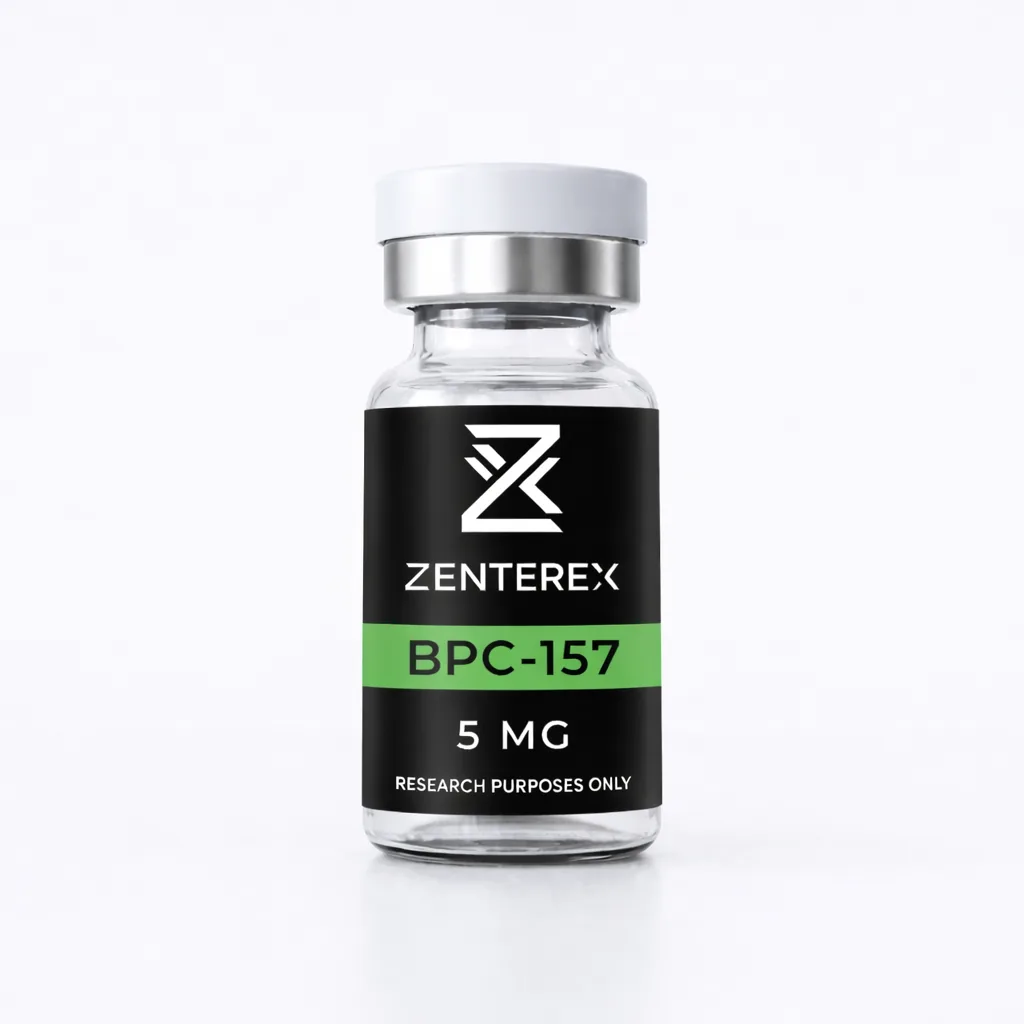
If you order BPC-157 from us, this is what arrives:
- A small glass vial containing 5mg of dry white powder
- The powder is freeze-dried. So the water is out of it and it keeps well in the post and in a freezer
- It should be stored at minus 20 degrees Celsius, away from light
- It dissolves in water
The cake of powder can look like almost nothing. It may also have shifted to the side of the vial in the post. Both are normal and neither means anything is wrong.
How you know it is really BPC-157
This is the part we would push you towards, because it is the only part you can actually check yourself.
Every batch we sell goes to Janoshik Analytical. They are an independent lab with no stake in the result. They run two tests:
- 1.Is this the right molecule? Measured by weighing the molecule very exactly. That weight is compared against what a 15-bead chain of this exact sequence should weigh.
- 2.How much of it is the right molecule? Measured by separating the contents and seeing what proportion is the target.
We publish those reports in full. Each one carries a code. Enter it on the lab's own website and you can confirm the report is genuine and unedited.
Match the batch number on your vial to the report. That is the whole check, and it takes about a minute.
Related compounds
BPC-157 often comes up with two others, and they are frequently confused:
- **TB-500** is a completely different molecule. Different origin, different size, different mechanism. They are studied in similar contexts, which is why they get mentioned together, but they are not related. We wrote a full comparison.
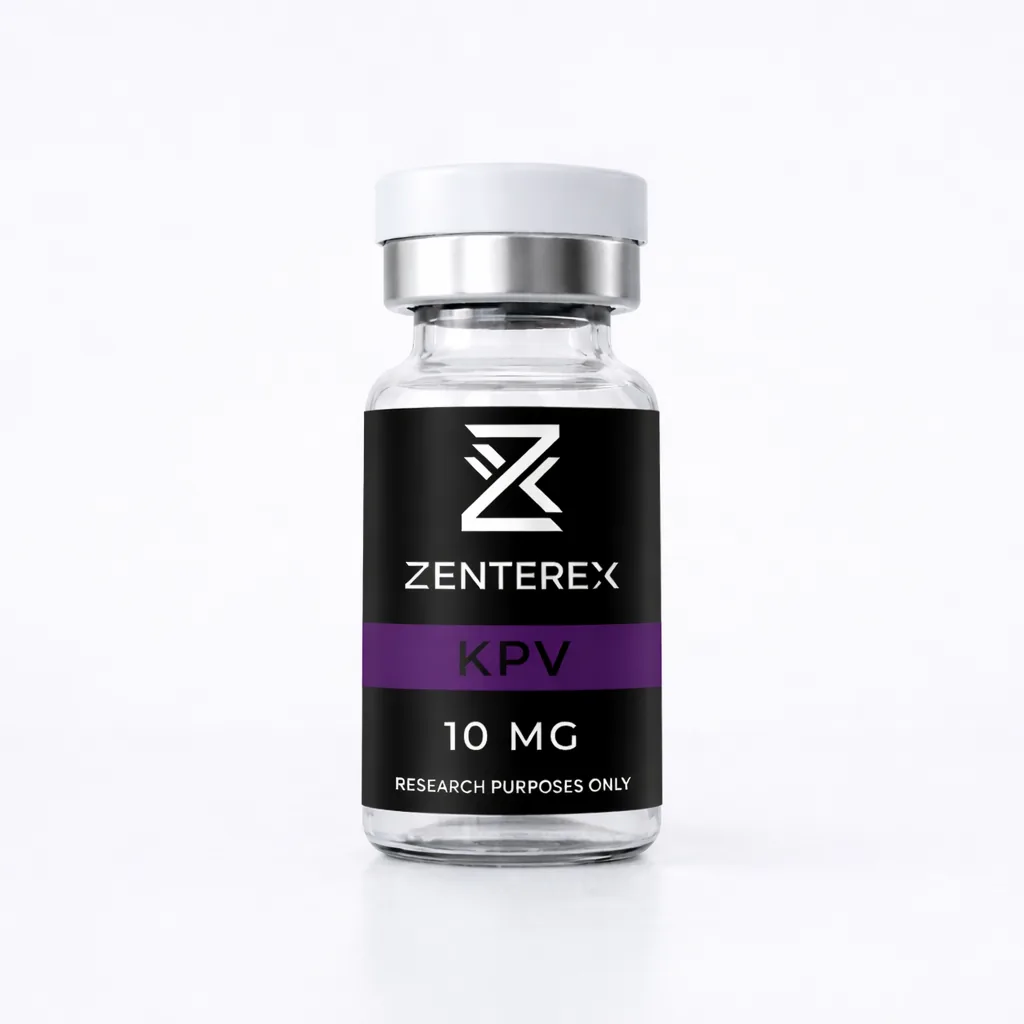
- **KPV** is a very short peptide, only 3 amino acids, from a different parent molecule again.
All three are available separately, or together in a bundle as individual vials.
The short version
BPC-157 is a lab-made copy of a 15-amino-acid fragment originally identified in human stomach fluid. It has been studied in cell cultures and rats, mostly looking at cell signalling. That research is early, and largely from one group.
It is sold as a reference sample for lab research only. It is not a medicine, and it is not for people or animals to take.
If you have a question this did not answer, ask us and we will add it.