
Which Mitochondrial Compound for Which Assay?
Three compounds reach the same organelle by three unrelated routes, and one of them is not a peptide at all. A selection guide by what you are measuring.
Mitochondria are the parts of a cell that turn food into usable energy. Three compounds in our range are studied in connection with them. They reach the organelle by completely unrelated routes.
Picking the right one means knowing which route you are interested in.
The three, and how each gets there
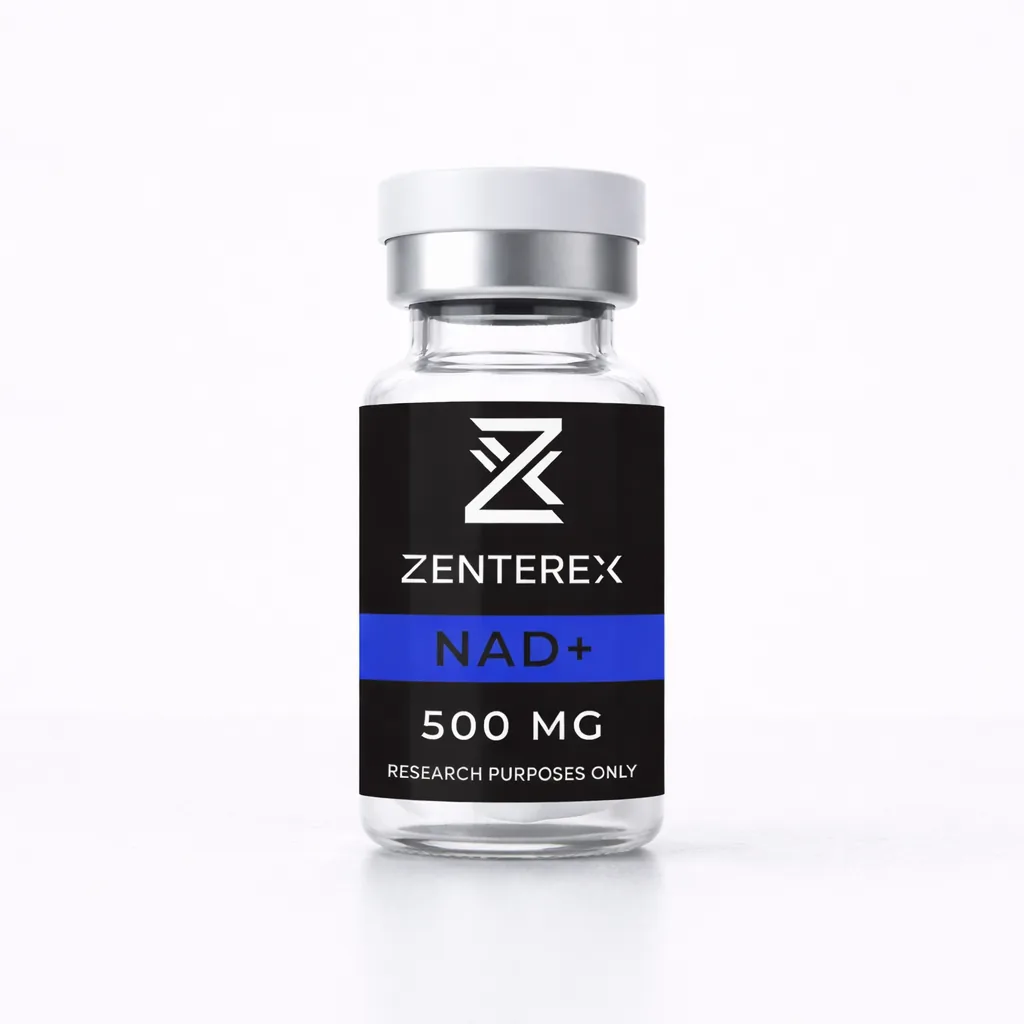
**NAD+, 500mg, and not a peptide at all**. It is a helper molecule that ferries electrons around during the chemistry cells use to release energy. Part of the process, not a message about it.
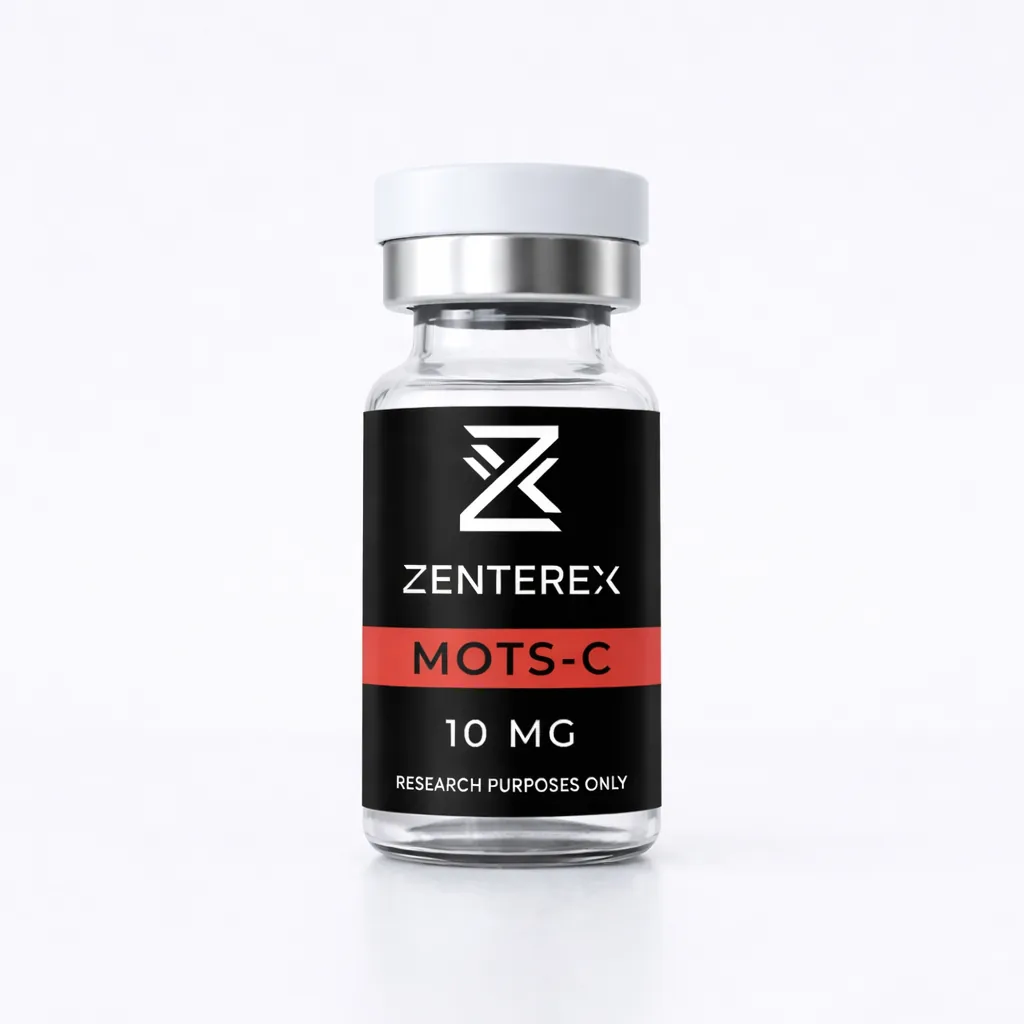
**MOTS-C, 10mg, 16 beads. Unusual because it is written inside the mitochondrion's own DNA**. Mitochondria carry a small separate set of instructions, and this peptide is in it. Studied as a signal.
**SS-31, 10mg, 4 beads. It gets to the mitochondrion by plain physics** rather than by being recognised.
It carries a positive charge and has greasy patches. The inner wall of the mitochondrion is negatively charged, and full of a fat called cardiolipin. So it piles up there through attraction, not because anything lets it in.
A coenzyme, a signal written in mitochondrial DNA, and a molecule that sticks to a membrane. Same organelle, three unrelated mechanisms.
Pick by what you are measuring
**Measuring the NAD+/NADH ratio, or running anything where NAD+ is a required cofactor?** NAD+. It is the coenzyme itself. The 500mg fill reflects that it is used at working strengths, not at the tiny strengths a signalling molecule needs.
**Measuring AMPK, or metabolic gene expression?** MOTS-C. AMPK is a cellular energy sensor that switches on when a cell is running low. MOTS-C's research centres on it.
**Measuring membrane potential, cardiolipin interaction, or reactive oxygen species?** SS-31. Its published behaviour is about the inner membrane's structure and integrity rather than about signalling.
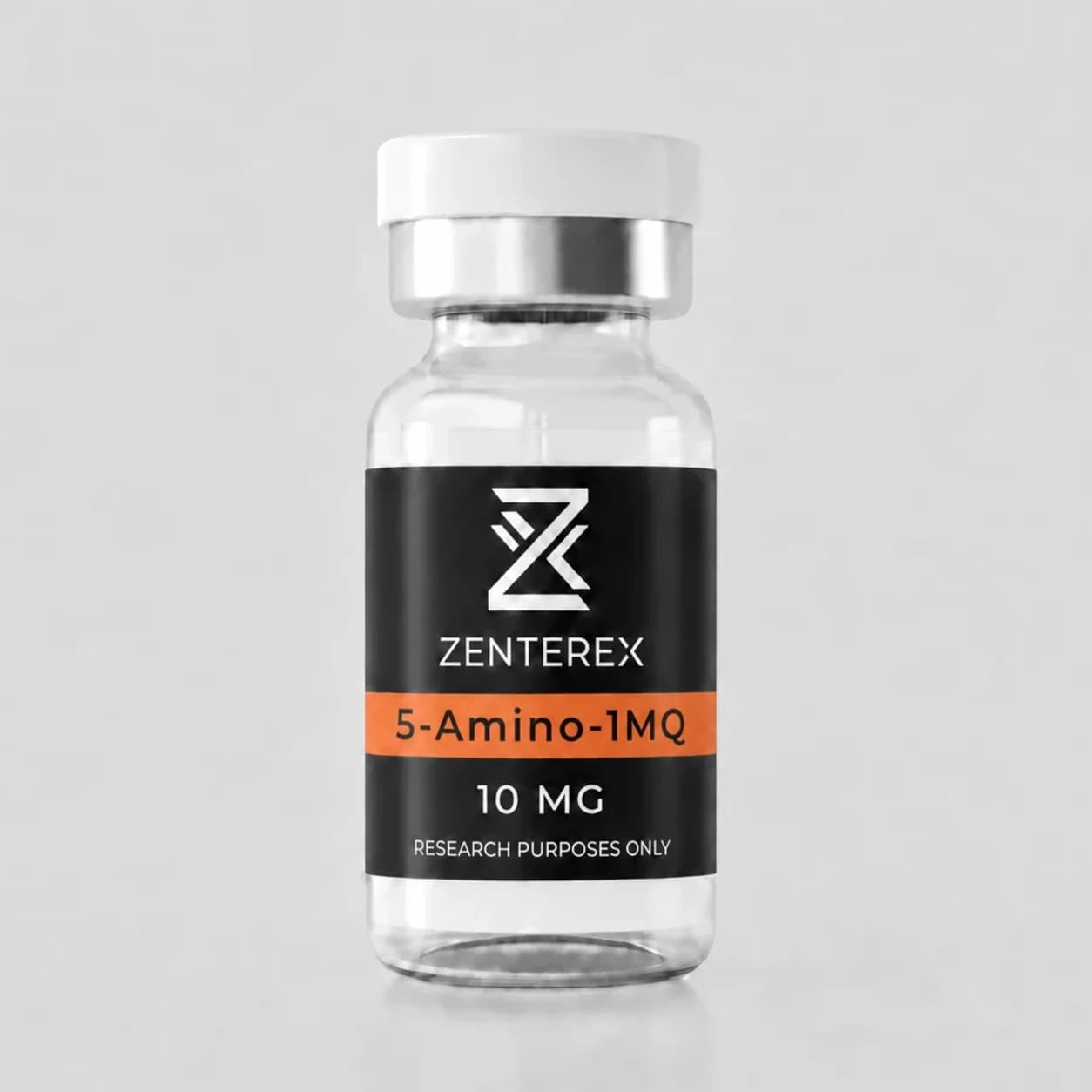
**Measuring NNMT enzyme activity, or NAD+ salvage chemistry?** 5-Amino-1MQ. Also not a peptide. It is a small molecule that blocks an enzyme, and that enzyme takes a building block out of NAD+ production. So blocking it comes at NAD+ chemistry from the opposite end to supplying NAD+.
The standard measurements in this field
Worth knowing, because they tell you which compound is relevant.
Oxygen use. Mitochondria use up oxygen at the last step of energy production. So measuring how fast is a direct read on how hard they are working. The workhorse of the field.
Membrane voltage. The inner wall holds a charge across it, like a battery, and that charge drives energy production. Dyes that respond to it tell you whether it is intact.
NAD+/NADH ratio. The balance between the two forms of the coenzyme reports the cell's metabolic state.
ATP quantification. The end product.
Reactive oxygen species. Energy production generates them as a by-product.
Three practical points
**You cannot compare these by weight.** 500mg of NAD+ against 10mg of MOTS-C reflects how each gets used, not generosity. NAD+ goes in at high strengths because it is a workhorse. MOTS-C is a signal. Our note on vial sizes explains.
Two of the four are not peptides. NAD+ and 5-Amino-1MQ have no sequence, so their product pages have no sequence field. Identity rests on the formula and the weight instead.
Get the NAD+ form right. NAD+ and NADH are two states of the same helper molecule. Different weights, different stability. We supply NAD+, and the name says so.
NMN and NR are precursors, and again different substances. Our note on the family covers the lot, because they get muddled constantly.
Running more than one
Common, because the three angles complement each other rather than overlapping. The carrier, the signal and the membrane-seeker.
All three come together as a bundle of separate vials. That reflects how mitochondrial work is done, not a suggestion that they are combined.
Documentation
NAD+, MOTS-C and SS-31 all have published batch reports, with two batches each for NAD+ and SS-31.
5-Amino-1MQ does not have one yet. It is simply absent, rather than covered by another compound's document.
Not sure which fits your setup? Tell us what you are measuring.