
Cytoprotective Peptides
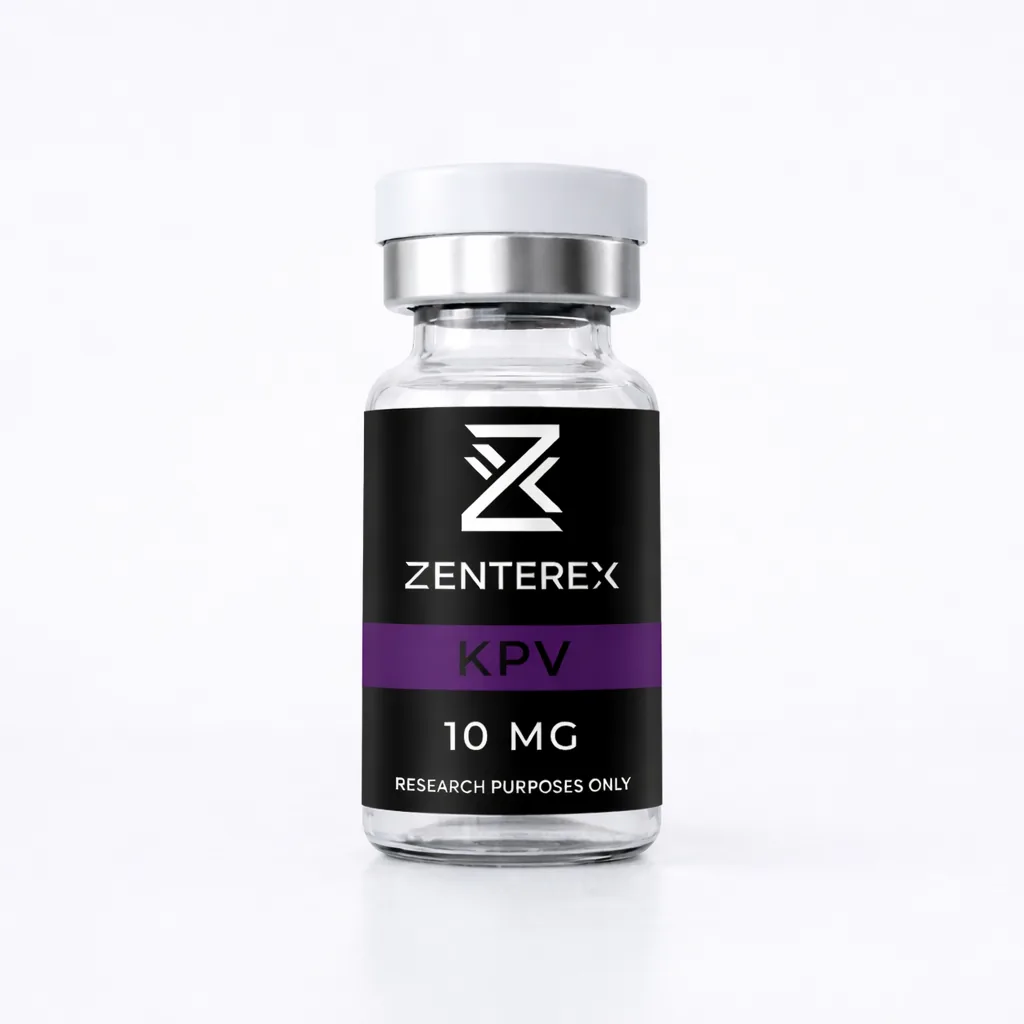
KPV
10mgC₁₇H₃₂N₆O₆
Key Research Findings
- Published cell-culture assays on epithelial NF-κB activation.
- In-vitro antimicrobial activity reported in plate-assay studies.
- Stability profile documented in lyophilised form at −20 °C.
Overview
KPV is a synthetic tripeptide fragment of the α-MSH C-terminal sequence. Supplied as a lyophilised powder for in-vitro research use only.
Mechanism of Action
Reported in published in-vitro and animal-model studies to interact with the MC1R melanocortin receptor and the NF-κB signalling pathway in epithelial cell-line assays. Not intended for human or veterinary use.
Research Effects
MC1R Receptor Binding
Extensive ResearchReported in receptor-binding assays as a ligand for the MC1R melanocortin receptor.
NF-κB Pathway Studies
Extensive ResearchCell-culture assays report effects on NF-κB-driven cytokine transcription in epithelial cell lines.
Antimicrobial Plate Assays
Moderate ResearchPublished in-vitro plate assays report activity against S. aureus, E. coli and Candida species.
References
- [1]Kannengiesser K, Maaser C, Heidemann J, et al.. Melanocortin-derived tripeptide KPV has anti-inflammatory potential in murine models of inflammatory bowel disease. Inflamm Bowel Dis. 2008. PMID 18092346 · doi:10.1002/ibd.20334
- [2]Brzoska T, Bohm M, Lugering A, et al.. Terminal signal: anti-inflammatory effects of alpha-melanocyte-stimulating hormone related peptides beyond the pharmacophore. Adv Exp Med Biol. 2010. PMID 21222263 · doi:10.1007/978-1-4419-6354-3_8
Cited for the molecular pathways described above. Listing a study is not a claim about any outcome in humans.
Laboratory Research Only — All information on this page is provided for scientific research purposes only. This is a certified reference material sample sold and distributed for laboratory research only.
Quick Facts
Research Status Key