

GHK-Cu vs Shop-Bought Copper Peptide Serums
Expensive serums contain the same molecule you can buy as a powder. What you are paying for, what the concentration usually is, and how to mix your own.
Copper peptide serums sell for a lot of money. The active ingredient is GHK-Cu, and you can buy it as a powder.
Here is the comparison, including what the serum is actually doing for you.
What you are paying for
| Bought serum | Raw GHK-Cu | |
|---|---|---|
| Active ingredient | GHK-Cu | GHK-Cu |
| Concentration | Often not stated | You decide |
| Formulation | Done for you | You mix it |
| Stability | Handled | Your responsibility |
| Cost per use | High | Much lower |
| Certificate of analysis | Rare | Standard here |
The molecule is the same. What differs is the concentration, the base it is mixed into, and who did the work.
The concentration problem
Most serums do not tell you how much GHK-Cu is in them.
That matters, because the research uses specific concentrations, and "contains copper peptides" is compatible with almost any amount. A product can be technically honest and contain very little.
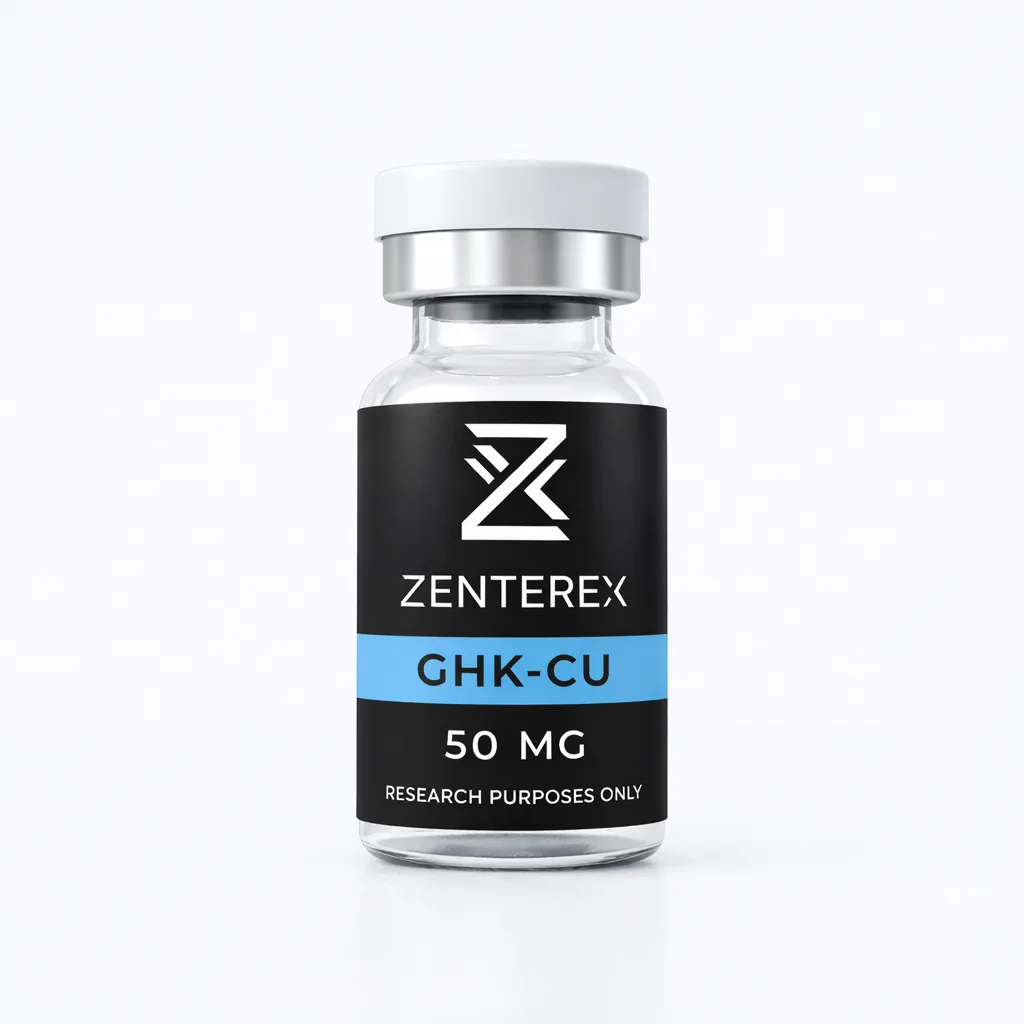
Buying the raw compound means you set the concentration. Most people work in the 1 to 2 percent range for topical use.
What the serum genuinely provides
Be fair about this. A good serum is not just markup.
A base that absorbs well. Getting a molecule through skin is not trivial, and formulation is a real skill.
Stability. GHK-Cu degrades with light and with the wrong ingredients. A properly formulated product handles that.
Convenience. No mixing, no measuring, no storage decisions.
If those are worth the price to you, buy the serum. That is a reasonable choice.
Mixing your own
If you would rather not, it is straightforward.
- 1.Work out your target concentration. 1 to 2 percent is typical.
- 2.Dissolve the powder in bacteriostatic water.
- 3.Blend into an unscented base, or use it directly.
- 4.Store it cold and dark. Make small batches.
The one thing that will ruin it: any base containing EDTA or a similar chelator. Chelators grip copper harder than the peptide does and will pull it straight out, leaving something that is no longer GHK-Cu. Nothing visible happens to warn you.
Read the ingredients of anything you blend it into. Also avoid combining it with vitamin C in the same application, since the two react.
Our usage guide covers the rest.
The certificate point
This is the argument that actually matters.
A serum rarely tells you what is in it, and almost never comes with independent testing.
A vial of GHK-Cu from a supplier worth using comes with a batch certificate from an independent lab, carrying a code you can check on that lab's own site. You know exactly what you have and how pure it is.
For a compound where potency is invisible, that is worth more than the convenience.
Which should you choose?
Buy a serum if you want it handled and do not want to think about it.
Buy the powder if you want to know the concentration, you want it tested, or you use it often enough that the cost difference is real.
Everything we sell is supplied for research purposes. It is not a medicine and it is not approved for medical use.