

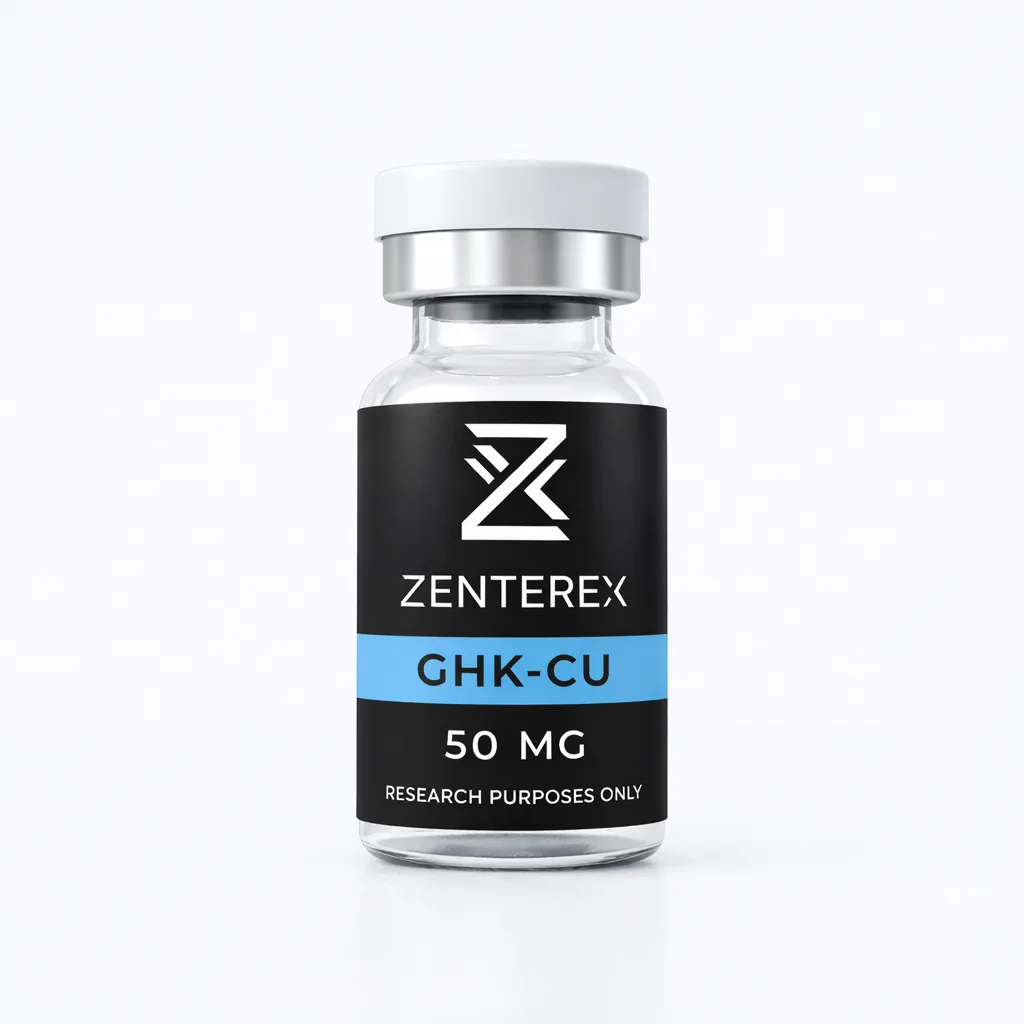
Cytoprotective Peptides
GHK-Cu
50mgC₁₄H₂₃CuN₆O₄
Key Research Findings
- Pickart & Margolina — characterisation of the GHK-Cu complex and gene-array studies.
- Published fibroblast culture data on collagen and elastin transcription.
- Plasma concentration decline with donor age documented in serum analysis studies.
Overview
GHK-Cu is the copper(II) complex of the tripeptide glycyl-L-histidyl-L-lysine, a sequence first isolated from human plasma in the 1970s and later identified in saliva and urine. The free tripeptide binds copper with high affinity, and it is the copper-bound form that most of the published literature studies. Its plasma concentration in humans declines with age, which is part of why it has been examined in tissue remodelling and gene expression work. We supply it as a lyophilised powder at 50mg per vial, with a batch certificate of analysis reporting HPLC purity and mass spectrometry identity. The copper content is what gives the powder its characteristic blue colour, so a vial that looks white or off-white is not GHK-Cu.
Mechanism of Action
Copper coordination happens at the N-terminal amine, the adjacent amide nitrogen and the histidine imidazole, which together form a square-planar site around the Cu(II) ion. That geometry is stable enough to hold copper but weak enough to exchange it with albumin and with cellular copper transporters, which is the property most in-vitro work turns on: GHK-Cu behaves as an exchangeable copper carrier rather than as a chelator that locks the metal away. Pickart and Margolina reported in 2018 that GHK modulates a large number of human genes when assessed against the Broad Institute Connectivity Map dataset, with signals concentrated in tissue remodelling and antioxidant pathways [1]. Earlier work by Maquart and colleagues reported connective tissue accumulation in rat wound models following local application of the complex [2]. Not intended for human or veterinary use.
Research Effects
Copper Delivery
Extensive ResearchReported in cell-culture assays as a Cu²⁺-binding ligand active on superoxide dismutase activity.
Collagen Transcription Assays
Extensive ResearchPublished fibroblast culture data on transcription of COL1A1, COL3A1 and elastin genes.
Gene-Array Studies
Moderate ResearchLarge-scale microarray studies report modulation of multiple cellular pathway genes in cultured cells.
References
- [1]Pickart L, Margolina A. Regenerative and Protective Actions of the GHK-Cu Peptide in the Light of the New Gene Data. Int J Mol Sci. 2018. PMID 29986520 · doi:10.3390/ijms19071987
- [2]Maquart FX, Pickart L, Laurent M, et al.. In vivo stimulation of connective tissue accumulation by the tripeptide-copper complex glycyl-L-histidyl-L-lysine-Cu2+ in rat experimental wounds. J Clin Invest. 1993. PMID 8227353 · doi:10.1172/JCI116842
- [3]Pickart L, Vasquez-Soltero JM, Margolina A. GHK Peptide as a Natural Modulator of Multiple Cellular Pathways in Skin Regeneration. Biomed Res Int. 2015. PMID 26236730 · doi:10.1155/2015/648108
Cited for the molecular pathways described above. Listing a study is not a claim about any outcome in humans.
Laboratory Research Only — All information on this page is provided for scientific research purposes only. This is a certified reference material sample sold and distributed for laboratory research only.
Quick Facts
Research Status Key
Featured in Bundles
GHK-Cu is included in the following Zenterex research peptide bundles.
Related Peptides
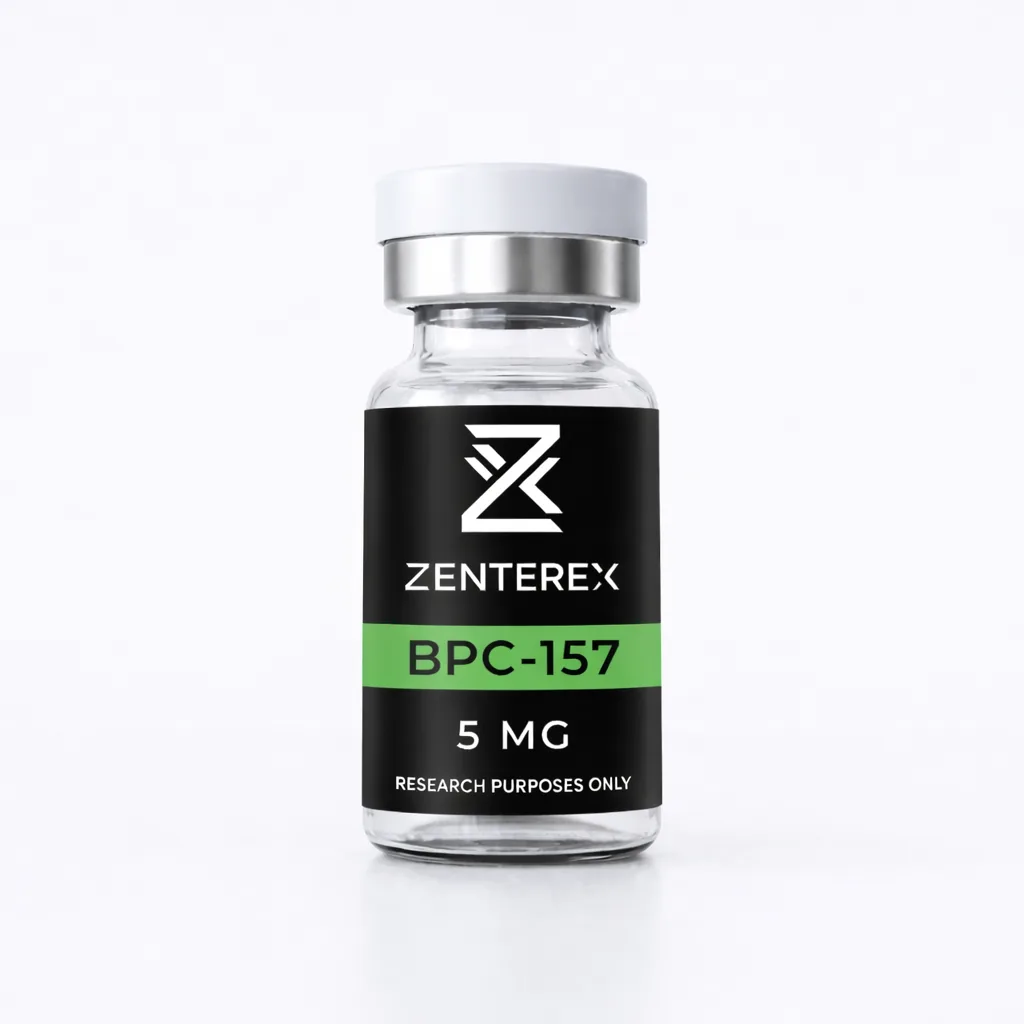
Cytoprotective Peptides
BPC-157
BPC-157 is a synthetic pentadecapeptide with the sequence Gly-Glu-Pro-Pro-Pro-Gly-Lys-Pro-Ala-Asp-Asp-Ala-Gly-Leu-Val. It corresponds to a partial sequence of a larger protein described in human gastric juice, from which it takes the name Body Protection Compound. Unusually for a peptide of this length it is reported to be stable in gastric acid, which is why much of the published work administers it orally in animal models rather than by injection. We supply it as a lyophilised powder at 5mg per vial with an independent batch certificate of analysis. It is one of the more heavily published research peptides in the catalogue, with most of the literature coming from a single research group in Zagreb over roughly three decades.
Learn More →
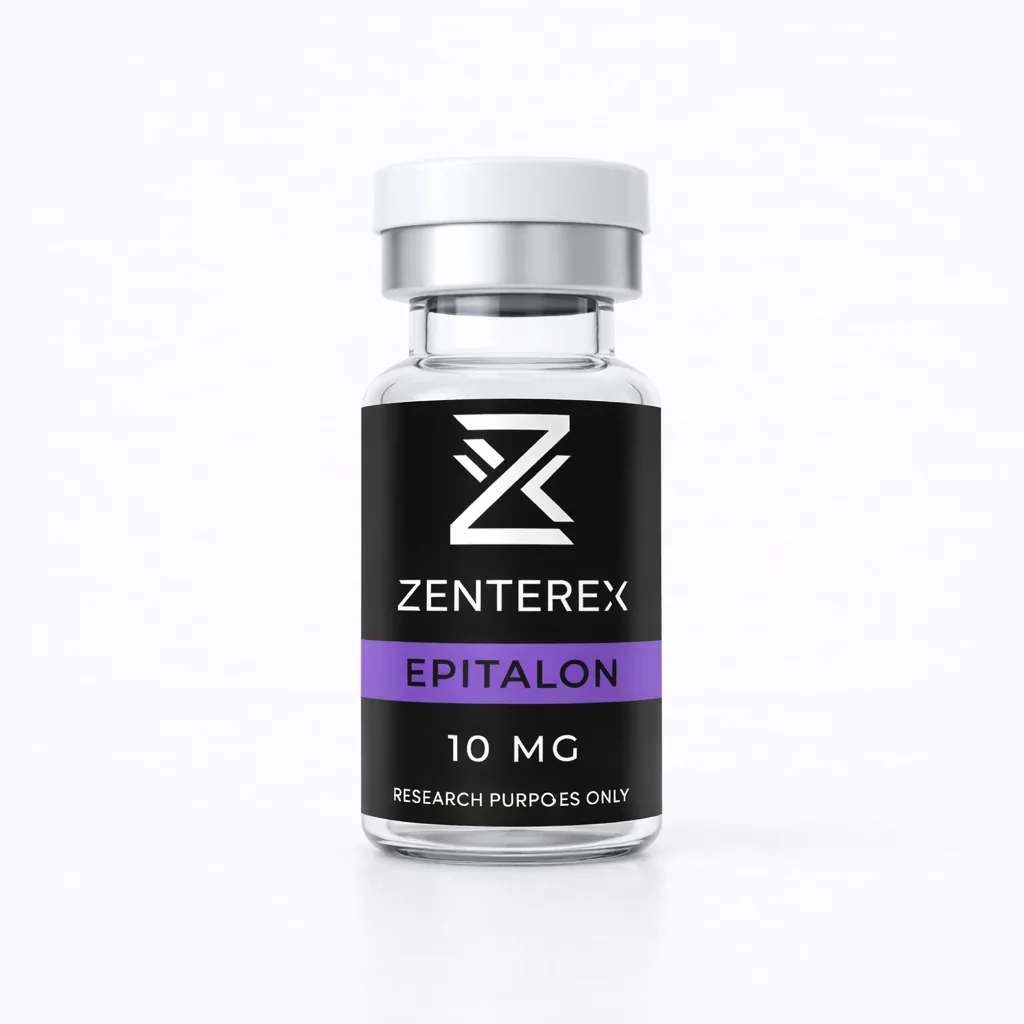
Synthetic Peptide Analogues
Epitalon
Epitalon (Epithalon) is a synthetic tetrapeptide derived from a sequence identified in pineal-gland extracts. Supplied as a lyophilised powder for in-vitro research use only.
Learn More →
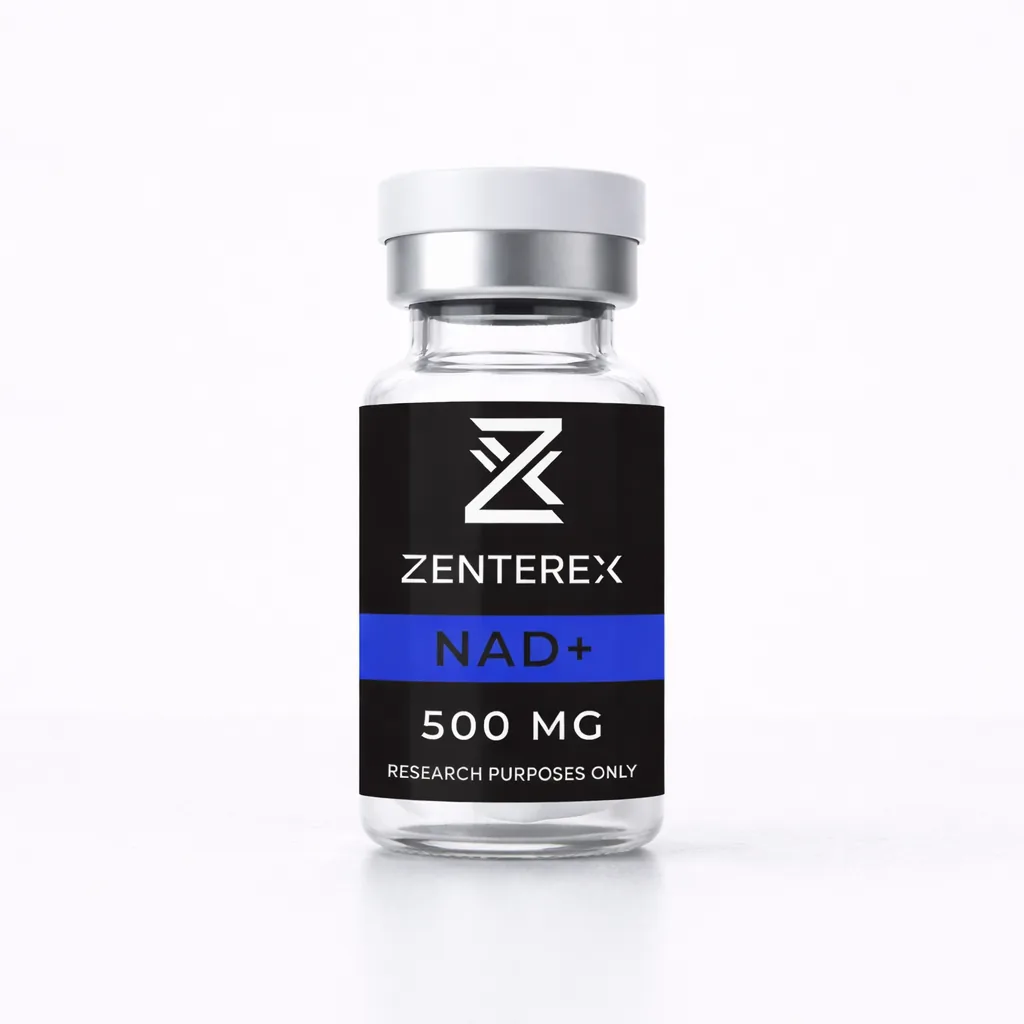
Cellular & Metabolic Compounds
NAD+
NAD+ is nicotinamide adenine dinucleotide, a redox coenzyme present in every living cell and one of the most studied molecules in biochemistry. It is not a peptide, and we group it under cellular and metabolic compounds for that reason. It cycles between an oxidised form, NAD+, and a reduced form, NADH, carrying electrons between the reactions of glycolysis, the citric acid cycle and oxidative phosphorylation. Beyond that classical role it is consumed as a substrate by three families of enzymes, which is what has driven the recent research interest. We supply it as a powder at 500mg per vial with an independent certificate of analysis.
Learn More →