
How Long Does a Lyophilised Peptide Remain Stable?
Stability is a rate, not an expiry date. What governs how long lyophilised material holds its characterisation, and why solution stability is a different question.
The honest answer is that it depends on the compound and the conditions.
Stability is better thought of as a rate than a date. But that deserves unpacking, so here is what actually decides it.
Stability is a rate
A peptide does not stay perfect until an expiry date and then fail. It breaks down all the time, at a rate set by its own chemistry and how you store it.
Think of a bar of chocolate rather than a carton of milk. There is no moment when it turns.
A stability figure says how long the material stays inside a defined specification, under stated conditions.
Change the conditions and the figure changes too. That is why a storage condition always comes with a published duration. A number on its own is not a stability claim.
What sets the rate
Four factors, in roughly descending order of importance for dry material.
Water. The biggest single factor, and the reason the material is freeze-dried at all. Most of the main damage routes need water. Take it out and you remove the ingredient they depend on.
Temperature. Chemical reactions run faster when warm, so cold slows everything down. That is why the published condition for most of our range is minus 20 degrees Celsius rather than a fridge.
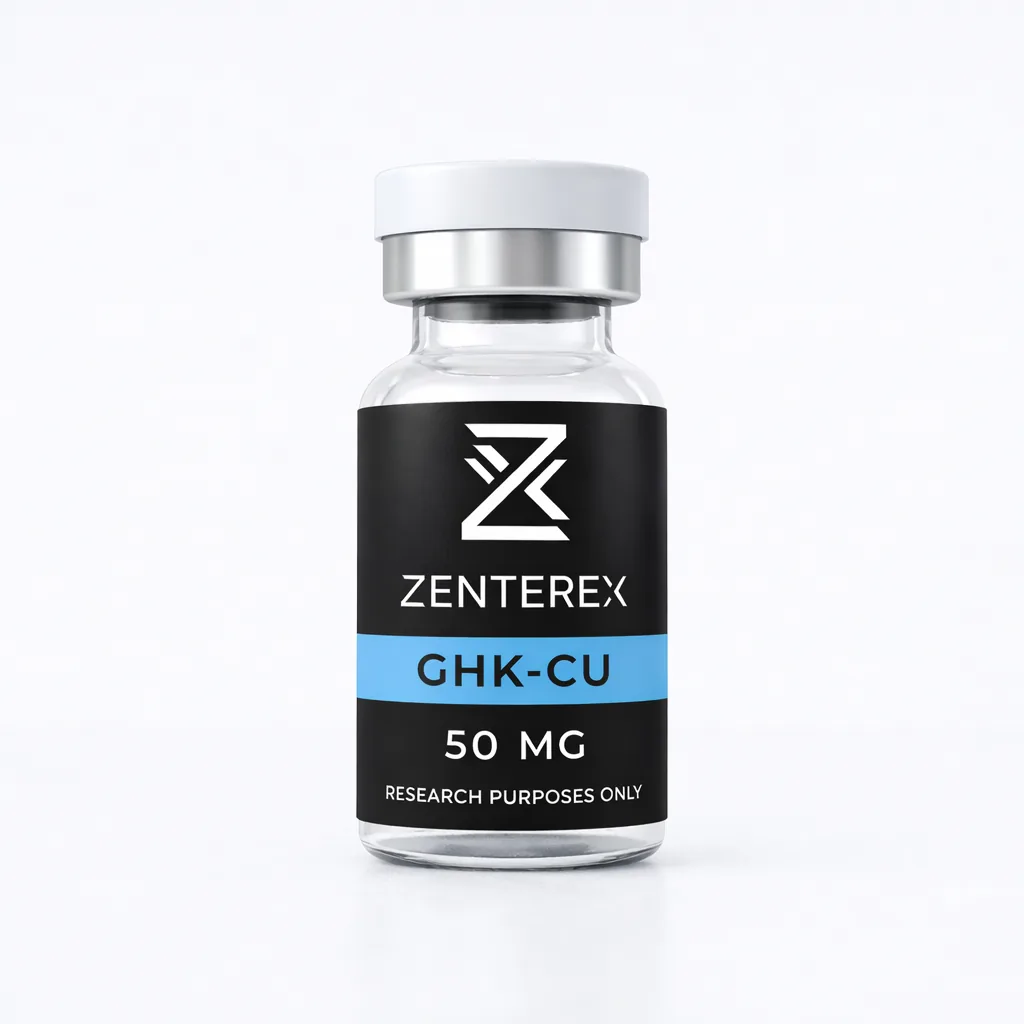
**Light.** Some beads are light-sensitive, and metal complexes such as GHK-Cu especially so. Keeping it dark is part of the published condition, not an optional extra.
The sequence itself. Some beads are simply more fragile than others. A sequence holding several of them breaks down faster than one holding none, under identical conditions.
That is why stability is specific to a compound rather than a property of peptides in general.
Dry and dissolved are different questions
This is the practical heart of it.
Freeze-dried powder, under published conditions, generally holds for months or years. That is what makes freezer storage of a research range workable at all.
Dissolved material is on a far shorter clock. Usually days to weeks, depending on the compound, the solvent and the temperature.
Once it is dissolved, the water freeze-drying removed is back. And so are the damage routes that need it.
That gap is large, and it is the single most useful thing to know.
Dissolving only what your next experiments need, and leaving the rest dry, is worth more than any amount of care over how you store the dissolved part.
The avoidable damage
Two handling habits cost more stability than the storage temperature does.
**Freezing and thawing repeatedly.** Each changeover damages the solution, and the losses add up. Splitting it into portions is the standard answer. Divide the stock once, so each portion goes through exactly one cycle.
Opening a cold vial. Take a vial straight from the freezer and open it, and it pulls in damp room air. That water condenses onto powder that was dried on purpose.
Letting it warm up first costs a few minutes. It avoids putting back the one thing most likely to wreck it.
What a certificate does and does not cover
A batch report describes the material at the time it was tested. It is a measurement, not a guarantee stretching forward through storage nobody saw.
That is not special to peptides. It is what any test certificate means.
It is also why the storage condition on a product page matters as much as the purity figure. The report says what left the lab. Storage decides how much of that is still true when you use it.
Batch reports for our range are published, each carrying its batch number and a verification key that resolves on the issuing lab's own site.
In short
Dry, cold and dark: a freeze-dried peptide holds up for a long time. Dissolved, warm, or cycled in and out of the freezer: far less so.
The published conditions on each product page differ by compound, because the chemistry does.
Everything in our catalogue is for lab research only. It is not a medicine, and it is not for people or animals to take.