

The Peptide Analogues Category: What It Contains
Four compounds studied in ageing cells, growth signals and pigment receptors. What the group holds, and why its URL and its label do not match.
Our peptide analogues group is the most mixed bag in the range. You cannot tell from the outside what is in it. Here is what it holds, and what ties the four together.
A note on the name
The group's web address is /products/peptide-analogues, but the page shows a different label. That mismatch is on purpose.
A group's address is a live URL that has built up search ranking over years, so we leave it alone. The label was rewritten later.
For anyone linking or finding their way around, the address is the reliable one. It is the same idea that makes a CAS number safer than a compound name, as our note on why CAS numbers matter explains.
What really defines the group is what is in it.
The four compounds
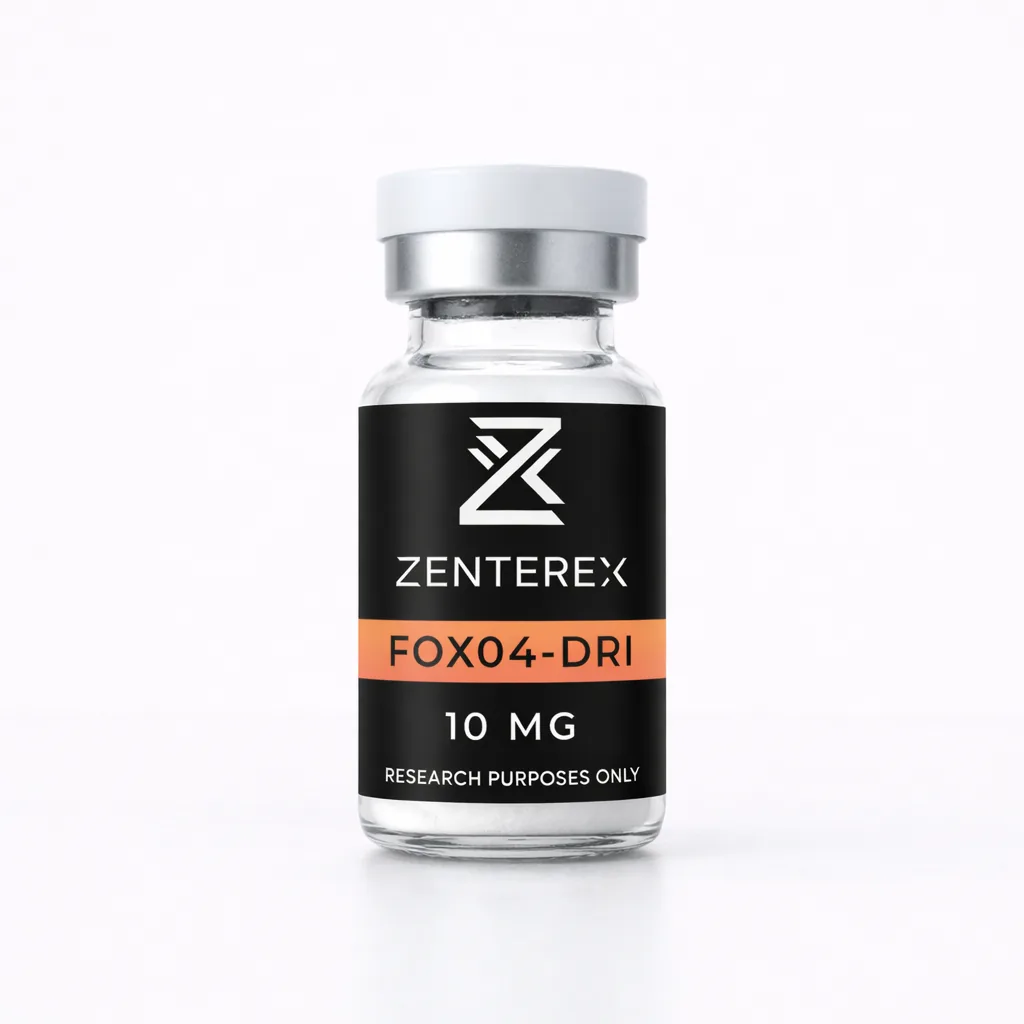
**FOXO4-DRI**, 2246.51 g/mol, CAS 2088986-26-7. A lab-made D-retro-inverso peptide, built to get in the way of two proteins meeting: FOXO4 and p53. Comes in a 10mg vial.
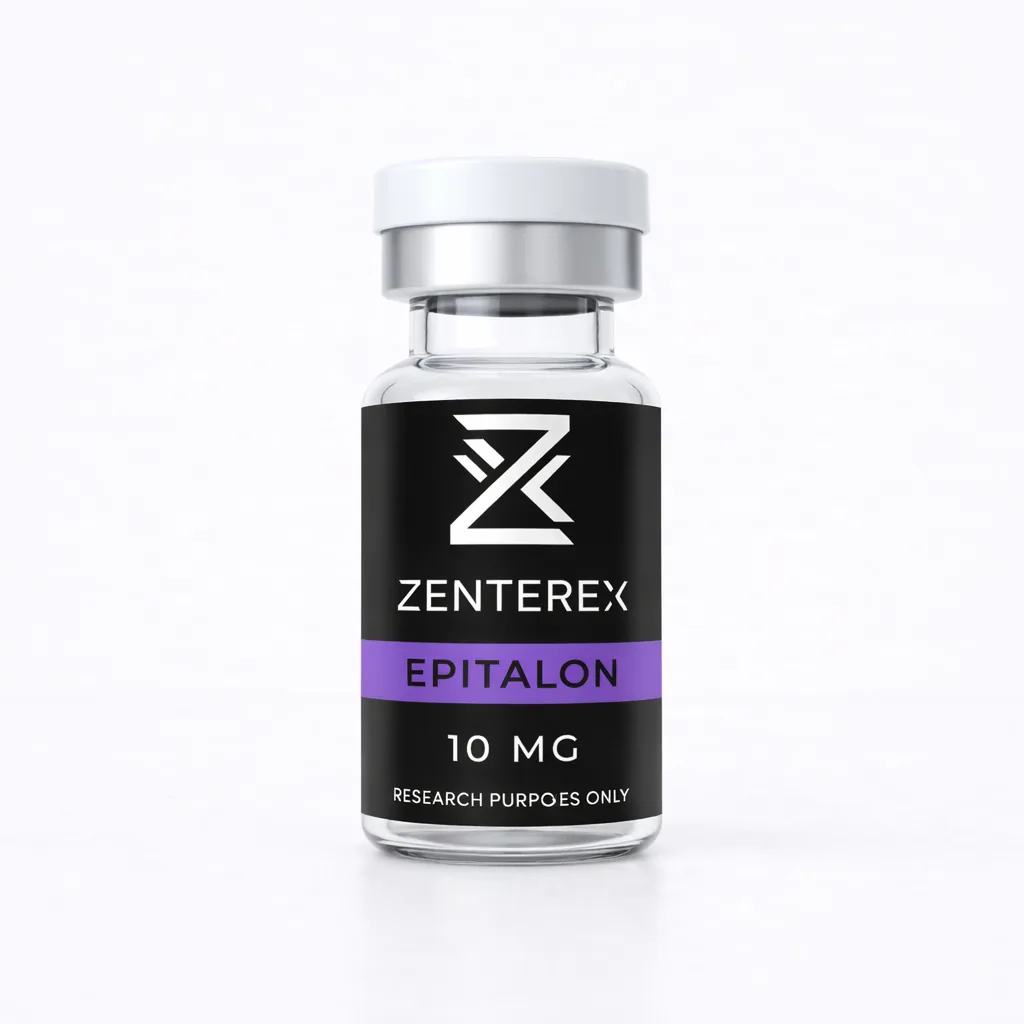
**Epitalon**, 390.35 g/mol, CAS 307297-39-8. A lab-made four-bead peptide, copied from a sequence found in pineal gland extracts. Comes in a 10mg vial.
**IGF-1 LR3**, roughly 9.11 kDa, CAS 946870-92-4. A copy of insulin-like growth factor 1, grown in cells rather than built by hand. It has an added tail at one end, and one bead swapped at position 3. Comes in a 1mg vial.
**MT-2**, 1024.18 g/mol, CAS 121062-08-6. A lab-made seven-bead ring. It acts across more than one pigment receptor rather than picking just one. Comes in a 10mg vial.
The weights span a factor of twenty-three, from a 390 g/mol four-bead peptide up to a 9.11 kDa protein. Three are built by hand in a machine. One is grown in cells. One is a ring. One is made entirely of mirror-image beads.
Four different design tricks
What makes this group interesting is that each compound solves the same problem a different way. The problem is that a plain peptide gets chewed up fast. Read together, the four are a tour of the options.
**FOXO4-DRI: armour the whole backbone.** DRI means the sequence is reversed and every bead swapped for its mirror image. The two changes largely cancel out. The side branches end up roughly where they started, but sitting on a backbone that enzymes cannot easily cut. Our note on D-retro-inverso peptides covers the design.
It is also the only thing in our range that targets two proteins meeting rather than a receptor or an enzyme. That is a hard target. Where two proteins touch, the surface is usually wide and flat, with no pocket for a molecule to sit in.
**MT-2: close it into a ring.** A ring has no loose ends, and loose ends are where the chain-trimming enzymes start. A ring also holds one shape instead of flapping about. Ring closure is often reported to change which receptors a molecule fits, and MT-2 is reported to hit several pigment receptors rather than one. As with Ipamorelin and GHRP-6, that is something to match to your question, not a mark of quality.
IGF-1 LR3: swap a bead and add a tail. Two published changes from the original. An added tail at one end, and one bead changed at position 3. Both are reported to change how it binds, and in particular how it deals with the carrier proteins that normally hold the natural version captive.
At roughly 9.11 kDa it also sits on the protein side of the line. That is why it is **grown in cells** rather than built bead by bead in a machine. Our notes on peptides and proteins and how peptides are made cover where that line falls.
Epitalon: change nothing. Four beads, nothing added or swapped. At 390.35 g/mol it is the smallest peptide in our range. The contrast is the point. Not everything in this group is engineered.
What researchers have looked at
These compounds share no mechanism, so the tests differ too.
FOXO4-DRI and Epitalon both turn up in research on ageing cells, but by different routes. One through two specific proteins meeting. The other through telomere length and ageing markers. That partial overlap is the nearest thing to a common thread the group has.
IGF-1 LR3 turns up in growth signalling work, measuring receptor binding and cell growth in culture.
MT-2 turns up in pigment receptor work, measuring how tightly it binds and whether it switches those receptors on.
What the spread means in practice
**Molecule counts differ enormously.** Take a 10mg vial of Epitalon at 390.35 g/mol against a 1mg vial of IGF-1 LR3 at 9.11 kDa. They are hundreds of times apart in molecule count. Comparing this group by weight is meaningless. Our calculator converts.
The grown-in-cells one behaves differently. A 9.11 kDa protein clumps more readily than a four-bead peptide, and it is fussier about conditions that unfold it. Its 1mg fill is also barely visible against the glass, which is normal.
Solubility and storage are per compound. All four store at minus 20 degrees Celsius, away from light. But what each dissolves in is on its own product page, and those figures do not carry across.
Paperwork
Batch reports for FOXO4-DRI, Epitalon and IGF-1 LR3 are published, with two Epitalon batches available. Each confirms identity by weighing the molecule against the expected value, and reports purity by chromatography.
FOXO4-DRI has one analytical catch worth knowing. A bead and its mirror image weigh exactly the same. So weighing the molecule cannot prove which version you have, and that handedness is the entire point of a DRI peptide. Confidence rests instead on the way it was made, and on how it behaves in chromatography.
Everything in our catalogue is for lab research only. It is not a medicine, and it is not for people or animals to take.