
What Is GHK-Cu? A Plain-English Guide
GHK-Cu explained simply: the copper peptide found in human blood, why the copper is the whole point, what collagen research has looked at, and what is in the vial.
GHK-Cu is our best seller. The interesting part is not really the peptide. It is the copper.
First: what is a peptide?
A peptide is a short chain of amino acids. Amino acids are the building blocks your body uses to make proteins.
Think of beads on a string. A few beads is a peptide. Hundreds is a protein.
GHK-Cu is only three beads. That makes it one of the smallest things we sell.
The copper is the point
Three amino acids on their own would be dull. What makes this trio interesting is its shape. It folds into a near-perfect pocket for one copper atom.
The three are glycine, histidine and lysine. In the standard shorthand that is G, H and K, which is where the name comes from. Cu is the chemical symbol for copper.
Histidine does the gripping. Its side branch is very good at holding metal atoms. Here it works with the rest of the chain to clamp a copper atom tight.
So GHK-Cu is a three-bead chain wrapped around a copper atom. The copper is not an additive. It is not a contaminant. It is part of the molecule, and the quoted weight of 403.91 includes it.
Why it is blue
Because of the copper.
Copper compounds like this soak up some colours of light and bounce back blue. So the powder is blue, and so is any liquid you make from it. If you have not seen it before, it looks wrong. It is not. A colourless GHK-Cu solution would be the thing to worry about.
Where it was found
GHK was first found in human blood in the 1970s. A researcher was looking at why blood from younger donors behaved differently from older donors in lab cultures.
So it is not an invented compound. It is a copy of something already in people, made in a lab instead of taken from blood.
What researchers have looked at
Published work is in cells in dishes and in animals, not people. There are three main threads.
Collagen and the scaffolding between cells
The biggest thread, and where most searches land.
Collagen is the protein that gives skin, tendons and other tissue its structure. It is part of a wider mesh called the extracellular matrix. Think of it as the scaffolding cells build around themselves to hold their shape.
Published studies grow fibroblasts in dishes. Fibroblasts are the cells that make collagen. The studies add GHK-Cu and measure how much collagen and scaffolding protein the cells make. Those are measurements of cell behaviour in a dish.
Copper delivery
A separate thread looks at the peptide mainly as a carrier. Copper is essential in tiny amounts but harmful loose, so the body never lets it wander. Something always escorts it. Some research looks at GHK as one of those escorts. That is chemistry more than biology.
Antioxidant measurements in cultured cells
Published work reports measurements to do with oxidation in cell culture. Copper has its own chemistry here, which is exactly why the next section matters.
Two things to watch when reading about it
GHK and GHK-Cu are not the same thing. Some published work uses the bare peptide with no copper. Most of the reported activity is put down to the copper. So a study on the metal-free version tells you little about the complex. Check which one a paper used.
Copper does things on its own. A well-designed study also tests plain copper at the same strength. That shows the result came from the complex, not just the metal. Published work varies in how carefully it does this.
What you get in the vial
If you order GHK-Cu from us:
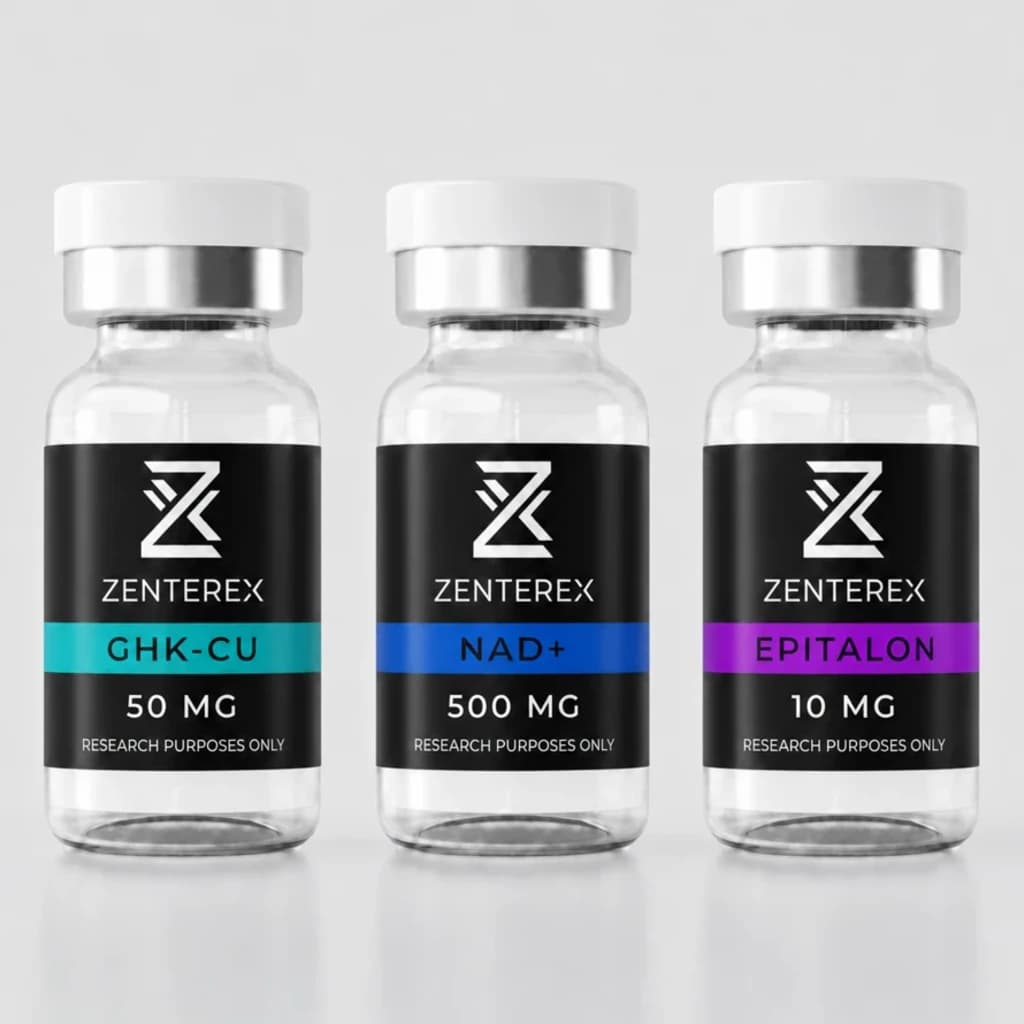
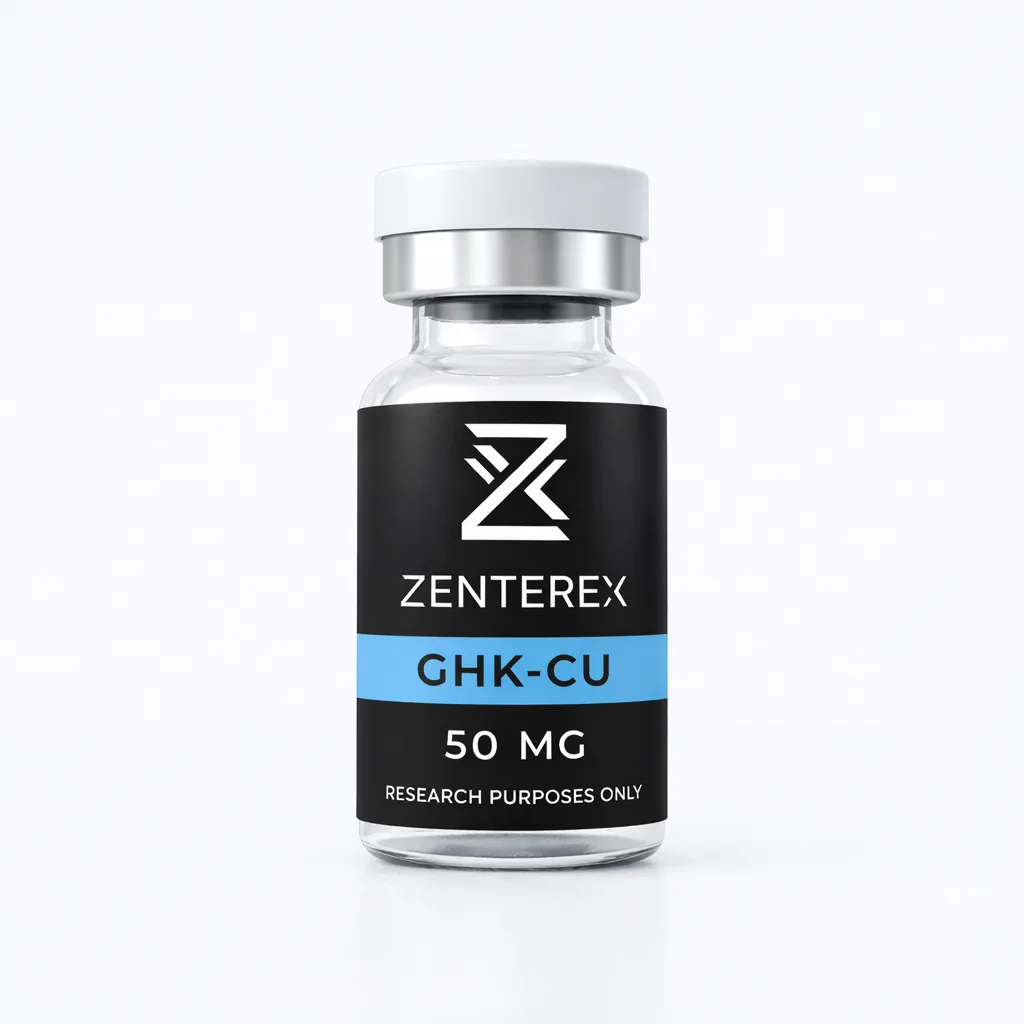
- A glass vial holding 50mg of blue powder
- Freeze-dried, so it survives the post and stores well
- Keep it at minus 20 degrees Celsius, away from light
- Molecular weight 403.91, CAS number 89030-95-5
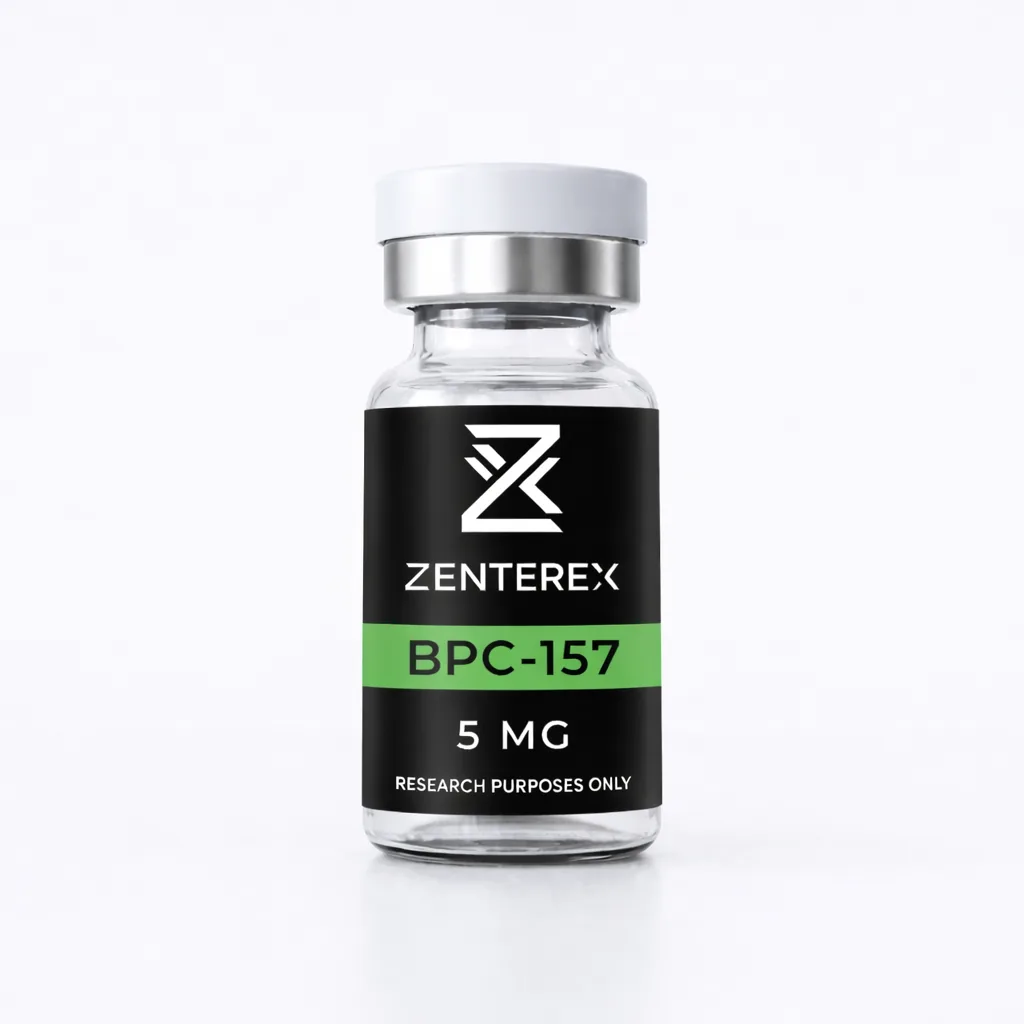
**Why 50mg when most vials are 5 or 10?** Because it is a very light molecule. A milligram measures weight, not how many molecules you get. GHK-Cu is light enough that 50mg holds roughly 35 times as many molecules as a 5mg BPC-157 vial. The fill is set to give a sensible working amount. Our note on vial sizes explains it properly.
Before you dissolve it: one warning
GHK-Cu is the only thing we sell where the wrong liquid takes the molecule apart.
Some lab buffers contain chelators. The common one is EDTA. A chelator's job is to grab metal atoms, and EDTA grips copper harder than the peptide does. So it pulls the copper straight out.
What you are left with is no longer GHK-Cu. Nothing visible happens to warn you.
Check your buffer before you add anything. Plain sterile or bacteriostatic water is fine. Our step-by-step guide covers it.
Light matters more here too. The compound is blue because it soaks up light, and soaked-up light is energy. That energy can drive unwanted chemistry at the copper. Keep it dark.
How you check it is really GHK-Cu
Every batch goes to an independent lab. The lab weighs it very exactly against what this three-bead copper complex should weigh. That confirms it is the right molecule. It also measures how much of the contents is that molecule.
Batch reports are published for every release. Each carries a code you can check with the issuing lab, to confirm the report is genuine and unedited.
Available with
GHK-Cu appears in two bundles, always as its own separate vial. It comes with BPC-157 and TB-500 in the three-compound bundle. It also comes with NAD+ and Epitalon in another.
The short version
GHK-Cu is a three-bead peptide wrapped around a copper atom. It was first found in human blood in the 1970s. Research has mostly looked at collagen and scaffolding protein made by cells in dishes. It is blue because of the copper. It comes in a 50mg vial because it is a light molecule. And buffers that grab metals will strip the copper out.
It is sold as a lab reference sample only, and is not for people or animals to take.
If something here is unclear, ask us.