
What Is NAD+? A Plain-English Guide
The chemistry of nicotinamide adenine dinucleotide, a redox coenzyme rather than a peptide, and its documented role in cellular electron-transfer research.
NAD+ is the compound in our range least like the rest of it. It is not a peptide. It has no sequence. Its published role is not receptor signalling at all. It is the basic electron chemistry that cell energy runs on.
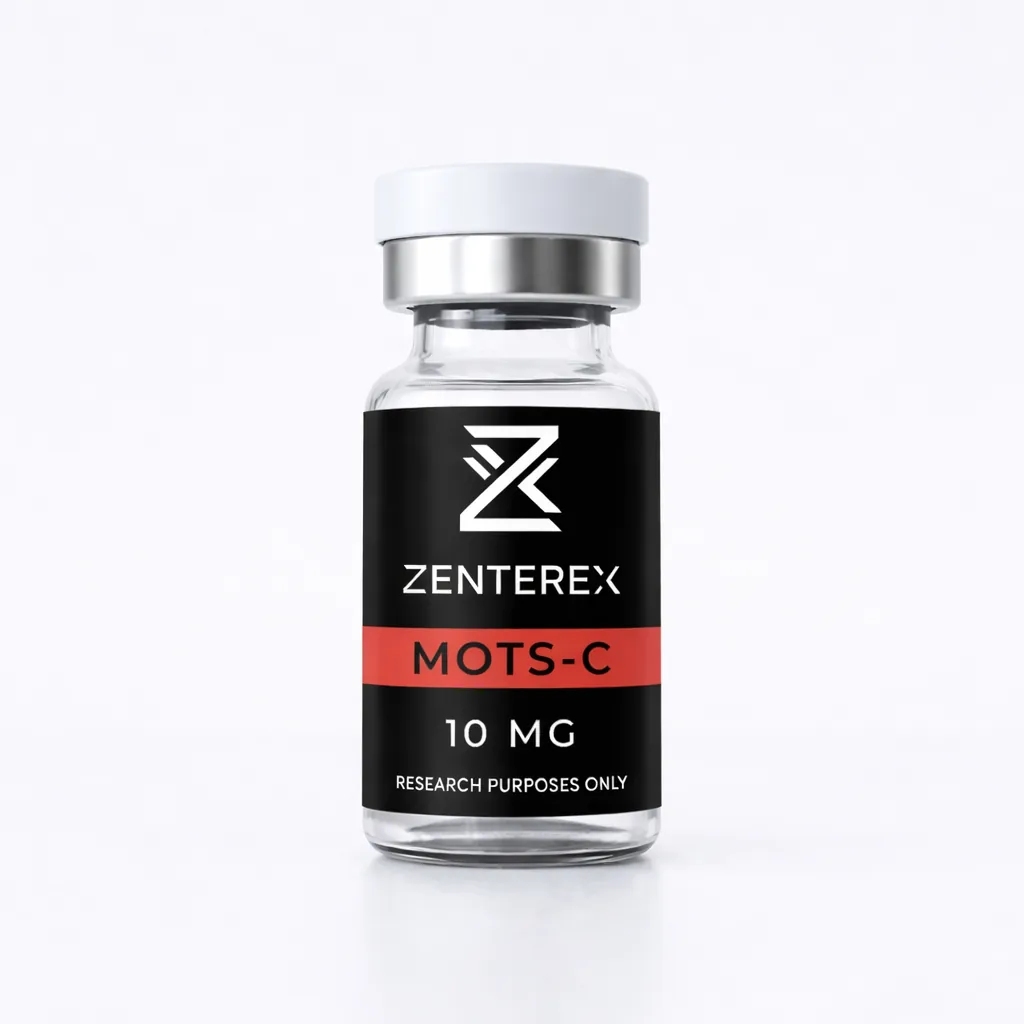
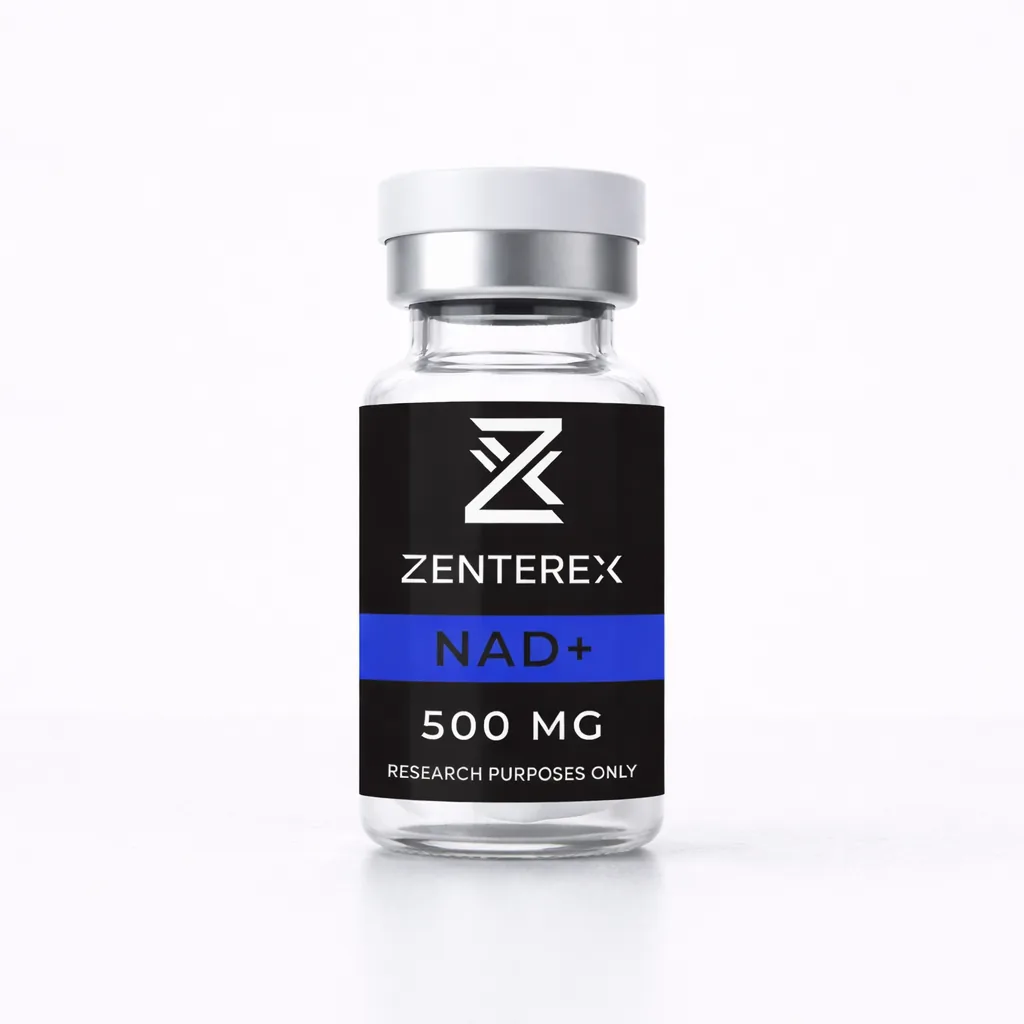
NAD+ comes as a freeze-dried powder, for lab research only.
What the molecule is
Nicotinamide adenine dinucleotide is a dinucleotide: two nucleotides joined through their phosphate groups. One carries an adenine base, the other a nicotinamide group.
- Molecular weight: 663.43 g/mol
- CAS number: 53-84-9
- Physical form: freeze-dried powder
- Store it at minus 20 degrees Celsius, away from light
- Supplied as: 500mg vial
The 500mg fill is by far the largest in our range. That is about fifty times the usual 5 to 10mg peptide vial. That reflects how it gets used. It is a helper molecule, present in bulk in a test system. It is not a signal that works in tiny traces.
Its low CAS number, 53-84-9, is a small historical marker. Registry numbers are handed out in order. A number that short means the compound was described early in the chemical record.
Why it is not a peptide
Worth stating plainly, because it sits in a range of peptides.
A peptide is a chain of amino acid residues joined by peptide bonds. NAD+ contains no amino acids and no peptide bonds. It is built from nucleotides. Those are the same building blocks as DNA and RNA, joined by phosphate links.
The result is that several fields on a normal product page are simply absent. There is no sequence, because there are no residues to sequence. Identity rests on the formula and the weight. Our note on peptide sequences covers the non-peptides we sell.
Methylene Blue, a phenothiazine dye, and 5-Amino-1MQ, a small-molecule quinolinium, are in the same position.
The redox chemistry
This is the whole of what NAD+ is, and it is elegantly simple.
The nicotinamide ring can accept and donate a pair of electrons along with a proton. Accepting them converts NAD+ to its reduced form, NADH. Donating them converts NADH back to NAD+. The molecule flips between the two states without being used up. That makes it a helper, not a fuel.
That cycle is the electron-carrying step in a great deal of cellular metabolism. Reactions that release electrons hand them to NAD+. That turns it into NADH. NADH then carries them to the electron transport chain, where they help make ATP.
The NAD+/NADH ratio is something you can measure about a cell. A lot of the research is about that ratio, not the molecule alone.
Published research context
Published studies in dishes and in animals examine NAD+ in connection with the following.
Redox reactions in cellular metabolism
The core published role, and the most extensively established. NAD+ functions as an electron acceptor in oxidation reactions across central metabolism.
Sirtuin enzyme activity
A distinct area. Sirtuins are a family of enzymes that need NAD+ to work. They use it up rather than recycling it. So the amount of NAD+ in a cell connects to enzyme control. It is a big research field in its own right.
Mitochondrial function in culture
Because the electron transport chain is mitochondrial, NAD+ availability connects to mitochondrial research. This is the common ground with MOTS-C and SS-31, the other two in our cellular peptides group. All three get there by completely different routes.
Handling notes specific to this compound
Two points that do not arise for the peptides.
The oxidised and reduced forms are different materials. NAD+ and NADH are chemically distinct with different molecular weights and different stability profiles. Documentation and research refer to specific forms, and confusing them is a straightforward error. We supply NAD+, the oxidised form, and the product name states it.
Precursors are not the same compound. Nicotinamide riboside, nicotinamide mononucleotide and nicotinamide are related molecules that feed into NAD+ metabolism. They are separate substances with their own CAS numbers. Published work on one is not published work on another. This is a frequent source of confusion in secondary sources.
The large 500mg fill also makes weighing easier than a small peptide vial does. Our calculator does the sums for any of them.
Documentation
Batch analysis is published for every release, and there are currently several NAD+ batches. Identity is confirmed against the theoretical mass of 663.43 g/mol and purity reported by chromatography.
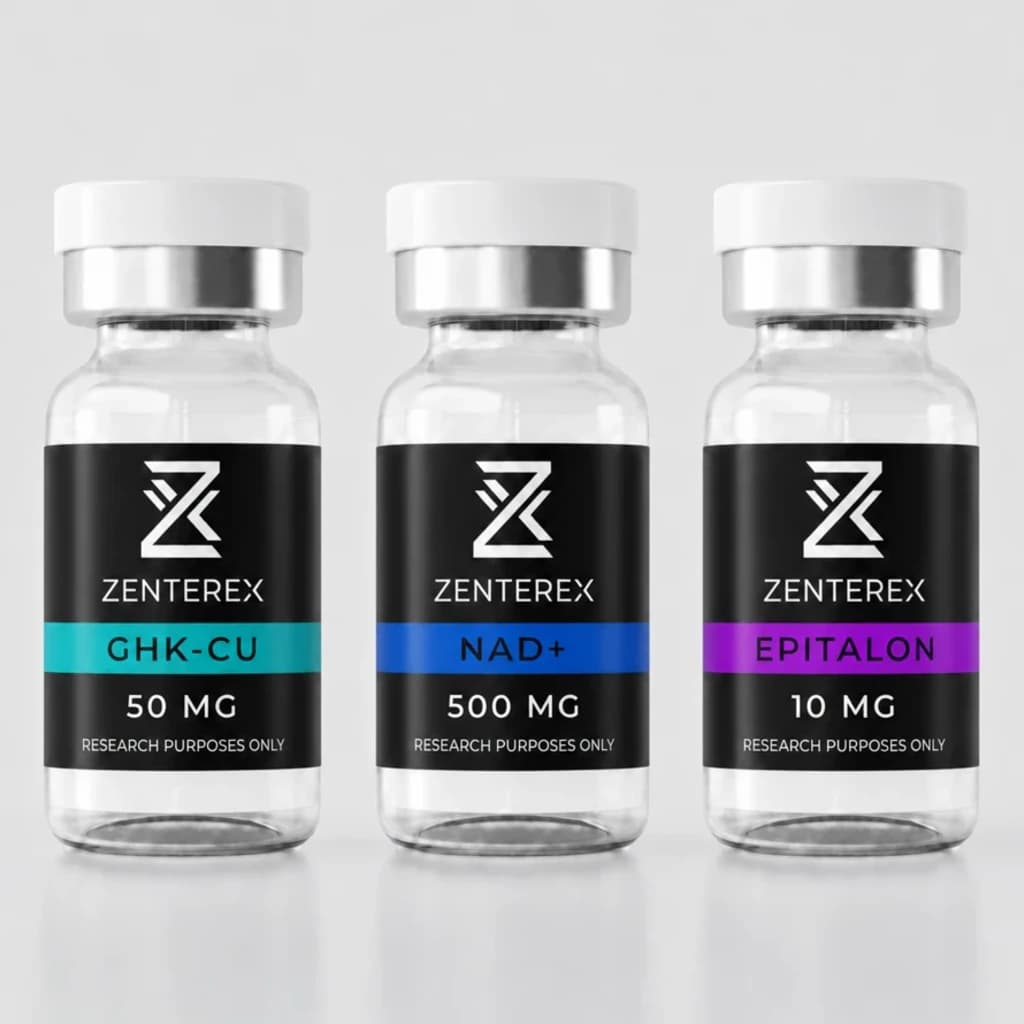
NAD+ comes in two bundles. One pairs it with MOTS-C and SS-31, as a mitochondrial research bundle. The other pairs it with GHK-Cu and Epitalon. Both hold separate freeze-dried vials.
Everything we sell is for lab research only. It is not a medicine, and it is not for people or animals to take.