

Cellular Peptides
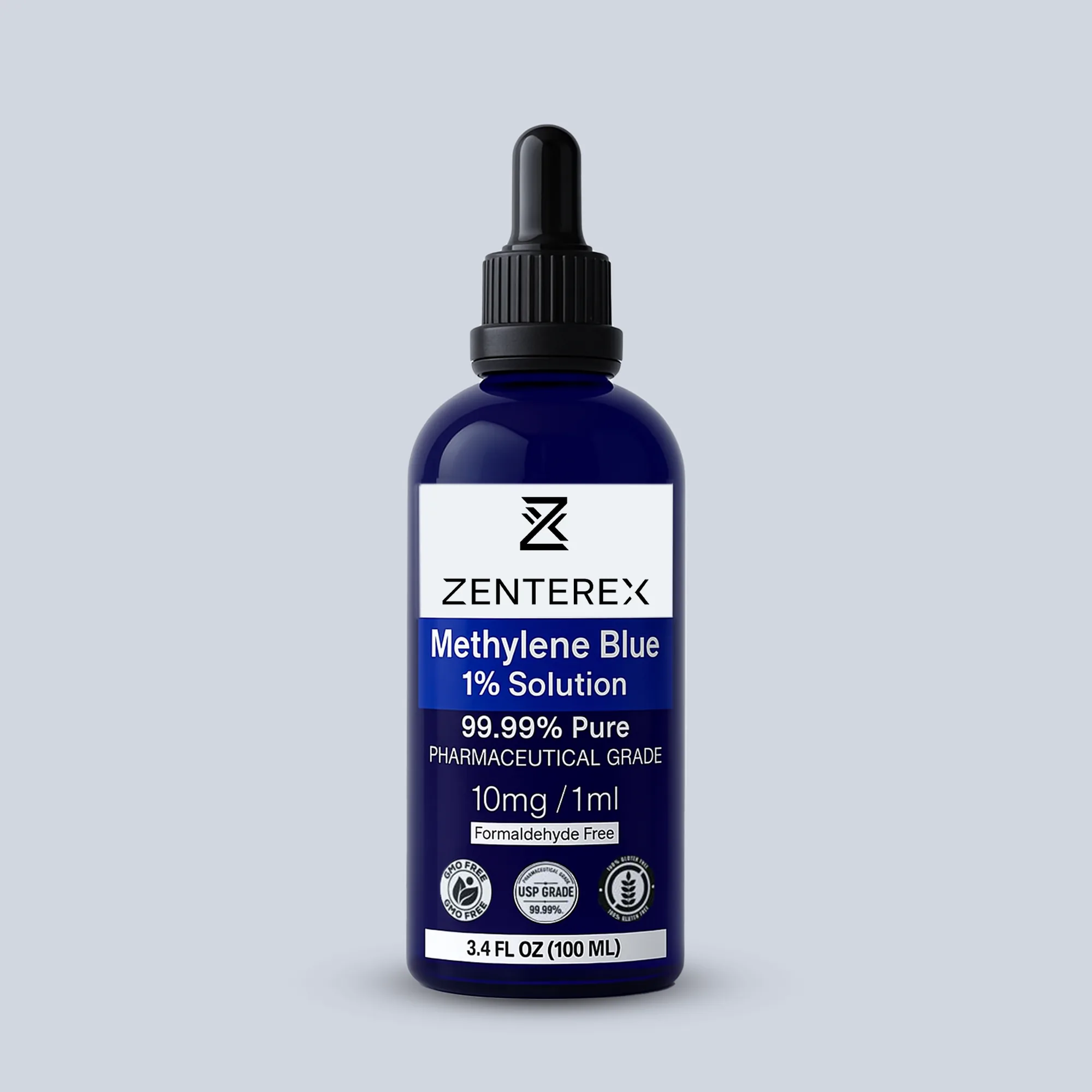
Methylene Blue
100mlC₁₆H₁₈ClN₃S
Key Research Findings
- Established as a histological and biochemical reagent in published lab protocols.
- Published cell-culture studies on alternative electron-shuttle activity at complex I–IV.
- MAO-inhibition assay data at higher concentrations.
Overview
Methylene Blue is a synthetic phenothiazine dye. Supplied as a powder or solution for in-vitro research use only.
Mechanism of Action
Characterised in published biochemistry as an electron-shuttling redox compound active in mitochondrial electron-transport-chain assays. Not intended for human or veterinary use.
Research Effects
Electron-Shuttle Activity
Extensive ResearchCharacterised in classical biochemistry as a redox-cycling electron carrier in mitochondrial respiratory-chain assays.
MAO-Inhibition Assays
Moderate ResearchReported in enzyme assays as an inhibitor of monoamine oxidase at higher concentrations.
Photodynamic Studies
Moderate ResearchEstablished photodynamic and antimicrobial reagent in published in-vitro protocols.
Laboratory Research Only — All information on this page is provided for scientific research purposes only. This is a certified reference material sample sold and distributed for laboratory research only.
Quick Facts
Research Status Key
Related Peptides
Cellular Peptides
NAD+
Nicotinamide Adenine Dinucleotide (NAD+) is a coenzyme central to cellular electron-transfer chemistry. Supplied as a lyophilised powder for in-vitro research use only.
Learn More →
Cellular Peptides
SS-31
SS-31 (Elamipretide) is a synthetic Szeto-Schiller tetrapeptide. Supplied as a lyophilised powder for in-vitro research use only.
Learn More →
CNS Research Peptides
Semax
Semax is a synthetic heptapeptide analogue of the ACTH(4-10) fragment. Supplied as a lyophilised powder for in-vitro research use only.
Learn More →