
What Is the Difference Between a Peptide and a Protein?
The boundary between peptide and protein is a convention rather than a chemical fact. Where the line is usually drawn and what actually changes across it.
Peptides and proteins are made of the same stuff, in the same way. The difference is a matter of convention, and of behaviour.
It is worth knowing where the line sits, and what actually changes on either side of it.
The same chemistry
Both are chains of amino acids joined end to end. Same building blocks, same kind of join.
There is no chemical boundary anywhere along the length. No change of bond, no break in the pattern.
Build a chain one bead at a time, from two beads to two thousand, and nothing happens at any point that would justify a new name. The vocabulary is ours, not nature's.
Where the line is usually drawn
Convention puts it at about fifty beads. Fifty or fewer is a peptide. Longer is a protein.
Some sources say forty, some say sixty. Nobody is wrong, because there is nothing to be wrong about.
There are finer terms inside the peptide range. Oligopeptide means a short chain, up to ten or twenty beads. Polypeptide means a longer one, and also a single chain within a protein made of several.
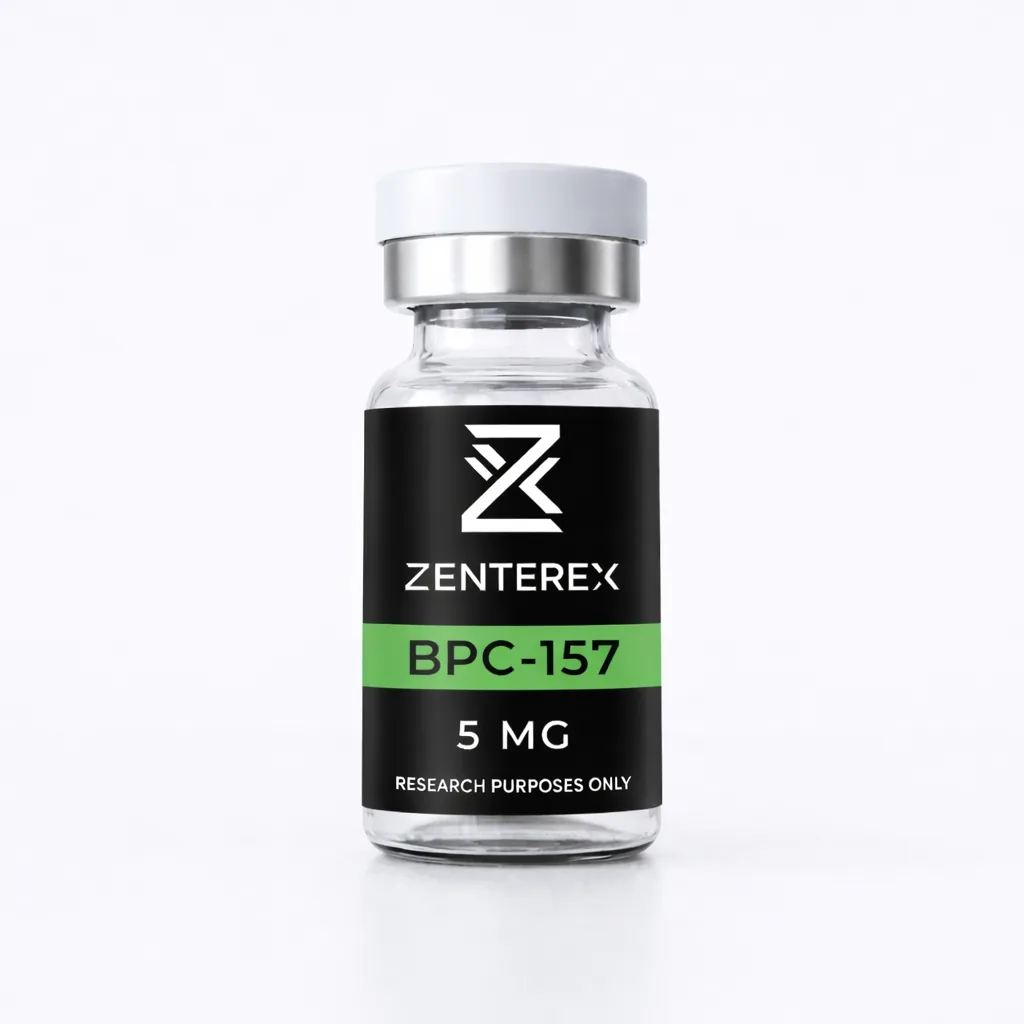
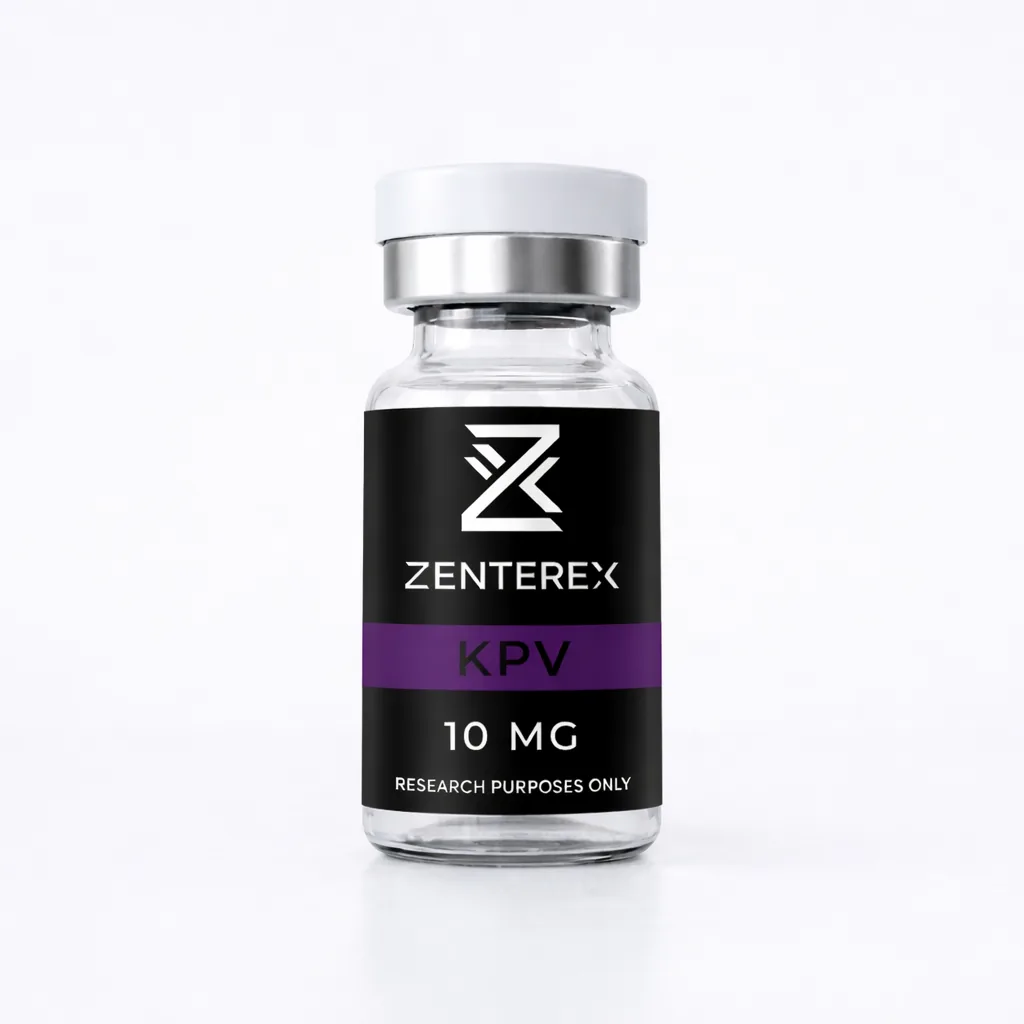
Our range sits mostly at the short end. KPV has three beads. BPC-157 has fifteen. CJC-1295 (No DAC) has twenty-nine. All comfortably peptides on any convention.
What actually changes with length
The line is arbitrary. But it tracks something real, and that part is worth holding onto.
Folding. Short chains are floppy and do not settle into one fixed shape. Longer chains fold into a definite shape, and for a protein that shape is usually the whole point.
Think of a shoelace against origami. Crumple the lace and it is still a lace. Crumple the origami and it is just paper.
So an unfolded protein has lost what it does. A short peptide has less to lose.
Where the activity comes from. A peptide usually works through its sequence directly: a stretch of beads a receptor recognises.
A protein often works through beads that sit far apart in the sequence and are only brought together by the fold.
How they are made. Up to about fifty beads, you can build a chain by machine, one bead at a time. Longer than that, it is usually grown in a host organism instead.
You can see that difference in our own range. IGF-1 LR3 is grown in cells rather than built by machine. At roughly 9.11 kDa, its weight is quoted in kilodaltons rather than g/mol.
It sits on the protein side of the line, and both the production route and the units say so.
Why fragments blur the boundary
Several compounds in our range are fragments of much larger molecules, which puts the two groups in direct contact.
TB-500 copies a piece of thymosin beta-4, a 43-bead parent. HGH-Fragment 176-191 is a sixteen-bead stretch of human growth hormone, which is nearly two hundred beads long.
The practical point is that a fragment is not its parent. It has none of the parent's fold, so none of what the fold provided carries across.
Published work on the full protein does not automatically tell you about the fragment. Muddling the two is one of the commonest errors in second-hand sources.
Does the distinction matter practically?
For handling, the length matters more than the label.
Longer chains have more places where a step can fail, so their impurities are messier. They have more beads that can oxidise. Bigger molecules clump more readily. And a folded molecule can be unfolded by conditions a short floppy peptide would shrug off.
None of that depends on what you call the chain. It depends on how long it is and how it was built. That is why storage, solubility and handling on each product page are per compound rather than per group.
For terminology, see our research peptide glossary. For how sequences are written and why direction matters, see our note on peptide sequences.
Everything in our catalogue is for lab research only. It is not a medicine, and it is not for people or animals to take.