
What Is Epitalon? A Plain-English Guide
Epitalon explained simply: the smallest peptide we sell, where it came from, and the one check that matters most when reading about it.
Epitalon is the smallest peptide we sell, and the least engineered. Four beads. Nothing added, nothing swapped, no protective cap.
Everything interesting about it is in its research history, not its chemistry.
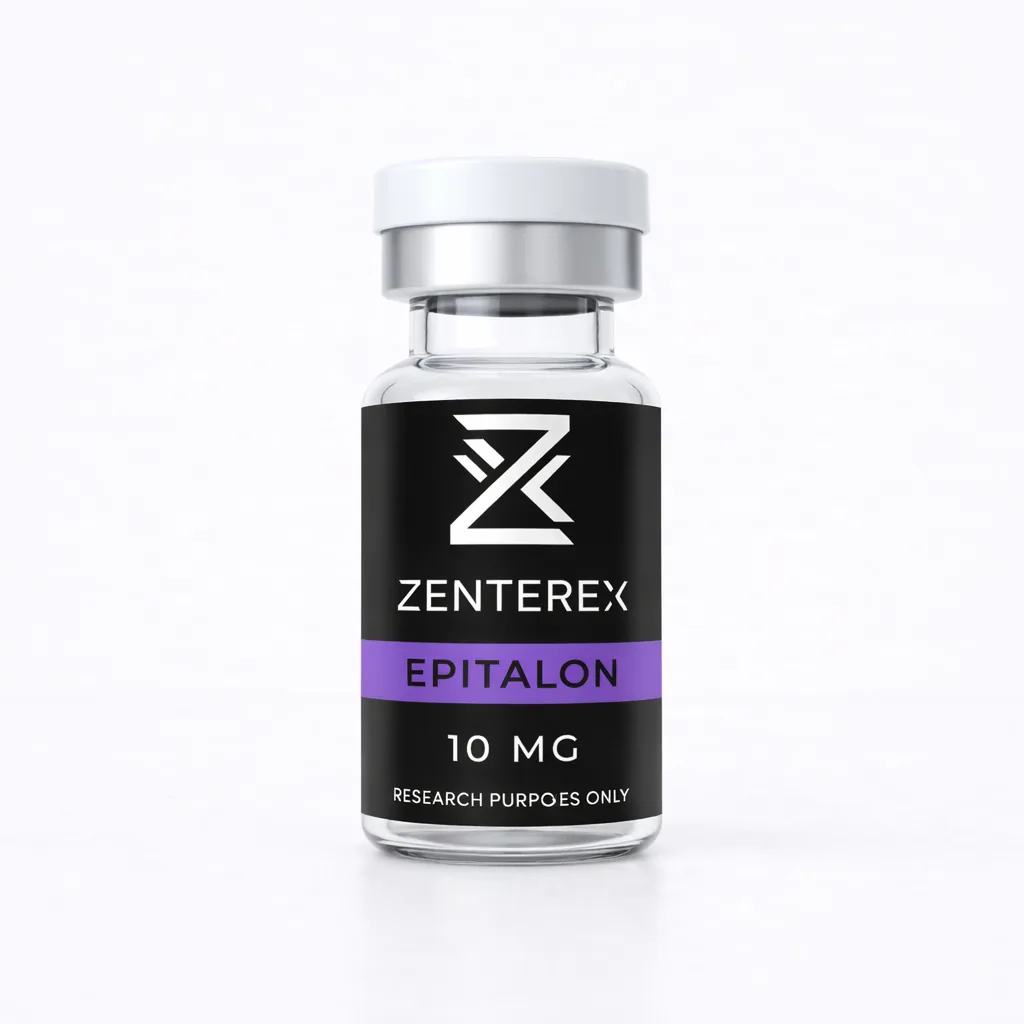
Epitalon comes as a freeze-dried powder, for lab research only.
What the molecule is
Epitalon, also written Epithalon, is a lab-made four-bead peptide. Its sequence was worked out from research on pineal gland extracts.
- Molecular weight: 390.35 g/mol
- CAS number: 307297-39-8
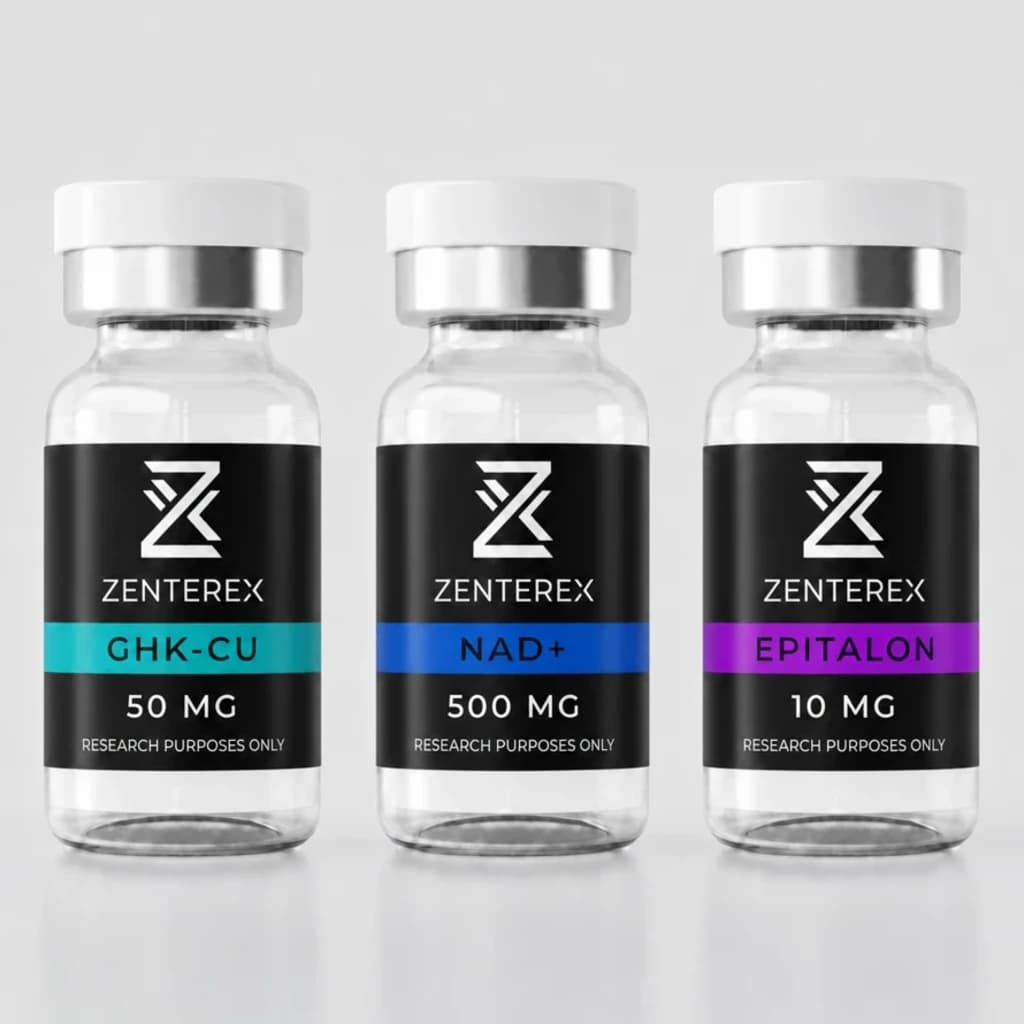
- Comes as a freeze-dried powder, in a 10mg vial
- Store it at minus 20 degrees Celsius, away from light
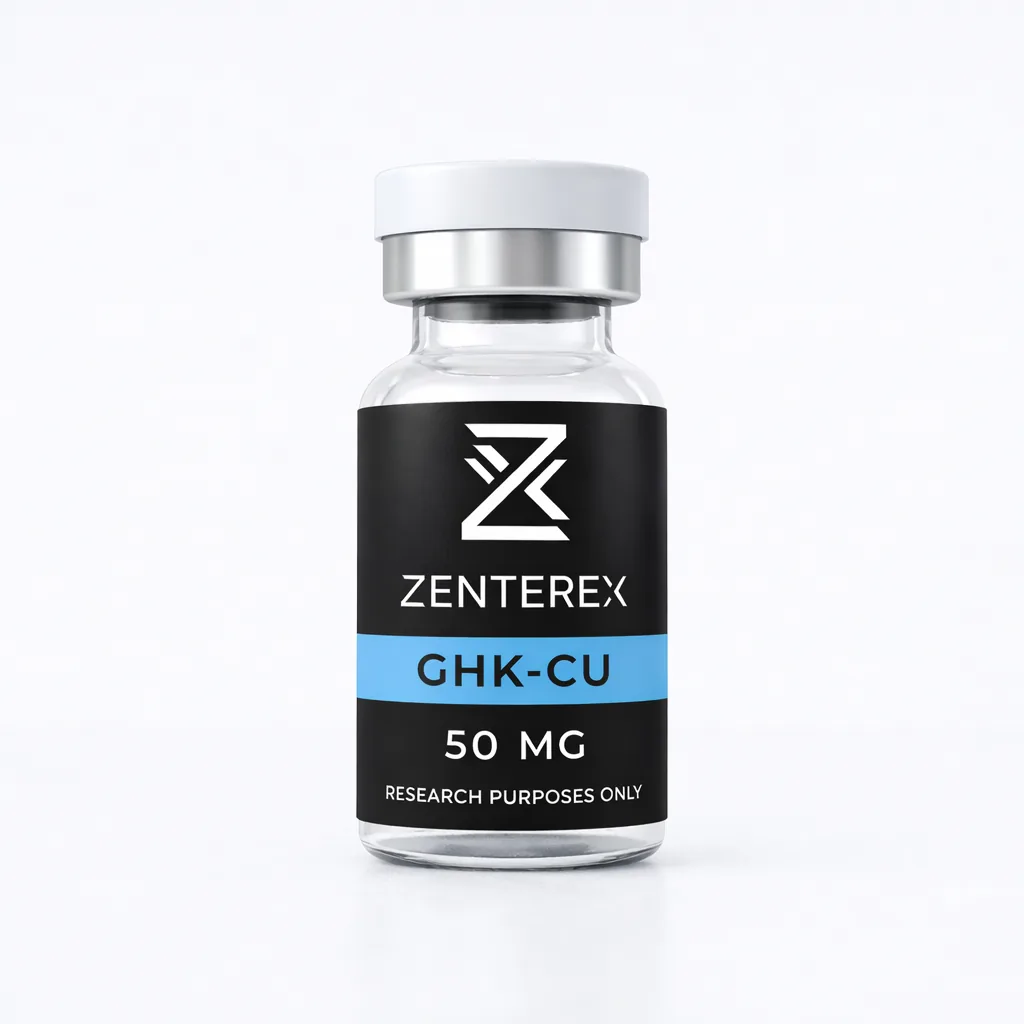
At 390.35 g/mol it is the lightest peptide we supply. Just under the copper complex GHK-Cu at 403.91 g/mol, and about a twenty-third of IGF-1 LR3.
So a 10mg vial holds a very large number of molecules. Comparing it by weight against something bigger is meaningless without converting. Our calculator does it.
The extract problem
Where the compound came from explains a stubborn problem in reading its research.
Epitalon grew out of work on epithalamin. Epithalamin is an extract made from pineal gland tissue. An extract is a mixture of whatever the process happened to pull out. It is not one defined substance.
Epitalon is a lab-made four-bead peptide whose sequence was identified from that work. It has a formula, a weight and a CAS number.
That difference matters far more than it sounds. A large part of the published research is about the extract, not the peptide.
Think of it as the difference between orange juice and vitamin C. You can show something about the juice without having shown anything about any one ingredient in it.
So a finding reported for epithalamin is not automatically a finding about Epitalon. Second-hand sources mix the two constantly, and this is the single most important thing to check when reading here.
It is the same class of mistake as giving a parent protein's properties to a fragment of it, as with TB-500 and thymosin beta-4.
What researchers have looked at
Published studies in dishes and in animals cover three areas.
Telomere length
The most reported area. Telomeres are repeated stretches of DNA that cap the ends of chromosomes. They get shorter each time a cell divides, a bit like a plastic tip wearing off a shoelace.
Published dish work reports measurements of telomere length, and of telomerase, the enzyme that rebuilds them, in culture.
Markers of cell ageing
Published work reports measurements of markers for cellular senescence. That is the state where a cell stops dividing for good but stays alive and active.
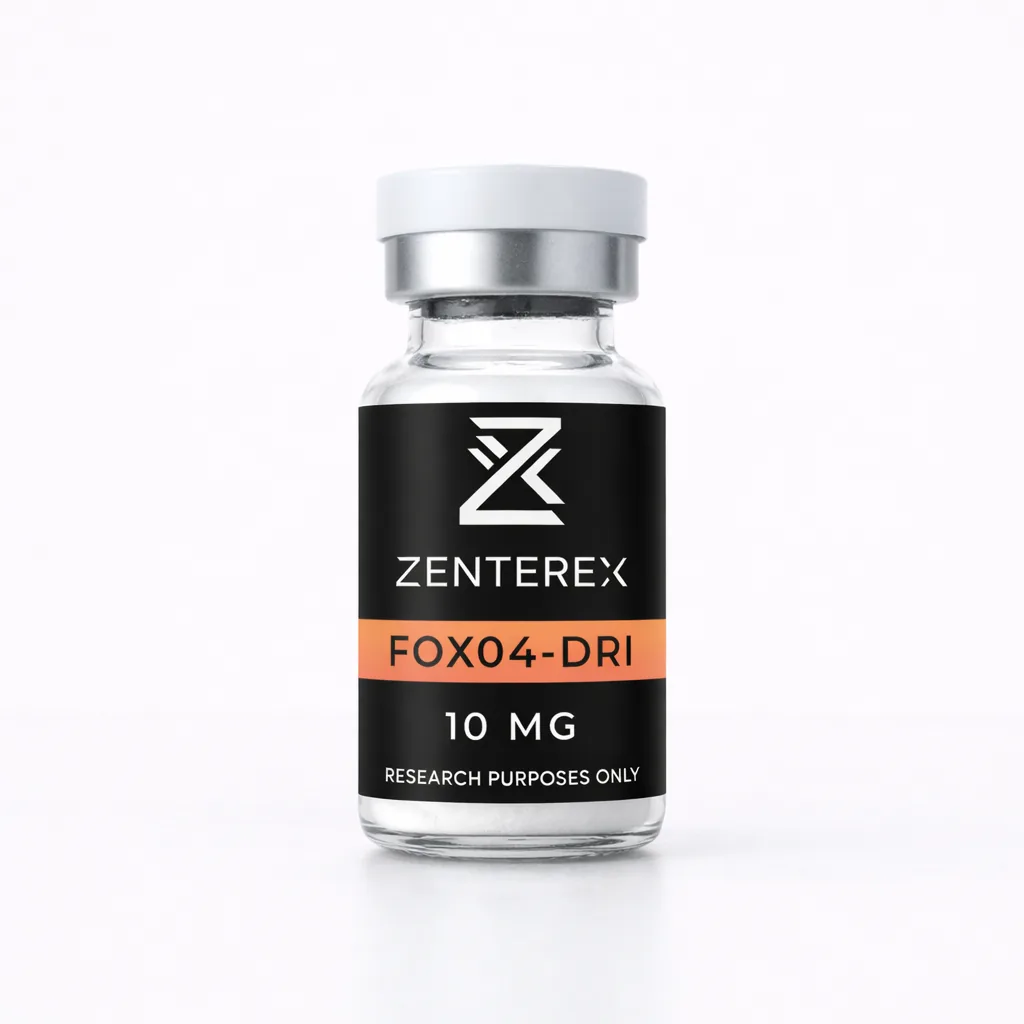
This puts Epitalon in overlapping territory with FOXO4-DRI, though the two get there by unrelated routes. One through telomeres, the other through two specific proteins meeting.
Pineal and body-clock measurements
Following from where the compound came from. Published animal work reports measurements here. It is described as more preliminary.
Reading the research
Three cautions, and this compound needs them more than most.
Extract or peptide? As above. The first thing to check in any source.
**Much of the original work is Russian.** Epitalon was developed and studied largely inside the Russian research system. A lot of it predates English-language indexing or sits outside it. The same applies to Semax and Selank. Tracing a claim to its source is harder here than elsewhere in our range.
Telomere claims attract exaggeration. This is a field where second-hand write-ups are far more confident than the original papers. A telomere measurement in a dish is a measurement in that dish. The distance between that and what popular summaries say is considerable.
Practical notes
**A tiny peptide is simple to make.** Four beads means three joining steps. There is almost nowhere for a chain to go missing or stop early. So its impurities are far simpler than a long chain's, as our note on batch reports sets out.
It is hard to see. Short peptides without aromatic beads barely absorb at 280 nanometres. So analysis is normally run at around 214 nanometres, where the peptide bond itself absorbs. That is why the detection wavelength on a report matters.
**Nothing protects it.** Semax and Selank have their Pro-Gly-Pro caps. FOXO4-DRI has its mirror-image backbone. Epitalon has neither. It is a plain, unprotected peptide, which matters in any test containing chain-cutting enzymes.
Handling and paperwork
A 10mg vial of freeze-dried powder. Keep it at minus 20 degrees Celsius, out of the light. The product page says what it dissolves in.
Batch analysis is published for every release, and there are currently two Epitalon batches. Each confirms identity by weighing the molecule against the expected 390.35 g/mol, and reports purity by chromatography.
Epitalon sits in our peptide analogues group. It also comes with GHK-Cu and NAD+ as a bundle of separate freeze-dried vials.
Everything we sell is for lab research only. It is not a medicine, and it is not for people or animals to take.