
Research Purposes Only

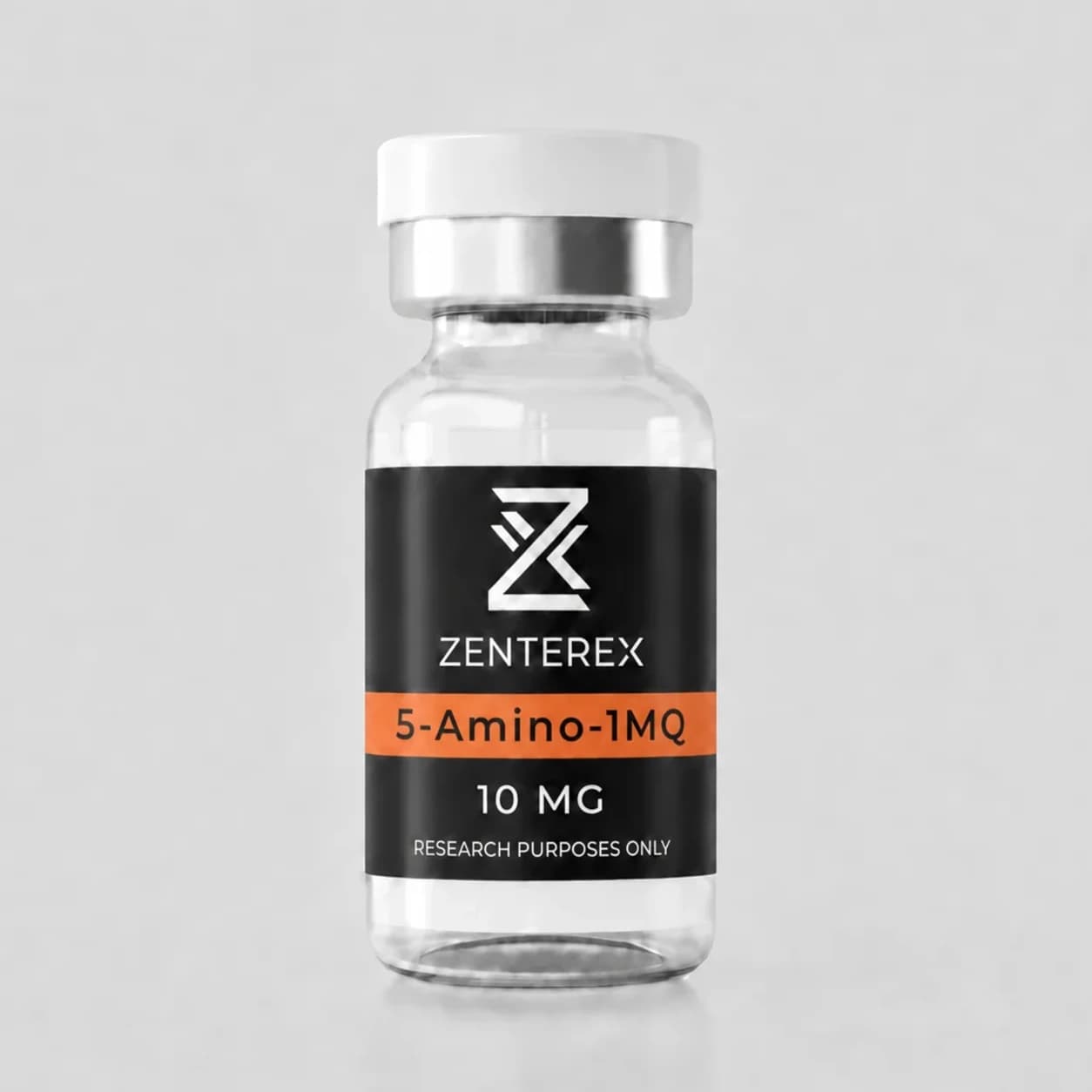
5-Amino-1MQ 10mg (5-Amino-1MQ) lyophilised research peptide vial — third-party lab-tested, for research use only

Fat Loss & Energy

5-Amino-1MQ

10mg

A small molecule that blocks the enzyme fat cells use to slow their own metabolism. Taken orally, no needles.

Why people choose 5-Amino-1MQ

  • Not a peptide and not injected. It is a small molecule taken by mouth.
  • Blocks NNMT, an enzyme that is overexpressed in fat tissue and rises further with obesity.
  • Raises NAD+ inside cells as a direct consequence, which is where the energy reports come from.
  • 10mg per vial, third-party HPLC tested, with a certificate of analysis for every batch.

What is 5-Amino-1MQ?

5-Amino-1MQ is the odd one out in this catalogue: it is not a peptide, it is a small molecule, and it is taken orally rather than injected. If needles are what has been putting you off, this and the oral peptides are where to start.

It works by blocking an enzyme called NNMT. That enzyme does two unhelpful things at once inside fat cells: it consumes NAD+, the coenzyme cells run their energy metabolism on, and it produces a metabolite that appears to slow fat cell metabolism further. NNMT is overexpressed in fat tissue to begin with and rises further as fat mass increases, which makes it something of a self-reinforcing problem.

Blocking it does two things in one move: fat cell metabolism speeds back up, and NAD+ levels inside those cells rise because nothing is burning through it. That second effect is why people report energy alongside the fat loss.

The evidence is animal and cell work. It is genuinely promising, the mechanism is well described, and the human trials do not exist yet. That is the honest position.

What people use it for

Fat cell metabolism

Growing evidence

The primary mechanism. Animal work shows NNMT inhibition reducing fat mass without changing food intake, which is unusual: this is not an appetite compound, it acts on what fat cells do with their energy rather than on how much energy you take in.

Raising NAD+ without a needle

Growing evidence

NNMT consumes NAD+. Block the enzyme and NAD+ rises inside the cell as a direct consequence. It is a different route to the same destination as NAD+ itself, achieved orally rather than by injection or an hours-long infusion.

Energy and endurance

Growing evidence

Downstream of the NAD+ effect and the most commonly reported subjective change. People describe steadier energy through the day rather than a lift, which is what you would expect from a change in cellular metabolism rather than stimulation.

Muscle preservation and regeneration

Early evidence

NNMT is expressed in muscle as well as fat, and inhibiting it in animal models improved muscle stem cell function. Early work, but interesting for anyone dieting, where muscle loss is the usual cost.

Metabolic health markers

Early evidence

Improvements in insulin sensitivity and lipid profile have been reported in animal models. Early, mechanistically plausible, and not something to buy this for on its own.

How it works

NNMT stands for nicotinamide N-methyltransferase, and it sits at an awkward junction in cellular metabolism. Its job is to methylate nicotinamide, and in doing so it consumes both a methyl group and, indirectly, the pool of nicotinamide that would otherwise be recycled back into NAD+.

In fat tissue NNMT is expressed at high levels, and higher still as fat mass increases. The consequence is fat cells with less NAD+ available and a slower metabolic rate: exactly the wrong direction if the aim is to reduce fat mass.

5-Amino-1MQ blocks the enzyme. Nicotinamide is no longer being consumed, so NAD+ rises inside the cell, and the metabolite that was slowing things down is no longer being produced. Fat cell metabolism increases as a result.

The most notable thing in the animal work is that the fat loss happened without any change in food intake. This is not an appetite compound and it does not make you eat less. It changes what the cells do with what you have already eaten.

5-Amino-1MQ dosage

50 to 150mg a day, by mouth, with food.

Typical dose50 to 100mg per day
Upper end150mg per day, usually split into two
Starting dose50mg daily for the first week
RouteOral. Not injected
TimingWith food, in the morning
Cycle length8 to 12 weeks, then a 4 week break
With NAD+Complementary rather than duplicative, and commonly run together

Mixing and injecting

  1. 1

    This is supplied as a powder for oral use, not for injection. Do not inject it.

  2. 2

    The vial is 10mg, so accurate dosing at 50 to 100mg per day means using multiple vials or dissolving and measuring carefully. Read the vial label and work from the actual quantity in front of you rather than from a protocol you read elsewhere.

  3. 3

    Dissolve in a small amount of water or juice and take with food. Taking it on an empty stomach is the usual cause of the mild nausea people report.

  4. 4

    Take it in the morning. The energy effect is mild but it is real, and taking it late can interfere with sleep.

  5. 5

    Store the dry powder cool, dry and away from light.

Work out your exact dose with the peptide calculator

Dose figures come from animal work scaled to human bodyweight and from user reports, not from clinical trials, because there are none. Treat the range as a starting point rather than an established protocol.

What to expect, week by week

Weeks 1 to 2

The energy change tends to come first if it comes at all: steadier through the afternoon rather than a noticeable lift.

Weeks 2 to 4

Body composition begins to move. Slow, and more visible in the mirror and the tape measure than on the scale.

Weeks 4 to 8

The main window. Because this works on metabolic rate rather than appetite, the change is gradual throughout rather than front-loaded.

Weeks 8 to 12

Continued gradual progress. Most people take a four week break at the end of this rather than running it indefinitely.

After the cycle

No rebound and nothing suppressed. NNMT expression returns to where it was, so the metabolic effect fades over a few weeks.

Side effects and safety

5-Amino-1MQ is well tolerated in the animal work at doses far above the human range, and user reports are consistent with that. The most common complaint is mild nausea when it is taken on an empty stomach, which taking it with food resolves.

The significant caveat is the evidence base. There are no human clinical trials. Everything here comes from animal and cell studies plus user reports, and the long-term human safety picture is genuinely unknown. That is a bigger unknown than for most compounds in this catalogue.

NNMT is involved in methylation, and inhibiting it has downstream effects on methyl group availability that are not fully mapped in humans. Some people run a B-vitamin complex alongside for that reason; the reasoning is sensible but it is reasoning rather than evidence.

Do not inject this. It is supplied as an oral compound and the vial is not formulated for injection.

Do not use during pregnancy or breastfeeding, and speak to a doctor first if you take prescription medication or have an existing condition.

What 5-Amino-1MQ stacks with

5-Amino-1MQ questions, answered

Do I inject this or swallow it?

Swallow it. 5-Amino-1MQ is a small molecule taken orally, not a peptide, and it is not formulated for injection. If you have been avoiding this catalogue because of needles, this is one of the ones you can take by mouth.

Will it make me eat less?

No. This is not an appetite compound. In the animal work fat mass fell with no change in food intake at all, because it acts on what fat cells do with energy rather than on how much you consume. If appetite is your problem, cagrilintide is the right shelf.

How is it different from taking NAD+?

Opposite ends of the same problem. NAD+ supplies more of the coenzyme; 5-Amino-1MQ stops the enzyme that burns through it. Blocking consumption is arguably the more efficient route, and it works orally. Many people run both.

Is there human evidence?

No clinical trials, and it would be dishonest to imply otherwise. The mechanism is well described and the animal work is genuine and consistent, but the human data does not exist yet. This is one of the less proven compounds in the catalogue.

How much should I take?

50mg daily for the first week, then 50 to 100mg. Some people go to 150mg split into two doses. These figures come from scaled animal work and user reports rather than trials.

Should I take a B-vitamin with it?

Some people do, on the reasoning that NNMT is a methylation enzyme and inhibiting it affects methyl group handling. It is sensible reasoning rather than established practice, and a standard B-complex is harmless either way.

Why do I feel slightly sick?

Almost always because it was taken on an empty stomach. Take it with food and the nausea usually disappears.

Not medical advice. This page describes how this compound is used and what the research shows. It is not a prescription or a diagnosis. Speak to a doctor before starting anything new if you are pregnant or breastfeeding, take prescription medication, or are managing an existing health condition.

Dosage at a glance

50 to 150mg a day, by mouth, with food.

Typical dose50 to 100mg per day
Upper end150mg per day, usually split into two
Starting dose50mg daily for the first week
RouteOral. Not injected

Quick Facts

Molecular FormulaC₁₀H₁₁N₂⁺
Molecular Weight159.21 g/mol (free cation)
CAS Number
Half-LifeNot established (research compound)
SolubilityDMSO; sparingly in water (research use)
Storage−20 °C
More in Fat Loss & Energy

Evidence key

Consistent results across published studies
Supported, but less well mapped
Promising, with limited data

Related Peptides

How can we help?
Cart