
BPC-157 for Tendon and Ligament Injuries
Why tendons heal so badly, what BPC-157 does about it, and how people run it for tennis elbow, rotator cuff, Achilles and patellar problems.
This is what BPC-157 is best known for, and there is a clear reason why.
Why tendons heal so badly
Cut your arm and it closes in a week. Strain a tendon and it can bother you for a year.
The difference is blood supply.
Skin is rich with blood vessels. Tendons and ligaments have almost none. Blood carries oxygen, nutrients and the cells that do repairs, so tissue without much blood supply repairs slowly and often incompletely.
That is the whole problem. And it is the problem BPC-157 works on.
What it does
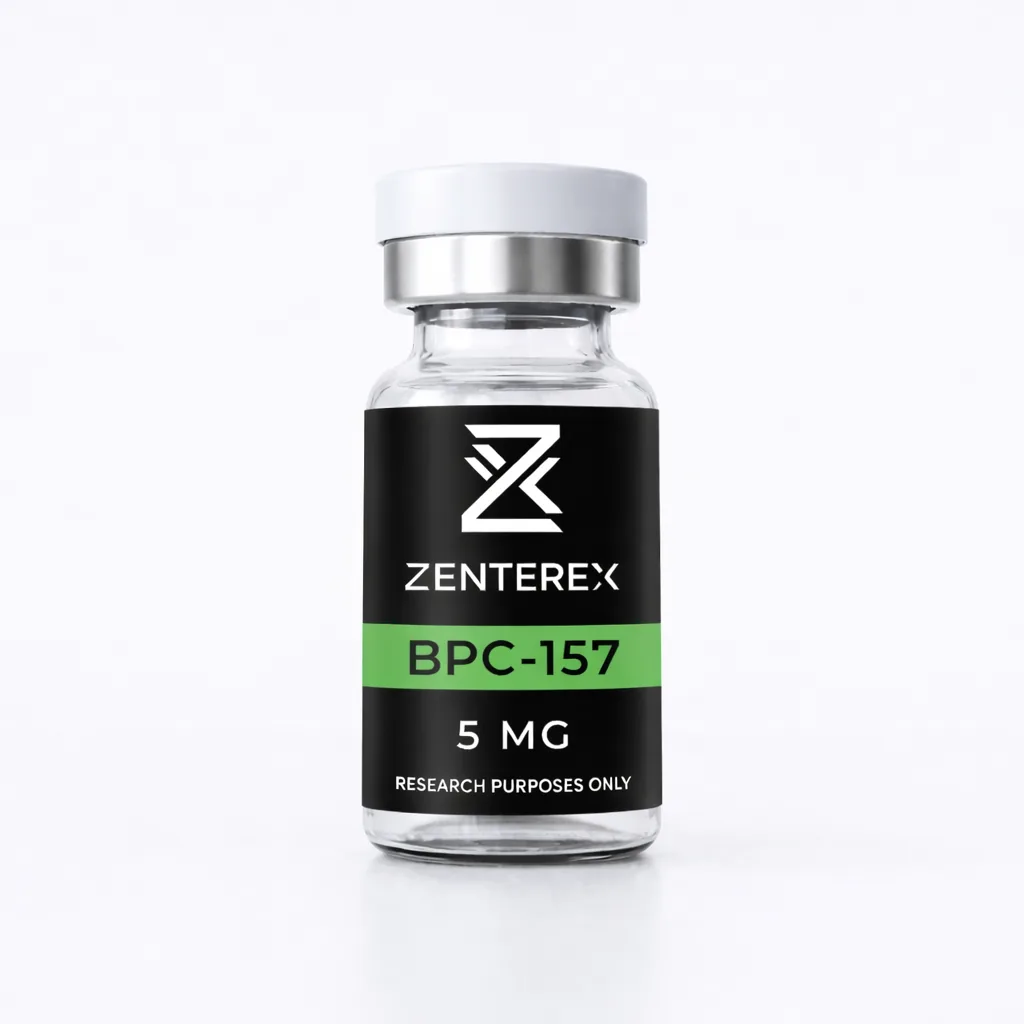
BPC-157 promotes the growth of new blood vessels into damaged tissue. It switches on VEGFR2, the receptor your body uses to build new capillaries.
More capillaries means oxygen, nutrients and repair cells finally reaching tissue that was starved of all three.
There is a second effect worth knowing. Animal work suggests it increases the number of growth hormone receptors on tendon cells. It does not raise your growth hormone. It makes the repair cells more responsive to what is already there, so the same signal produces more collagen.
What the research covers
Rat studies on cut Achilles tendons and severed knee ligaments consistently report faster and stronger healing. Tendon cells grown in a dish move and lay down collagen faster in its presence.
It is consistent across decades and multiple independent research groups, which is more than most compounds in this market can say.
The injuries people use it for
- Tennis and golfer's elbow
- Rotator cuff problems
- Patellar tendinopathy, or jumper's knee
- Achilles problems
- Ankle sprains that never fully recovered
- Chronic hip and groin strains
The common thread is connective tissue that has been irritated for months and stopped improving on its own.
How people run it
250 to 500 mcg per day. Once daily, or split into two.
**Injected under the skin, as near the injury as is practical.** Local dosing is widely reported as faster for a specific injury. If the site is awkward, TB-500 is the better choice, since it travels through the body.
4 to 6 weeks for a recent injury. 8 to 12 weeks for something chronic.
What to expect
- Week 1 — the groundwork. New blood supply starts forming.
- Weeks 2 to 3 — the background ache eases.
- Weeks 4 to 6 — it stops flaring every time you load it.
- Weeks 8 to 12 — range of movement and strength under load.
The change is usually noticed as an absence. People say "I realised I had stopped thinking about it".
The mistake that ruins it
Going back to full training too early.
Week two feels better, so people load it hard, and undo the repair as fast as it happens. The tissue is being rebuilt, and rebuilding takes longer than the symptom takes to quieten.
Ease back in from week four, not week two.
Adding TB-500
The common pairing. BPC-157 brings blood in, TB-500 helps repair cells travel to where they are needed. Different mechanisms, so they add rather than overlap.
Our stack guide covers it.
Everything we sell is supplied for research purposes. It is not a medicine and it is not approved for medical use.