
What Is MOTS-C? A Plain-English Guide
MOTS-C explained simply: the peptide written inside your mitochondria, how it connects to cellular energy and metabolism, and what arrives in the vial.
MOTS-C is studied in connection with cellular energy. That means how cells turn food into fuel, and how they notice when fuel runs short. It is also one of the strangest molecules we sell. The reason takes a minute to explain.
Start with mitochondria
Mitochondria are the parts of a cell that make energy. They take food that has already been broken down and turn it into a form the cell can spend.
A muscle cell might contain thousands of them. A cell that does little work has far fewer. Roughly speaking, the more energy a cell needs, the more mitochondria it carries.
They are often called the powerhouse of the cell, which is a school-textbook line but a fair one.
The strange part
Almost everything in your body is built from instructions in DNA. That DNA sits in the cell's nucleus, its central library.
Mitochondria have their own separate DNA. A small, separate set of instructions, kept inside the mitochondrion itself rather than in the nucleus. It is a leftover from a very old piece of biology. Mitochondria are thought to have started out as free-living bacteria, which ended up living inside bigger cells.
MOTS-C is written in that DNA. Not the main library, but the small private one inside the energy factory.
That is unusual enough that when it was identified, it opened a small new research field. Peptides of this kind are now called mitochondria-derived peptides.
What the name means
MOTS-C stands for mitochondrial open reading frame of the twelve S ribosomal RNA type-C.
That is a description of exactly where in the mitochondrial DNA the instruction sits, written for specialists. It tells you nothing about what the molecule does. Like most names in this field it is a filing label rather than a description.
Structurally it is a chain of 16 amino acids, the building blocks your body uses to make proteins. A short chain like this is a peptide; a long one is a protein.
What researchers have looked at
Published work is in cells in dishes and in mice, not people. Within that, three threads.
The cell's energy sensor
The most reported area, and the one that connects it to energy.
Cells have a sensor called AMPK that works like a fuel gauge. When a cell runs low on energy, AMPK switches on. The cell then shifts towards making more and spending less.
Published studies report MOTS-C in connection with this sensor. That is why the compound turns up in metabolism research rather than, say, in receptor pharmacology.
Metabolic gene activity
Related work measures which genes get more or less active afterwards. It focuses on genes involved in how cells handle fuel. These are measurements of gene activity in cultured cells and mice.
Moving from the mitochondria to the nucleus
The most interesting claim in the field, and the least settled.
Some published work reports that under stress the peptide travels out of the mitochondrion and into the nucleus. There it may affect which genes are switched on. If that holds up, it would make MOTS-C a message being sent from the energy factory to head office.
That is a really novel idea, and it is early.
Two honest caveats
The field is young. Mitochondria-derived peptides were only described in the 2010s. The work comes from a fairly small number of research groups. That is not a criticism. It does mean findings have been repeated by other groups less often than a long reference list suggests.
Genetics is not pharmacology. Some of the research is about natural variations in people's mitochondrial DNA. It looks at how those track with health data across whole populations. That is interesting. It is also a completely different kind of study from giving the lab-made peptide to cells in a dish. Secondary write-ups blur the two constantly.
What you get in the vial
If you order MOTS-C from us:
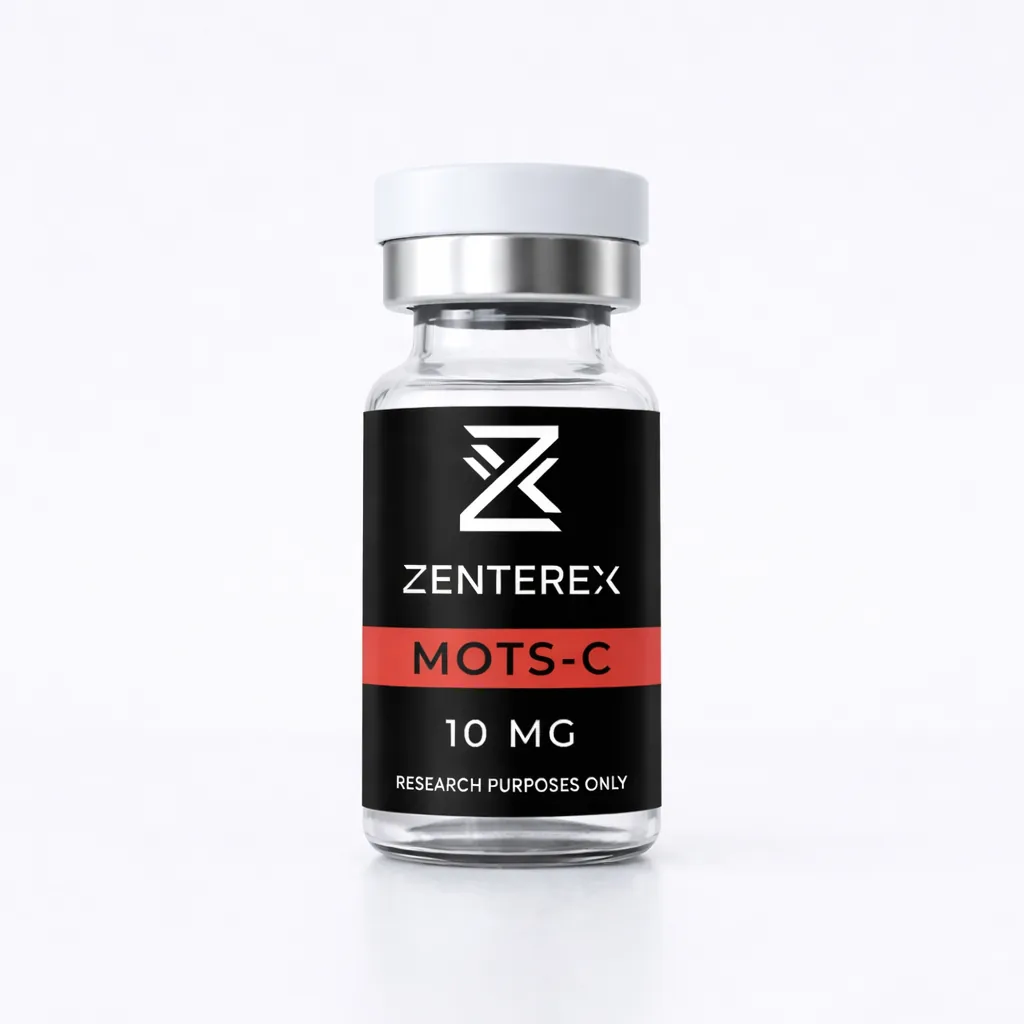
- A glass vial containing 10mg of dry white powder
- Freeze-dried, so the water has been removed and it survives the post and stores well
- Stored at minus 20 degrees Celsius, away from light
- Molecular weight 2174.6, CAS number 1627580-64-6
That CAS number is worth a glance. Registry numbers are handed out in order, so a long one means the compound was described recently. Compare NAD+ at 53-84-9. That one goes back to the early days of the chemical record.
How you check it is really MOTS-C
Every batch goes to an independent lab, which confirms two things. First, that it is the right molecule. The lab weighs it exactly and compares that against what a 16-bead chain of this sequence should weigh. Second, how much of the contents is that molecule.
At 16 amino acids, MOTS-C sits in the middle for manufacturing difficulty. The chain is built one bead at a time, across 15 joining steps. Every step is a chance for something to go slightly wrong. That is far more chances than a 4-bead peptide, and far fewer than a 44-bead one.
Batch reports are published for every release. Each carries a code you can check with the issuing lab, to confirm it is genuine.
The others studied with it
MOTS-C sits with two other compounds in our cellular peptides group. All three reach the same energy machinery by completely different routes.
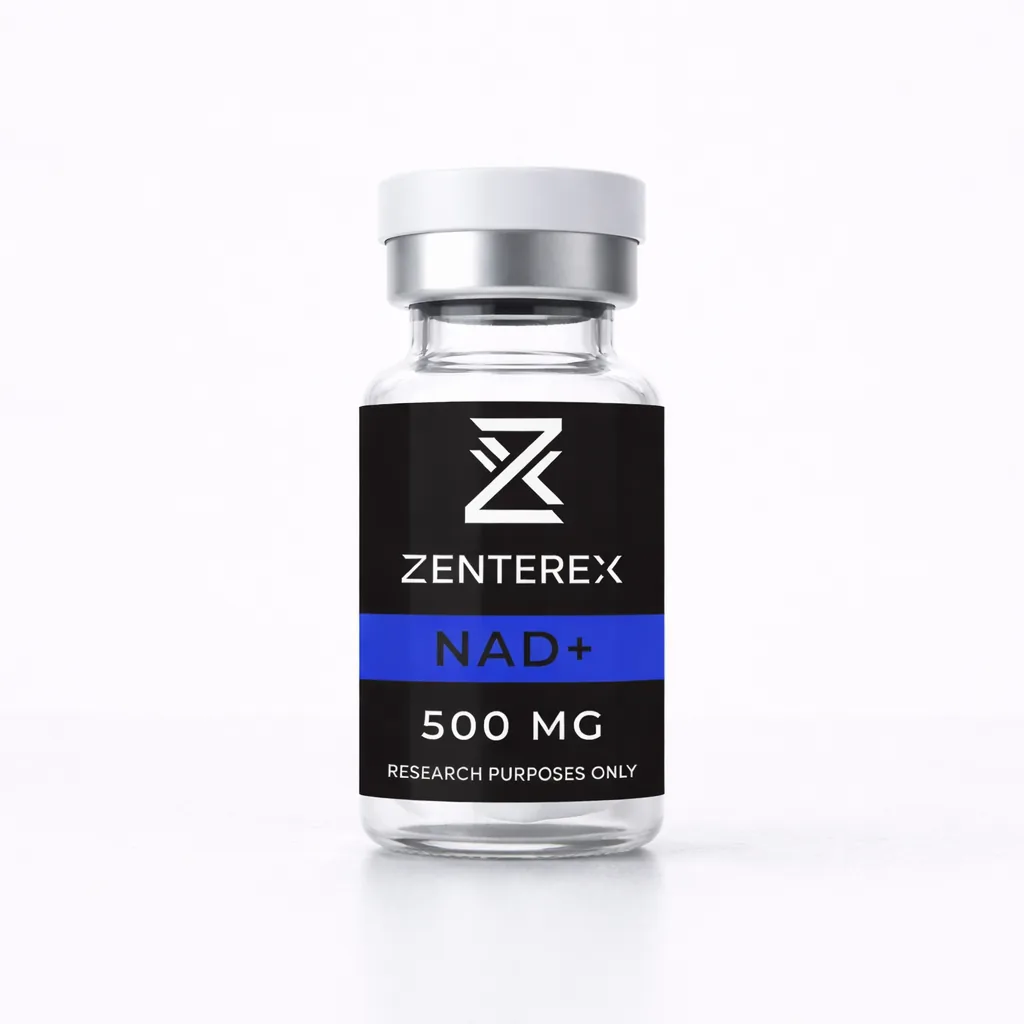
- **NAD+** is not a peptide at all. It is a helper molecule that physically carries electrons around during the reactions that release energy from food.
- **SS-31** is a 4-amino-acid peptide that sticks to the inner membrane of the mitochondrion because of simple electrical attraction.
A carrier, a membrane compound, and a signal. Our selection guide covers which suits which measurement, and all three come as a bundle of separate vials.
The short version
MOTS-C is a 16-amino-acid peptide encoded inside the mitochondrion's own DNA rather than the cell's main DNA. It is studied in connection with cellular energy: specifically AMPK, the sensor cells use to detect running low on fuel. The research is in cells and mice, and the field is young.
It is sold as a lab reference sample only, and is not for people or animals to take.
If something here is unclear, ask us.