
How to Reconstitute GHK-Cu: The Copper Catch
GHK-Cu dissolves like any other peptide, but it has one property nothing else in the range shares, and the wrong buffer can quietly take it apart.
The mechanics of dissolving GHK-Cu are the same as any other vial. But it is the only compound in our range with a metal built into it. That changes what you can safely put it in.
Read the copper section before you choose a buffer.
The vial is bigger than you expect
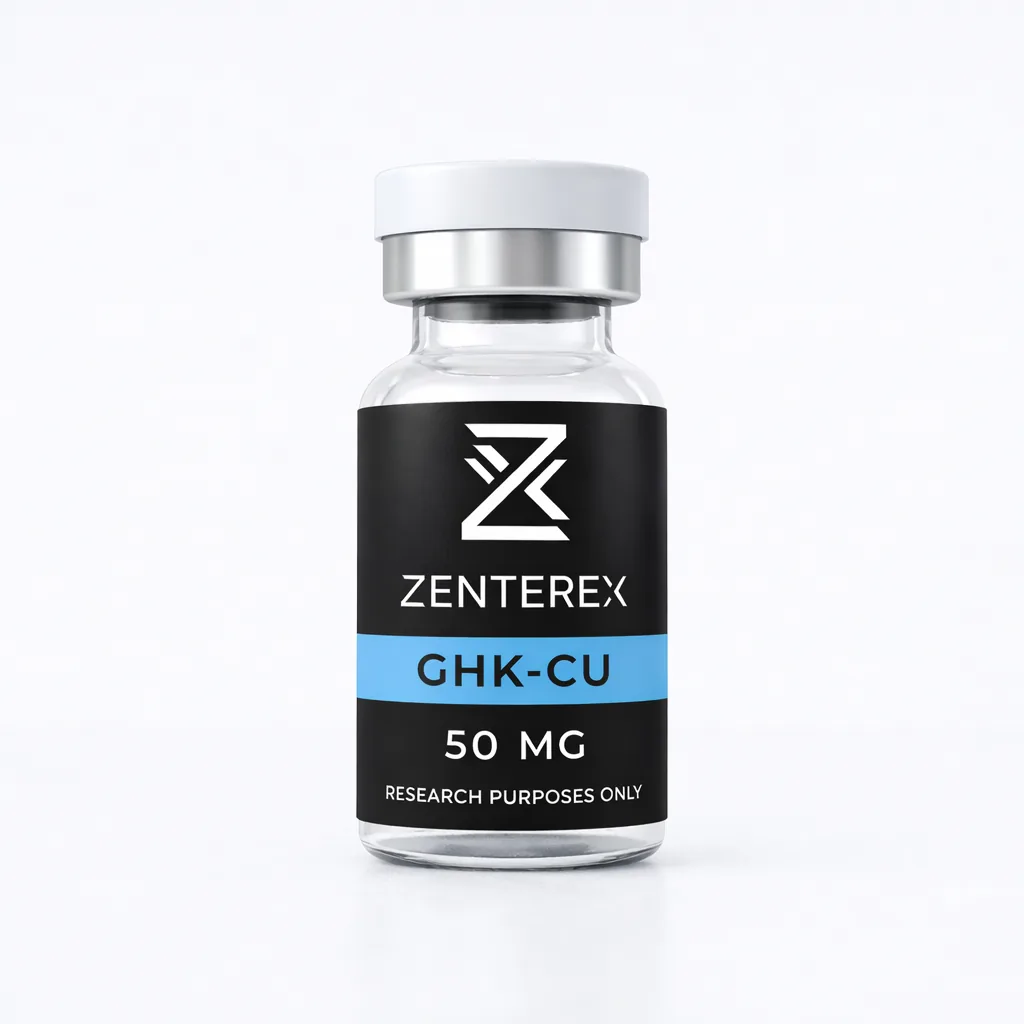
GHK-Cu comes as 50mg, ten times most of the range.
That is not extra generosity. GHK-Cu is a very light molecule at 404. So a larger weight is needed to give a sensible number of molecules. Our note on vial sizes explains the arithmetic.
The powder is blue
It will look wrong if you are not expecting it. It is not.
GHK-Cu is a three-amino-acid peptide wrapped around a copper ion, and copper compounds of this kind are blue. Blue powder and a blue solution are exactly what should happen. A colourless GHK-Cu solution would be the thing to worry about.
Working out the volume
The vial holds a fixed 50mg. Strength depends on how much liquid you add.
| Water added | Strength |
|---|---|
| 5 mL | 10 mg/mL |
| 10 mL | 5 mg/mL |
| 25 mL | 2 mg/mL |
Pick a figure, write it down, and use it consistently. Our peptide calculator handles any combination.
The copper catch
This is the part that has no equivalent elsewhere in the range. It is the reason this post exists.
Some buffers will pull the copper out of the molecule.
Certain chemicals grab metal ions and hold onto them tightly. They are called chelators, and the common one in lab buffers is EDTA. It appears in a great many standard recipes, often for reasons that have nothing to do with your compound.
The problem is that EDTA binds copper more strongly than the peptide does. Put GHK-Cu into an EDTA-containing buffer and the copper transfers across. You are left with the bare peptide and a copper-EDTA complex, which is not the compound you ordered, and behaves differently.
Nothing visible happens. The colour may shift, but there is no precipitate, no cloudiness, no obvious failure. The experiment simply produces confusing results.
What to check before you dissolve or dilute:
- Does your buffer contain EDTA, EGTA, or anything described as a chelator?
- If yes, use a different buffer for this compound.
- Plain sterile or bacteriostatic water has no chelator and is fine.
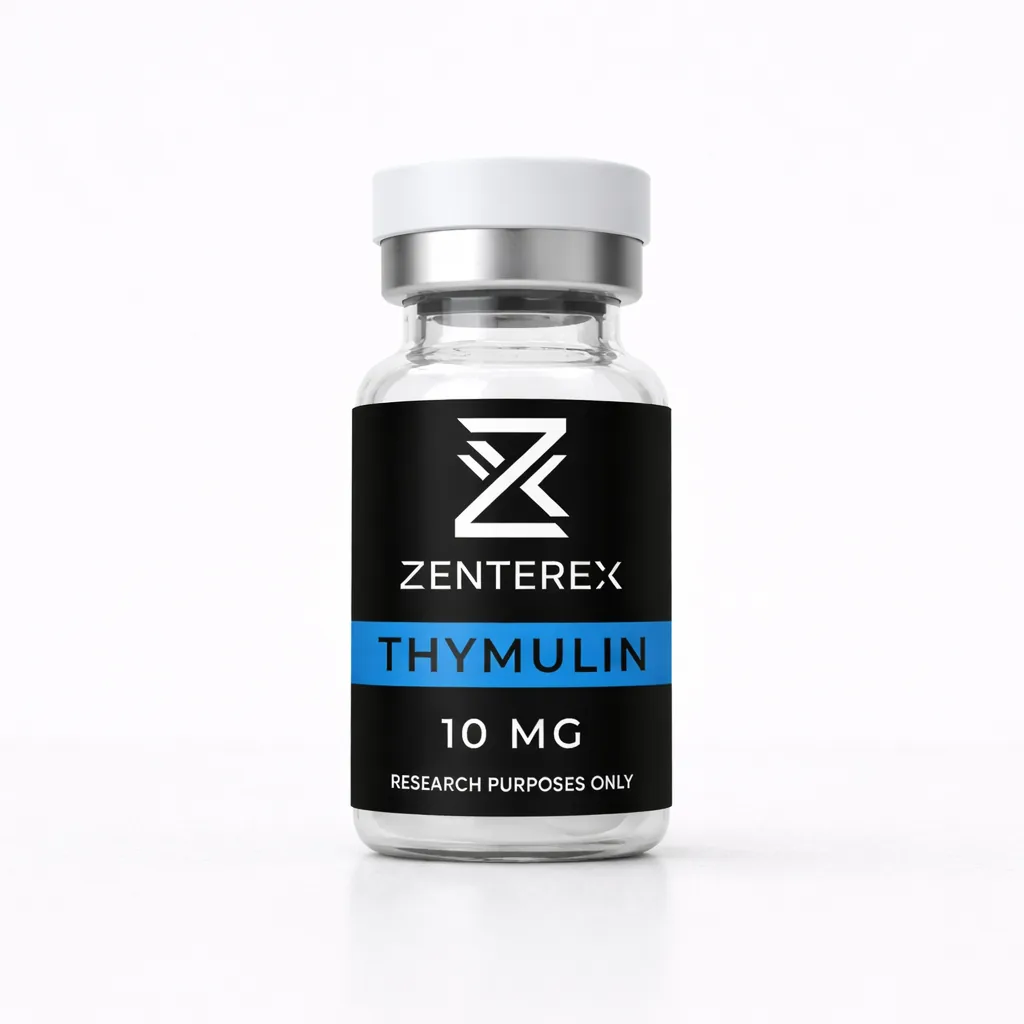
Thymulin needs the same care for the same reason, except its metal is zinc. Those two are the only compounds in our range where buffer choice can take the molecule apart.
The steps
1. Let the vial reach room temperature. 20 to 30 minutes out of the freezer. Opening a cold vial pulls moist air in, which condenses onto powder that was freeze-dried specifically to remove water. Biggest avoidable mistake, and free to avoid.
2. Wipe both seals with alcohol and let them dry on their own. Contact time does the work.
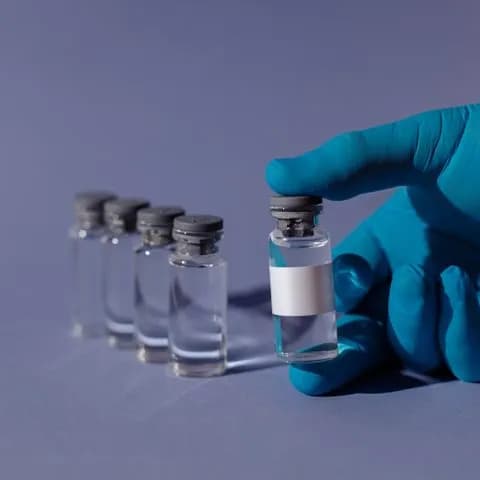
3. Draw your chosen volume with a fresh needle and syringe.
4. Add it down the inside wall of the vial, at an angle, not straight onto the powder. Let it run in slowly.
5. Swirl, do not shake. Shaking whips air in, and peptides come apart at the air-water boundary. The damaged molecules clump, and clumping does not reverse.
6. Give it time. Swirl occasionally at room temperature. Something that has not dissolved in thirty seconds has often dissolved in ten minutes.
**7. Split into single-use portions and label them** with compound, strength, date and batch number. Each portion then gets frozen and thawed exactly once, however long the work runs. Our note on aliquoting covers why that matters.
Light matters more here
Most peptides want to be kept dark as a general precaution. For GHK-Cu it is more than that.
The compound is blue because it absorbs visible light, and absorbed light is energy the copper can use to drive unwanted chemistry. So keep solutions in the dark: foil around the tube, or an opaque box, and do not leave it standing on a lit bench.
Our note on light sensitivity covers which compounds care and why.
Quick summary
- 50mg vial, ten times most of the range, because it is a light molecule
- Blue is correct
- No EDTA or other chelators, they strip the copper out invisibly
- Room temperature before opening, swirl not shake, split and label
- Keep it dark, more so than the rest of the range
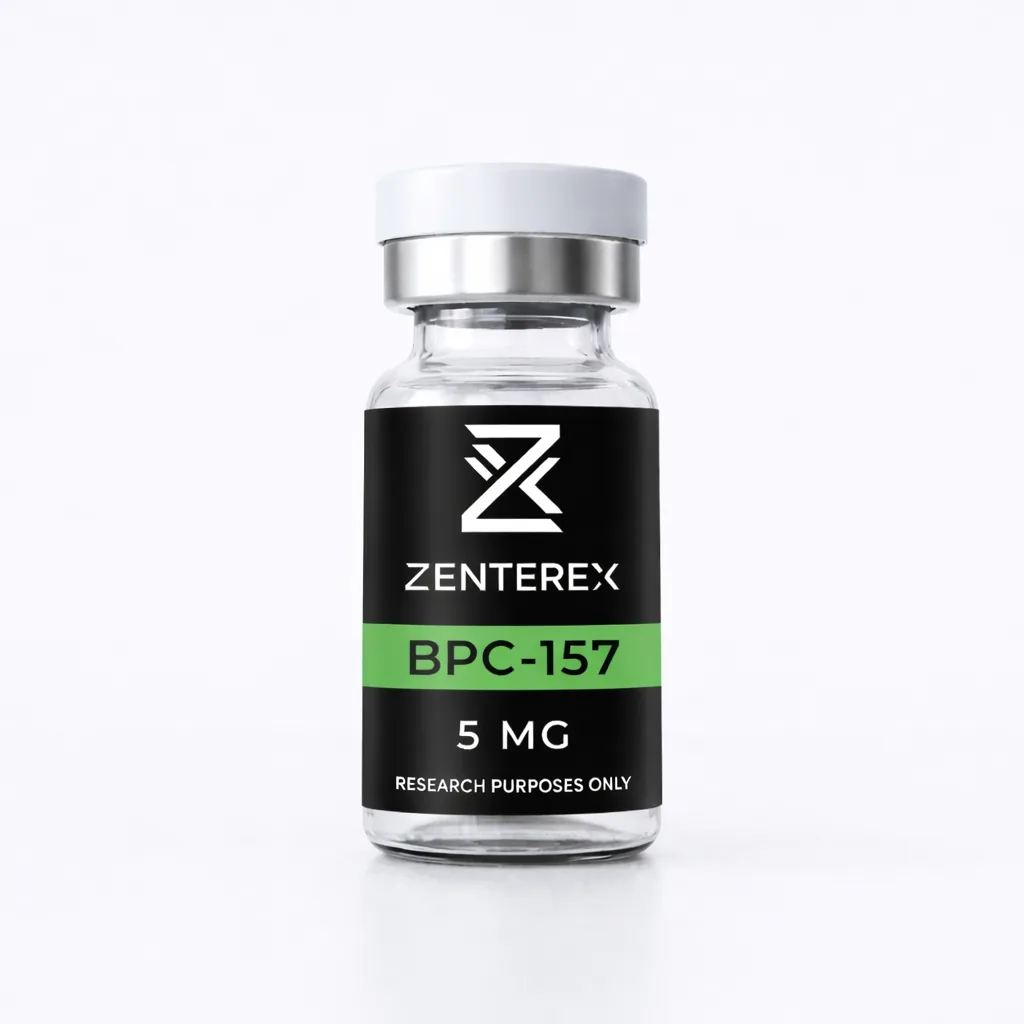
The general method is the same as our BPC-157 walkthrough. The copper and light points are what is specific here.
If you are unsure whether a buffer is safe for it, send us the recipe and we will tell you.