
What Is Semax? A Plain-English Guide
Semax explained simply: a piece of a bigger hormone with a protective cap bolted on the end, and what that cap is actually for.
Semax is a lab-made peptide developed in Russia. It is a good example of what happens when a piece of a bigger hormone has something bolted onto it. The result behaves quite differently from the piece it started as.
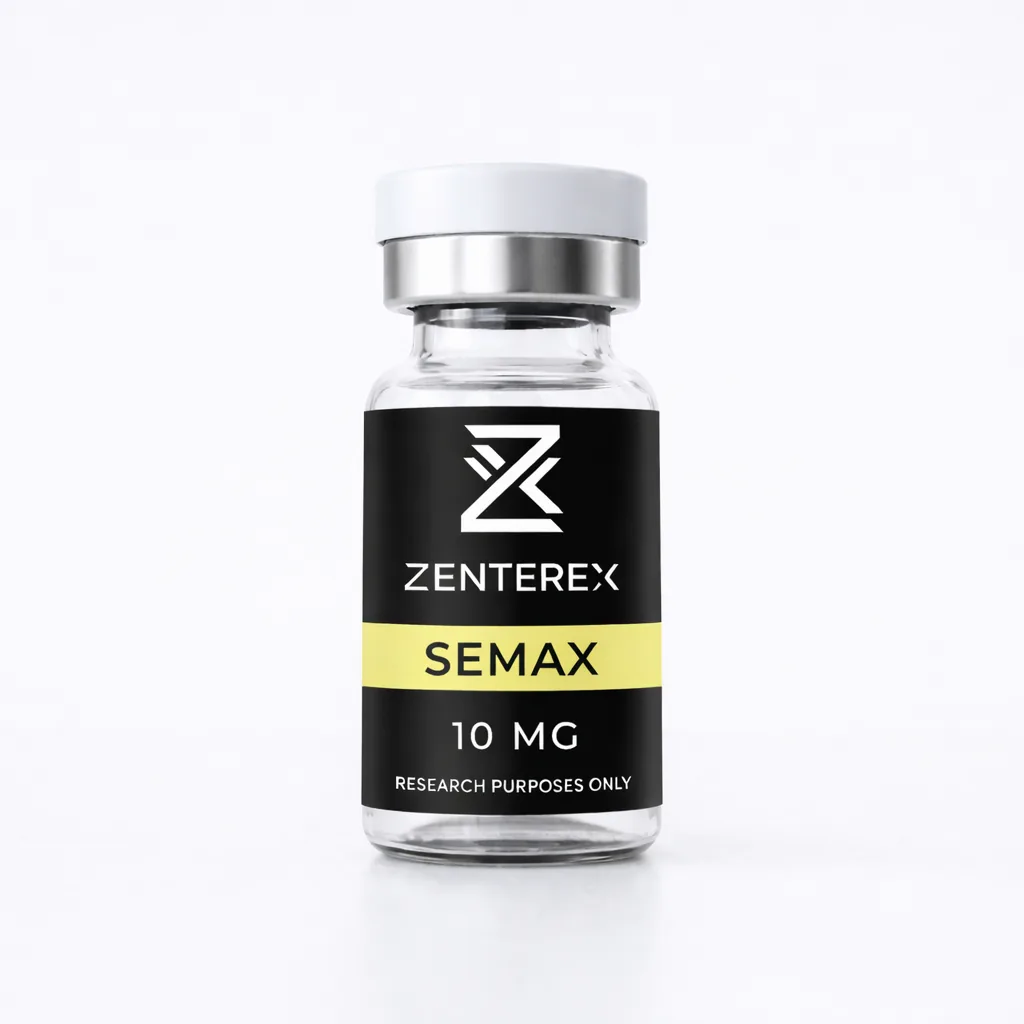
Semax comes as a freeze-dried powder, for lab research only.
What the molecule is
Start with ACTH, a hormone 39 beads long. Take beads 4 to 10 out of the middle of it. That seven-bead stretch is the starting point, written ACTH(4-10).
Then bolt three more beads onto the end: proline, glycine, proline. Written Pro-Gly-Pro.
- Molecular weight: 813.93 g/mol
- CAS number: 80714-61-0
- Comes as a freeze-dried powder, in a 10mg vial
- Store it at minus 20 degrees Celsius, away from light
Why that three-bead tail is there
This is the interesting part, and it is deliberate design rather than an accident.
Short peptides get chewed up fast. A bare ACTH(4-10) fragment does not last long.
Proline is an odd amino acid. Its side branch loops back and joins the backbone, making a ring. That ring stiffens the chain right there. And a stiff bit of chain is a poor target for the enzymes that do the chewing.
Think of a bootlace. The lace frays at the ends, so you put a plastic tip on it. The tip does not change what the lace is for. It stops it coming apart.
The Pro-Gly-Pro tail is that plastic tip. The reported result is a compound far tougher than the bare fragment, which is what makes it practical to study at all.
The same logic turns up elsewhere in our range. BPC-157 has three prolines in a row near one end, and is likewise reported as unusually tough.
What researchers have looked at
Published studies in dishes and in animals cover three areas.
BDNF and related growth factors
The most reported area. Published work looks at BDNF, a growth factor for nerve cells, and its receptor. It measures how much of the gene or the protein is present, in animals and in cultured cells. These are not behaviour measurements.
Dopamine and serotonin systems
Animal studies report measurements to do with these two signalling systems. This research is described as moderate in volume.
What receptors it actually fits
The parent fragment comes from ACTH, which belongs to the pigment-hormone family. So a body of work asks which of those receptors the modified fragment still fits.
The reports suggest Semax's published activity is not neatly explained by those receptors. That is part of why it gets studied as a compound in its own right, rather than as an ACTH offshoot.
Reading the research
Two cautions specific to this compound.
Much of the original research is in Russian. Semax was developed and studied largely inside the Russian research system. A lot of that work predates English-language indexing, or sits outside it. English summaries of it vary a great deal in quality. Tracing a claim back to its source is harder here than for most things we sell.
**Check the fragment numbers.** ACTH(4-10), ACTH(4-7) and the Pro-Gly-Pro version are three different molecules. Work on one does not automatically tell you about another, and the notation is easy to misread. Our note on peptide sequences covers how the numbering works.
Handling and paperwork
A 10mg vial of freeze-dried powder. Keep it at minus 20 degrees Celsius, out of the light. The product page says what it dissolves in.
Batch analysis is published. Each report confirms identity by weighing the molecule against the expected 813.93 g/mol, and reports purity by chromatography.
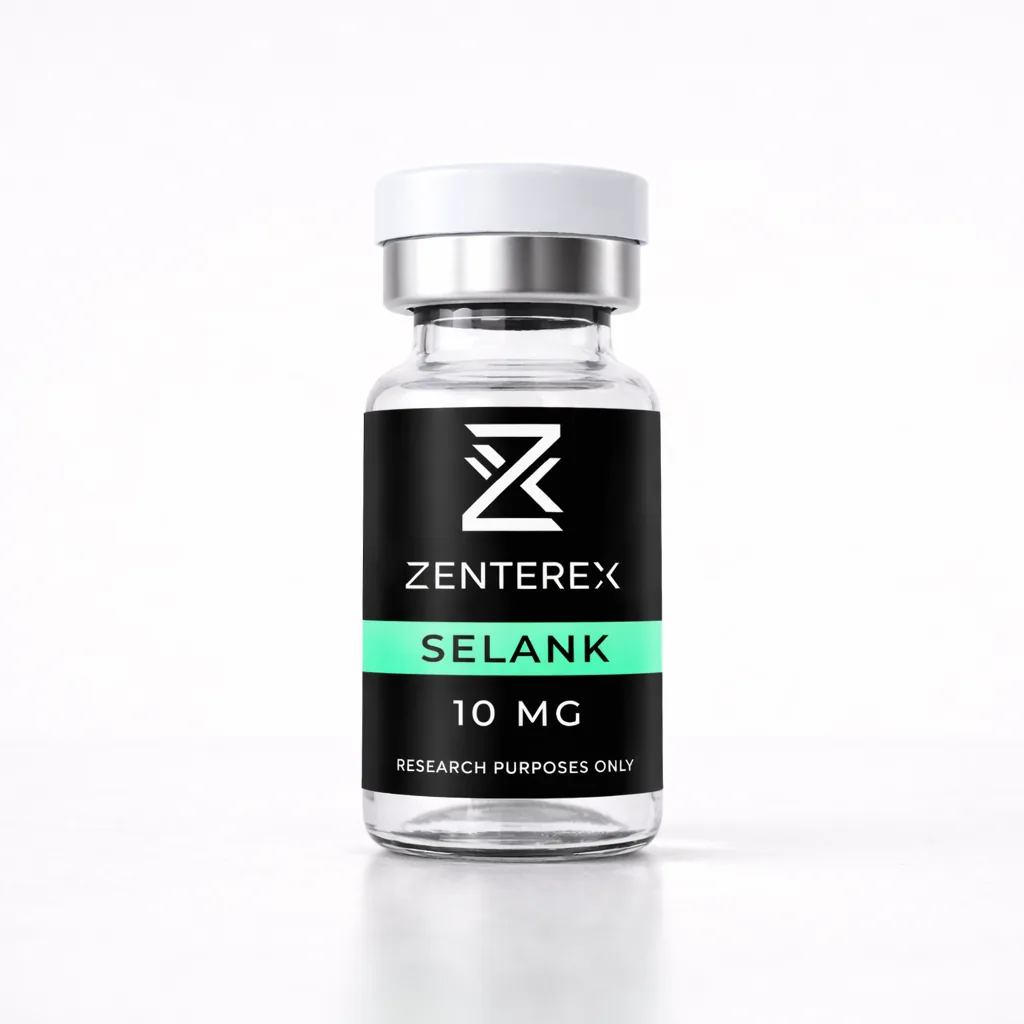
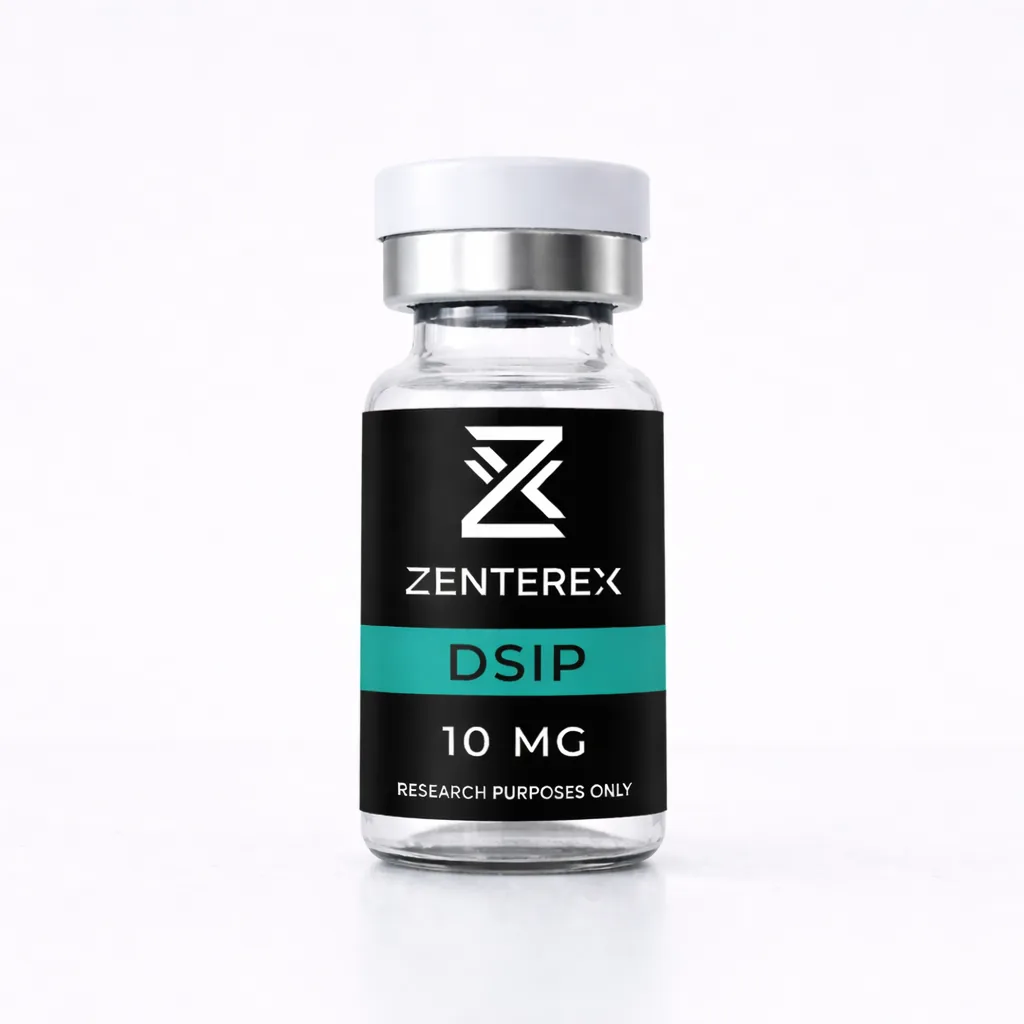
Semax sits in our CNS research peptides group with Selank and DSIP. It also comes with Selank as a bundle of two separate freeze-dried vials.
The two share a development origin and a research field. They are not structurally related. Selank is built on tuftsin, a completely different parent.
Everything we sell is for lab research only. It is not a medicine, and it is not for people or animals to take.