
What Is Bacteriostatic Water?
Bacteriostatic water has benzyl alcohol in it, which stops bacteria growing in a vial you open more than once. What that means, and when to use it.
Bacteriostatic water is the dullest thing we sell. It is also the one that touches nearly everything else, and its name is the most often misread.
Bacteriostatic water is sold for lab research only.
What it is
Water with a little benzyl alcohol in it. Benzyl alcohol is a preservative. It stops bacteria multiplying.
- It comes as a liquid, in a single container
- It is used to dissolve freeze-dried powder
- It is meant for vials that get opened more than once
The benzyl alcohol is the only active part. The rest is ordinary purified water.
Bacteriostatic does not mean bactericidal
This is the bit the name hides, and the bit people get wrong.
Bacteriostatic means it stops bacteria breeding. Bactericidal means it kills them.
Benzyl alcohol, at the strength used here, only stops them breeding. It will not clean up a vial that is already dirty. What it does is stop a few stray bacteria becoming millions over the weeks you use a stock.
Think of it as a fridge, not a fire. A fridge slows food going off. It does not fix food that has already gone off.
So it is not a replacement for good sterile technique. It just makes good technique more forgiving.
Why contamination matters twice
Two separate problems. The second is the one people miss.
It ruins cell work. Bacteria or fungi in a dish wreck the experiment. The result means nothing, whatever the compound did.
It eats the peptide. Microbes give off enzymes that cut peptide chains apart. So a dirty stock is losing the compound all the time. The liquid still looks fine, but there is less in it than the label says.
Picture a jar of sugar left open in a damp room. It still looks like sugar, but there is less sugar in it each week. That second problem bites even when there are no cells involved. A test run from a dirty stock is being run at an unknown strength. The tell-tale sign is results that get weaker and weaker as the weeks go by.
When to use it
The answer comes from how the vial will be handled, not from taste.
Use bacteriostatic water when one vial will be opened again and again over days or weeks. Every opening is a chance for something to get in, and the benzyl alcohol limits what happens next.
Sterile water is just as good if you dissolve a vial and split it straight into small portions. Each portion gets used once. There is barely any window for anything to get in, so the preservative earns less.
Splitting it up is the better habit anyway. It also cuts down freeze-thaw cycles. Dividing a stock once means fewer needle holes in the seal. It also means fewer trips in and out of the freezer. Both kinds of damage add up.
The benzyl alcohol is part of the experiment
This caveat belongs on every use of it.
Benzyl alcohol is not a neutral filler. It is an ingredient. Cells usually cope with it at these strengths. But if your test is a sensitive one, put it in a vehicle control at the same final strength.
Without it you cannot say whether the effect came from the compound or from the liquid. The same goes for DMSO, dilute acetic acid and trifluoroacetate salts. Our note on checking a batch report explains why.
Where it fits with other solvents
Plain water, sterile or bacteriostatic, is the **default**. It is enough for most of our range. BPC-157, for example, has a published solubility of water at 1 mg/mL.
Some peptides refuse to dissolve in plain water. Usually that is because the molecule carries almost no overall electric charge, and water needs charge to grip. Then you step up. Dilute acetic acid for one kind. Dilute base for the other. An organic solvent only for the really greasy ones. Our notes on choosing a solvent and why some peptides need acetic acid explain which is which.
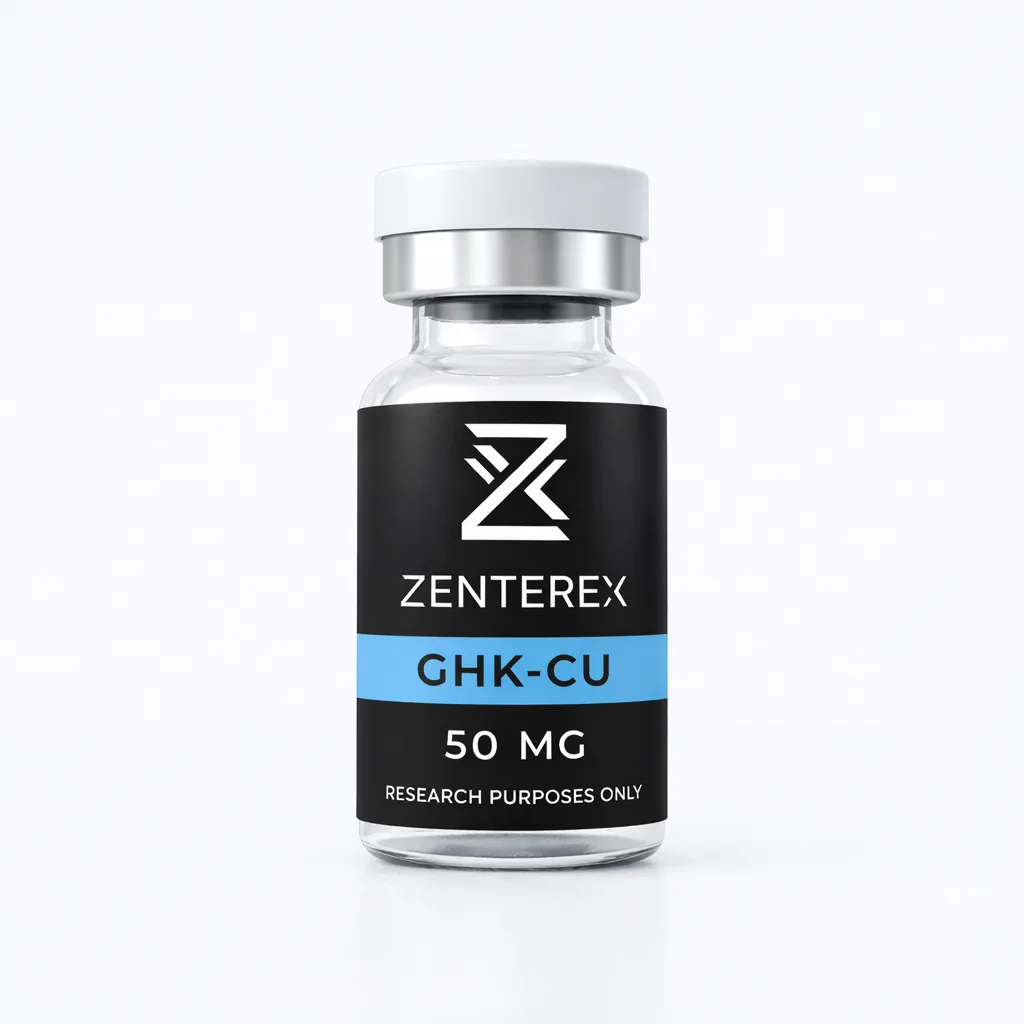
One more thing. Some compounds are built around a metal atom, such as GHK-Cu and Thymulin. Buffers that grab metals can pull them apart. That matters for whatever you dilute the stock into later.
Technique
The same points apply to any vial.
Let the vial warm to room temperature before you open it. Otherwise damp room air condenses onto powder that was dried on purpose. Wipe the seal with 70 percent alcohol. Let it dry by itself. The contact time is what does the work. Use a fresh sterile needle and syringe each time. Run the liquid down the inside wall, not straight onto the cake. Swirl it, do not shake it. Peptides unravel where liquid meets air, and unravelled molecules clump.
Think of it like topping up a squash bottle. How strong it ends up depends on how much water you add. So work out the volume first, from the vial weight and the strength you want. Our calculator does the arithmetic.
Why we stock it
Because it is the one consumable tied directly to dissolving our own products. And because the sterile-versus-bacteriostatic difference is worth getting right rather than guessing.
We do not stock general lab kit like tubes, tips or filters. A specialist supplier with a full range will serve you better. Our note on lab consumables covers what to look for.
Everything we sell is for lab research only. It is not a medicine, and it is not for people or animals to take.